Manufacture Iran War Consent
This PSYOP is actively manufacturing consent for U.S. military intervention in the Strait of Hormuz by portraying Iran as an aggressive threat to global commerce. It primarily serves the interests of the U.S. military-industrial complex, the Israeli strategic establishment, and the oil and shipping industries.
Cluster signature
Peak 194 articles in July 2026
Bars run to 500, not to the tallest band.
Focus, Authority, Tribe, Emotion — averaged across 700 articles.
- Loaded Language891
- Exaggeration/Minimisation353
- Appeal to Fear/Prejudice274
- Appeal to Authority248
- Appeal to Values196
- Name Calling/Labeling87
- Flag Waving82
- Appeal to Popularity48
Bar length is square-root scaled so the tail stays readable; counts are exact.
PSYOP Hierarchy
Executive Summary
Power Patterns
Manufacturing Casus Belli
The PSYOP manufactures a casus belli by consistently framing Iranian actions in the Strait of Hormuz as unprovoked aggression and threats to global commerce, despite a lack of clear evidence or context regarding prior U.S./Israeli actions. This aligns with the 'Manufacturing Casus Belli' pattern, where incidents are amplified to justify pre-planned military operations. The narrative also employs 'Divide and Rule' by portraying Iran as a rogue state isolated from rational actors, and leverages 'Eschatological Mobilization' through the underlying Israeli strategic objectives that often drive U.S. policy in the region. The 'Lobby-Industrial Complex' benefits from the increased military spending and intervention that this narrative supports.
Cui Bono — Who Benefits?
The U.S. military-industrial complex benefits from increased defense budgets, deployments, and potential military engagements. Israel benefits by having its primary regional rival, Iran, further isolated and potentially weakened through U.S. military action, aligning with its 'Greater Israel' project. The oil and shipping industries benefit from perceived 'stabilization' of critical shipping lanes, potentially leading to higher profits, and from the removal of any Iranian leverage over oil transit.
Historical Parallels
Gulf of Tonkin
The narrative uses unverified or exaggerated incidents (e.g., 'Iran fired at S. Korean vessel' in en.yna.co.kr, 'US sinks Iranian small boats' in jpost.com) to justify pre-planned military escalation and the deployment of 'Project Freedom', mirroring the fabricated incident used to justify the Vietnam War.
Iraqi WMDs (2002-2003)
The consistent framing of Iran as an 'existential threat' and 'state sponsor of terrorism' (e.g., breitbart.com, israelnationalnews.com) without robust evidence, and the immediate calls for military action or sanctions, echoes the intelligence fabrication and media amplification used to justify the Iraq War.
The Humanitarian Intervention Template (Libya 2011)
The framing of U.S. military action ('Project Freedom') as a 'humanitarian mission' to protect 'stranded ships' and 'seafarers' (e.g., theglobeandmail.com, nbcnews.com, npr.org) despite a lack of clear evidence of humanitarian crisis, is reminiscent of how humanitarian concerns were used to justify interventions in Libya and Syria.
Narrative Mechanics
Synchronized Talking Points
“Iran is an aggressive, untrustworthy threat to global commerce and maritime safety.”
“U.S. military actions (e.g., 'Project Freedom') are defensive, necessary, and humanitarian responses to Iranian aggression.”
“Iran's leadership is irrational, corrupt, and on the brink of collapse due to sanctions and internal strife.”
“Sanctions are a justified and effective tool against Iran's illicit oil networks and IRGC funding.”
Framing Evolution
The narrative has evolved from initial reports of 'unprovoked' Iranian attacks on ships to a more proactive U.S. stance of 'guiding' ships and launching 'Project Freedom' as a humanitarian effort. This shifts the U.S. role from reactive defense to active intervention, while still maintaining the 'Iran as aggressor' frame. Later articles also introduce the idea of Iran's internal weakness and economic vulnerability, suggesting that sustained pressure will lead to compliance.
Suppressed Counter-Narratives
×The U.S. and Israeli military actions that preceded Iran's closure of the Strait of Hormuz or alleged attacks.
×The legality of U.S. naval blockades or 'security zones' under international law.
×The humanitarian impact of U.S. sanctions on ordinary Iranian civilians.
×Iran's perspective on its sovereignty over the Strait of Hormuz and its right to self-defense.
×The role of other regional actors or diplomatic efforts in de-escalating tensions.
Outlet Coordination
Outlets like israelnationalnews.com, jpost.com, and breitbart.com consistently push the hardest anti-Iran narratives, often using strong, emotional language and framing Iran as an existential threat. Mainstream outlets like npr.org, theglobeandmail.com, and cbsnews.com adopt a more 'neutral' tone but still largely adhere to the 'Iran as aggressor, U.S. as protector' framing, often omitting crucial context about U.S. and Israeli provocations. RT.com provides a counter-narrative, often presenting Iran's actions as defensive, but is frequently dismissed as 'Russian disinformation' by Western outlets. The timing of 'Project Freedom' announcements across multiple outlets (nbcnews.com, theglobeandmail.com, npr.org) suggests coordinated messaging around a pre-planned military initiative.
Bigger Picture
This PSYOP fits into a broader geopolitical strategy to maintain American hegemony in the Middle East, secure global energy supplies, and protect Israeli strategic interests. It aims to neutralize Iran as a regional power and prevent its challenge to the existing order, potentially paving the way for a larger confrontation or regime change. The end game is to either force Iran's capitulation to U.S. demands or to justify military action against it.
Prediction
This PSYOP is likely building toward public acceptance of increased U.S. military presence in the Strait of Hormuz, more aggressive enforcement of sanctions, and potentially direct military confrontation with Iran, framed as a necessary measure to protect global trade and humanitarian interests. It prepares the public for a 'limited' military intervention that could easily escalate.
Sub-Operations
Manufacture Iran War Consent
This PSYOP is actively manufacturing consent for U.S. military intervention in the Strait of Hormuz by portraying Iran as an aggressive threat to global commerce. It primarily serves the interests of the U.S. military-industrial complex, the Israeli strategic establishment, and the oil and shipping industries.
Manufacture Anti-Iran-Deal Consensus
A coordinated campaign by US and Israeli war-hawk media to undermine the Iran nuclear agreement by framing any diplomatic concession as dangerous capitulation to an untrustworthy adversary. The operation serves hardline factions who benefit from sustained military pressure on Iran, amplifying voices that portray the deal as rewarding Iranian aggression and generating public opposition to any diplomatic settlement.
Manufacture Iran Regime Change Consent
This PSYOP aims to desensitize the public to the idea of external powers orchestrating regime change in Iran, specifically through U.S.-Israeli manipulation, thereby manufacturing consent for future interventions. It benefits Israel, the U.S. Military-Industrial Complex, and pro-war factions by normalizing the concept of unconventional political shifts in Iran.
Intelligence Coverage

PSYOP Surging: Manufacture Iran War Consent
Intensity: 8/10 | Sources: 40 outlet(s)

Strait of Hormuz attacks are being framed as Iranian aggression to justify U.S. military presence
A coordinated narrative has emerged across 40 outlets, producing 688 articles between March 7, 2026, and October 8, 2026, depicting Iran as the primary aggre...
Iran is being framed as an imminent threat to global oil routes
A coordinated narrative has emerged across 40 outlets, producing 660 articles between March 7, 2026, and September 13, 2026, designed to position Iran as an ...
Iran’s actions in the Gulf are being framed as routine threats to oil flows
A coordinated narrative is amplifying Iran's role as a destabilizing force in the Strait of Hormuz. Detected from March 7, 2026 to September 9, 2026, the ope...
Iran’s actions in the Gulf are being framed as an imminent threat to global trade
A coordinated narrative is active across 39 media outlets, producing 636 articles between March 7, 2026, and September 3, 2026. The messaging surge centers o...
Iran’s shipping lane plan is framed as a threat, not crisis mitigation
A coordinated narrative has intensified across Western media since March 7, 2026, to manufacture public consent for potential U.S. military action in the Str...
Iran is being cast as a global threat to justify military escalation in the Gulf
A coordinated narrative has intensified across Western media since March 7, 2026, amplifying Iran’s actions in the Strait of Hormuz as an existential threat ...

Iran is being framed as an imminent threat to global shipping to justify military action
A coordinated media narrative has been detected amplifying the threat posed by Iran to shipping in the Strait of Hormuz. The operation spans 602 articles acr...
Iran is being framed as a shipping threat to justify U.S. military escalation
A coordinated media campaign to manufacture consent for U.S. military intervention in the Strait of Hormuz has intensified between March 7, 2026, and August ...
Iran is being cast as the sole escalator in a conflict it claims to be containing
A coordinated narrative has intensified across Western media from March 7, 2026 to July 31, 2026, framing Iran as the primary driver of military escalation i...
Iran is being framed as the sole aggressor in escalating regional war
A coordinated narrative campaign has intensified across major Western and Israeli media outlets from March 7, 2026 to July 24, 2026, designed to manufacture ...
Iran is being framed as the sole trigger of a new war despite U.S. escalation
An intensification of coordinated messaging has occurred across 37 media outlets, producing 487 articles between March 7, 2026, and July 19, 2026, that align...
Iran is being framed as an imminent threat to global shipping to justify military escalation
A coordinated media campaign has emerged to manufacture public consent for U.S. military intervention in the Strait of Hormuz by portraying Iran as an aggres...
Strait of Hormuz crisis is being framed as Iran’s aggression, not U.S. escalation
A coordinated narrative surge has intensified from March 7 to July 15, 2026, across 36 outlets, involving 461 articles focused on hostilities in the Strait o...
Iran’s maritime actions are being framed as an escalating threat to global trade
A coordinated narrative amplifying the threat posed by Iran to international shipping through the Strait of Hormuz has intensified across Western and aligned...
Iran is being framed as an unavoidable threat to justify war
A coordinated messaging campaign intensified between March 7, 2026, and July 11, 2026, across 34 outlets, producing 413 articles that advanced the narrative ...
Iran's actions in Hormuz are being framed as a global threat to justify military response
A synchronized media campaign has amplified narratives linking Iran to threats against international shipping in the Strait of Hormuz. Detected from March 7,...
Outlets are framing Iran as the sole aggressor in Strait of Hormuz tensions
A synchronized narrative campaign has intensified across 33 global outlets, producing 376 articles between March 7, 2026, and June 30, 2026, portraying Iran ...
Media frames Iran as aggressive, U.S. as reactive to justify military action.
Sources: 13 outlet(s) | Articles: 20 | First detected: April 26, 2026
Media outlets coordinate to normalize military strikes against Iran.
Sources: 14 outlet(s) | Articles: 30 | First detected: June 9, 2026
Trump Positioned as Sole Arbiter in Iran Crisis Through Coordinated Media Push
On June 8–9, 2026, a synchronized narrative surge positioned Donald Trump as the central figure managing an unfolding Iran conflict. Thirty articles across 1...
Coordinated Media Push to Justify Iran Escalation Amid Fragile Ceasefire Talks
A coordinated narrative escalation has been detected across 11 Western and international outlets between May 26 and May 29, 2026, centered on U.S.-Iran negot...
Manufacture Iran War Justification: Coord Failures Masked as Breakthroughs
A synchronized narrative surge promoted false claims of a near-finalized nuclear deal between the U.S. and Iran. Detected across 14 outlets from May 21 to Ma...
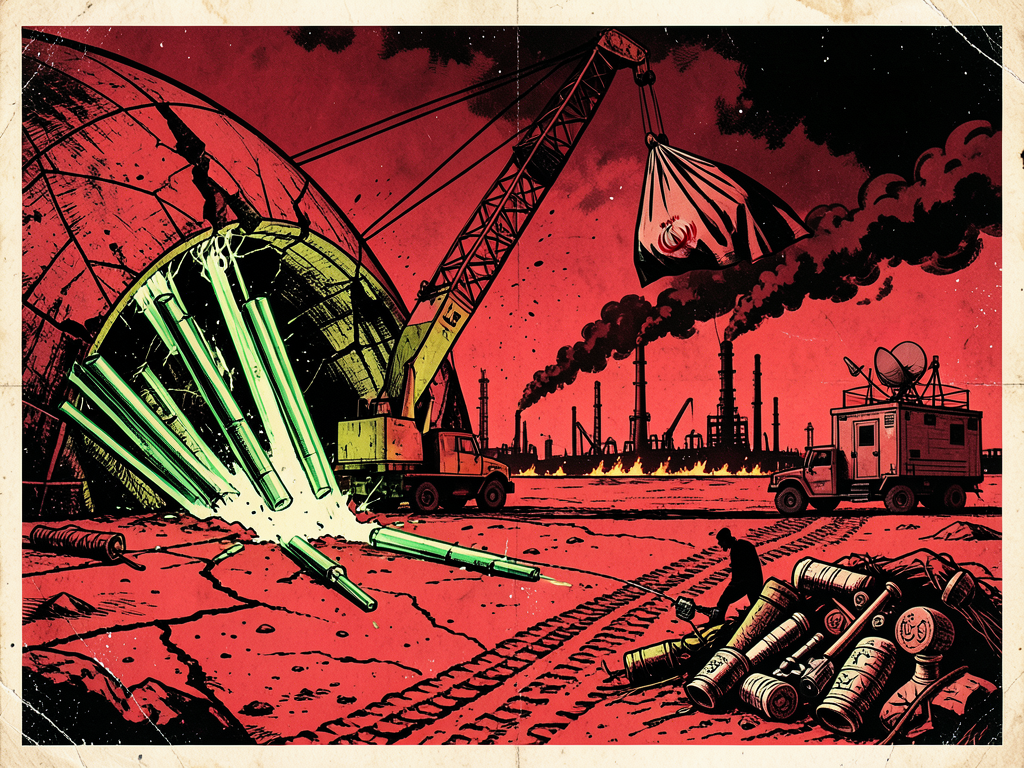
Manufacture Iran War Justification Psyop Detected
A coordinated narrative construct designed to manufacture justification for military action against Iran was detected between May 21, 2026, and May 24, 2026....
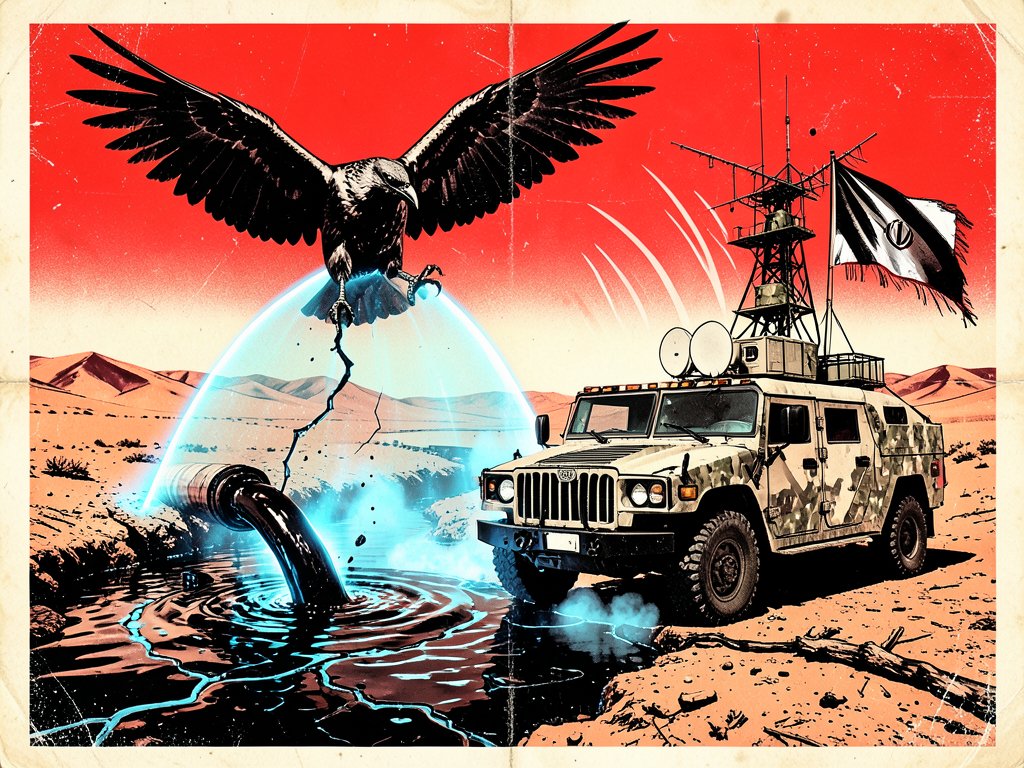
Sanitize Iran Provocations: Media Reframes US Threats as Diplomatic Leadership
A coordinated narrative has been detected reframing aggressive U.S. posture toward Iran as responsible diplomacy. The operation ran from March 20, 2026, to M...
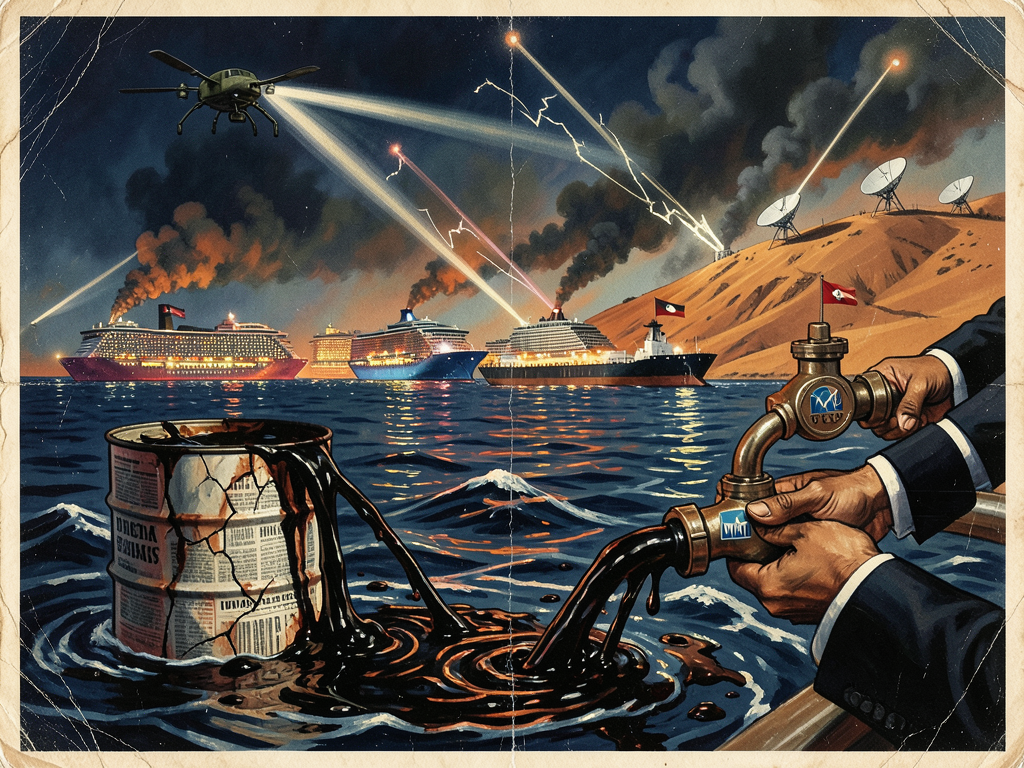
Manufactured Crisis: Coordinated Media Push for Strait of Hormuz Escalation
A coordinated narrative surge spanning 55 articles across 17 outlets from April 15 to May 15, 2026, is advancing the conditions for U.S. military interventio...
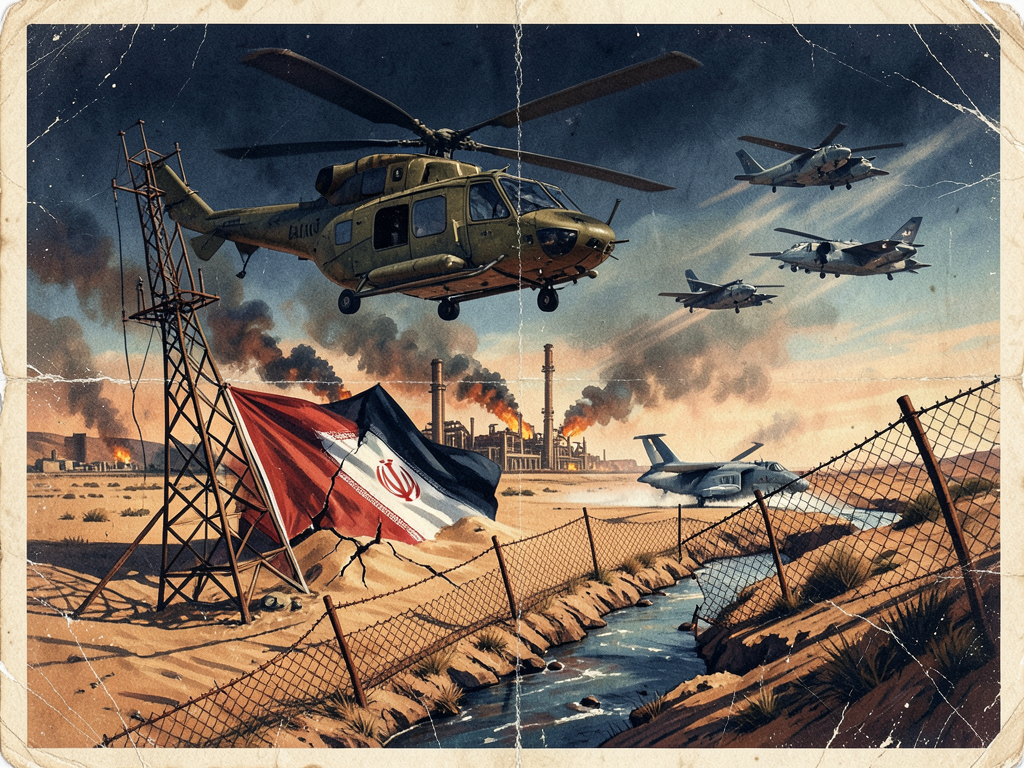
Prime for Iran War: Coordinated Narrative Push for Military Confrontation
A coordinated narrative surge promoting military action against Iran was detected between May 1, 2026, and May 11, 2026. Twelve articles across six outlets a...
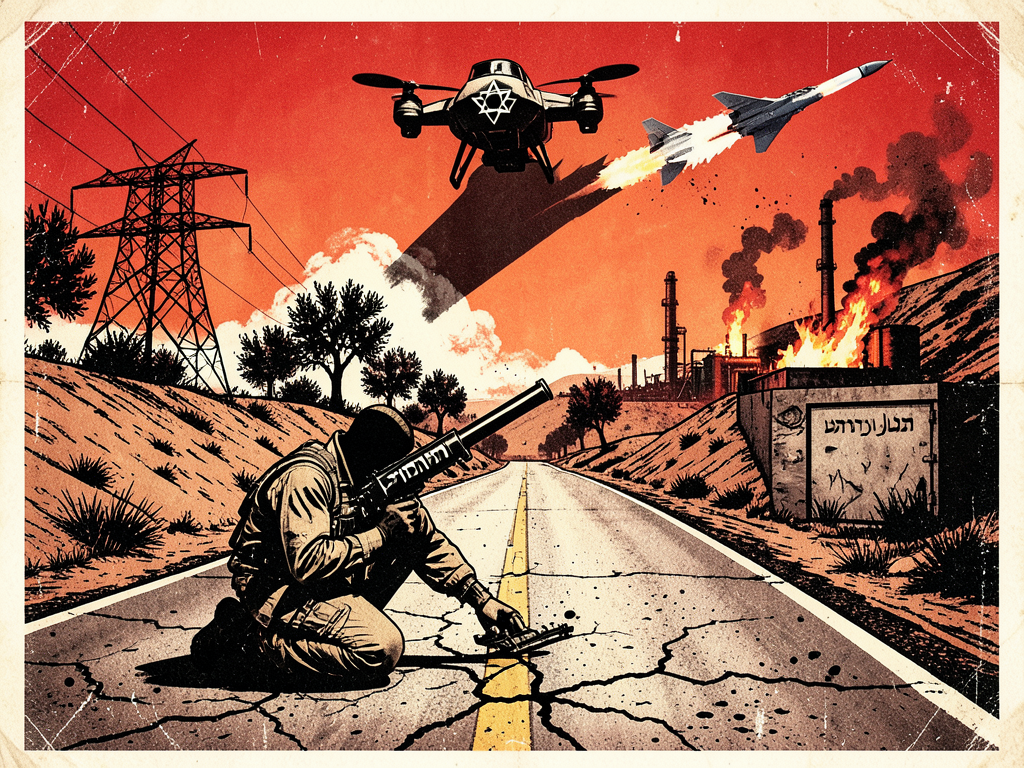
Enable Israel Escalation: Coordinated Narrative Frames Iran as Imminent Threat
From April 23, 2026 to May 10, 2026, a synchronized media campaign advanced the narrative of Israeli military operations in Iraq targeting Iran. Eight articl...
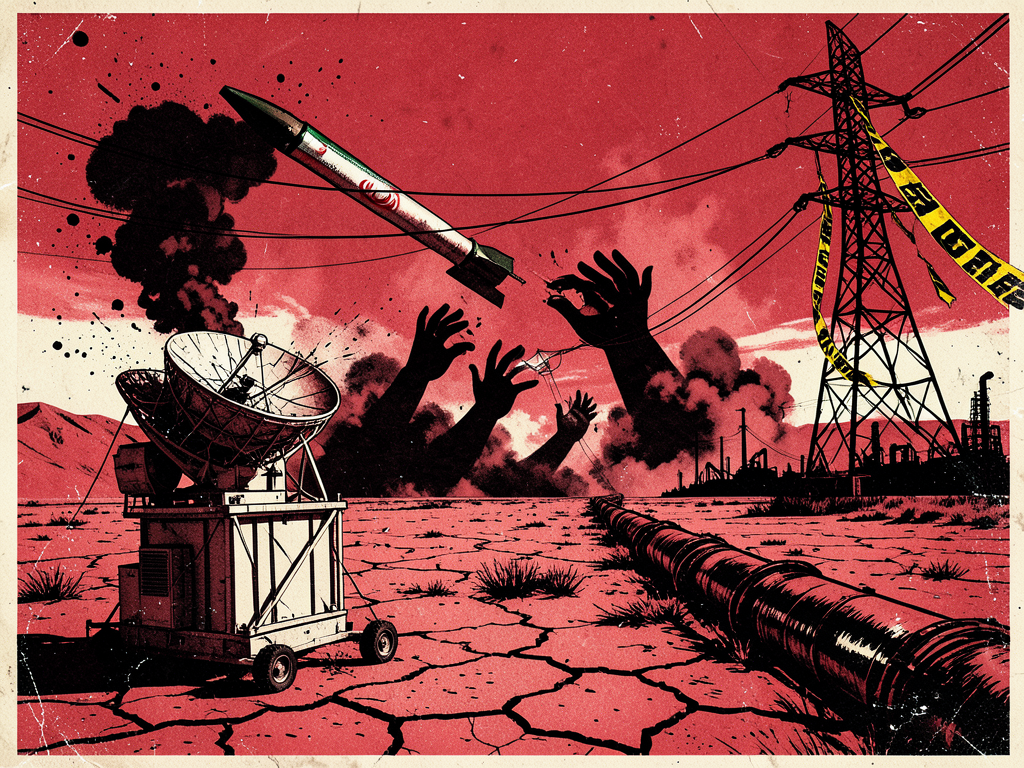
Enable Israel Escalation: Iranian Threat Narrative Activated
A coordinated narrative has been detected amplifying the threat of Iranian espionage and military provocation to create public justification for Israeli or U...
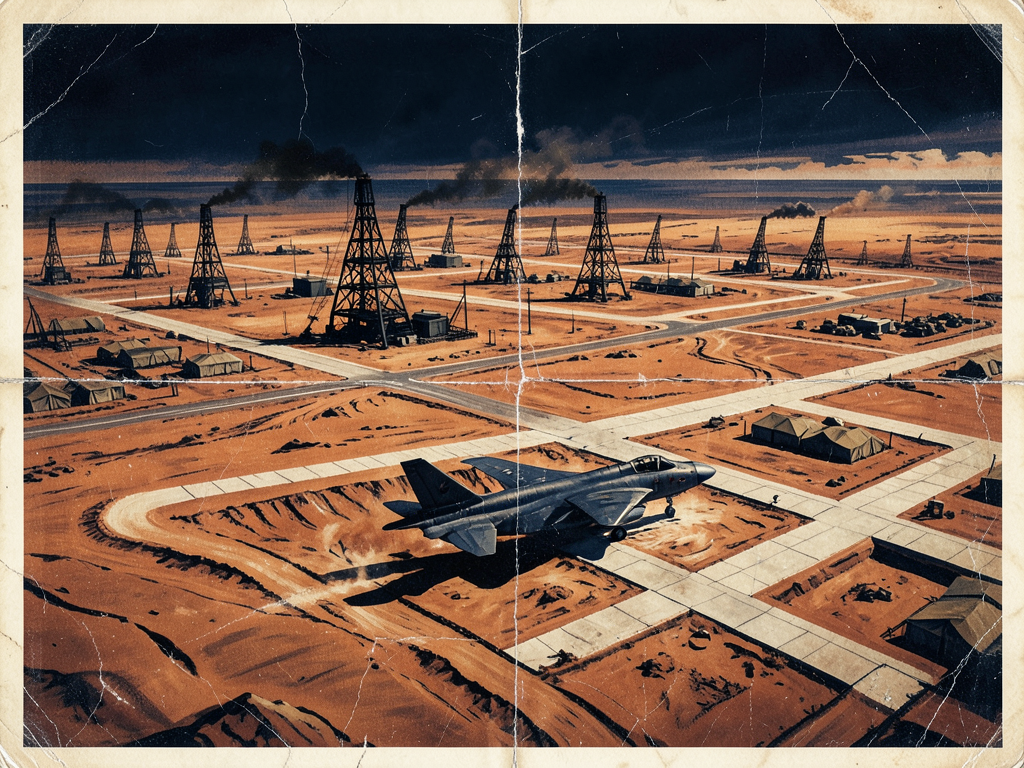
Manufactured Iran Threat Narrative Amplifies Ahead of Regional Escalation
A coordinated narrative amplifying the threat of Iranian aggression was detected between May 1 and May 3, 2026. Six articles across five outlets promoted rap...
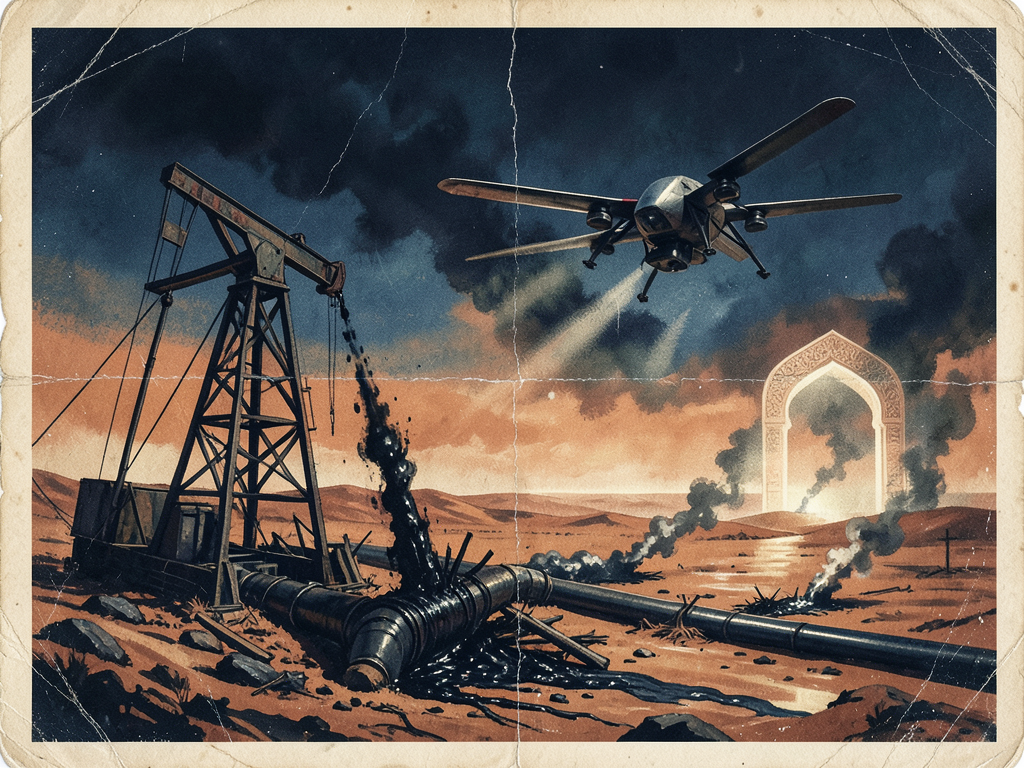
Manufacture Iran War Consent PSYOP Detected in Regional Defense Reporting
A coordinated narrative has been detected across five media outlets from May 1 to May 3, 2026, promoting an imminent Iranian threat to justify large-scale mi...
Manufacture Iran War Consent: Vatican-Trump Conflict Frames Looming Strike as Moral Imperative
A coordinated narrative campaign spanning 123 articles across 24 outlets from February 19, 2026, to April 17, 2026, constructs a false moral binary around a ...
Manufacture Iran War Consent through Vatican-Trump Conflict Framing
A coordinated narrative campaign was detected between February 19, 2026 and April 17, 2026, spanning 123 articles across 24 major Western outlets. The operat...
Manufacture Iran War Consent spike detected across 24 outlets
A coordinated narrative escalation to build public consent for war with Iran and justify a $1.5 trillion defense budget was detected between February 19, 202...
Sources & Articles
2026-10-14T11:16:21.000Z
2026-10-10T18:08:46.000Z
2026-10-14T05:02:36.000Z
2026-10-10T07:22:57.000Z
2026-10-15T04:06:01.063Z
2026-10-14T12:13:46.000Z
2026-10-12T01:50:06.000Z
2026-10-08T08:29:54.000Z
2026-10-08T19:15:07.000Z
2026-10-08T00:01:08.300Z
Showing 10 of 700 articles