Operational Summary
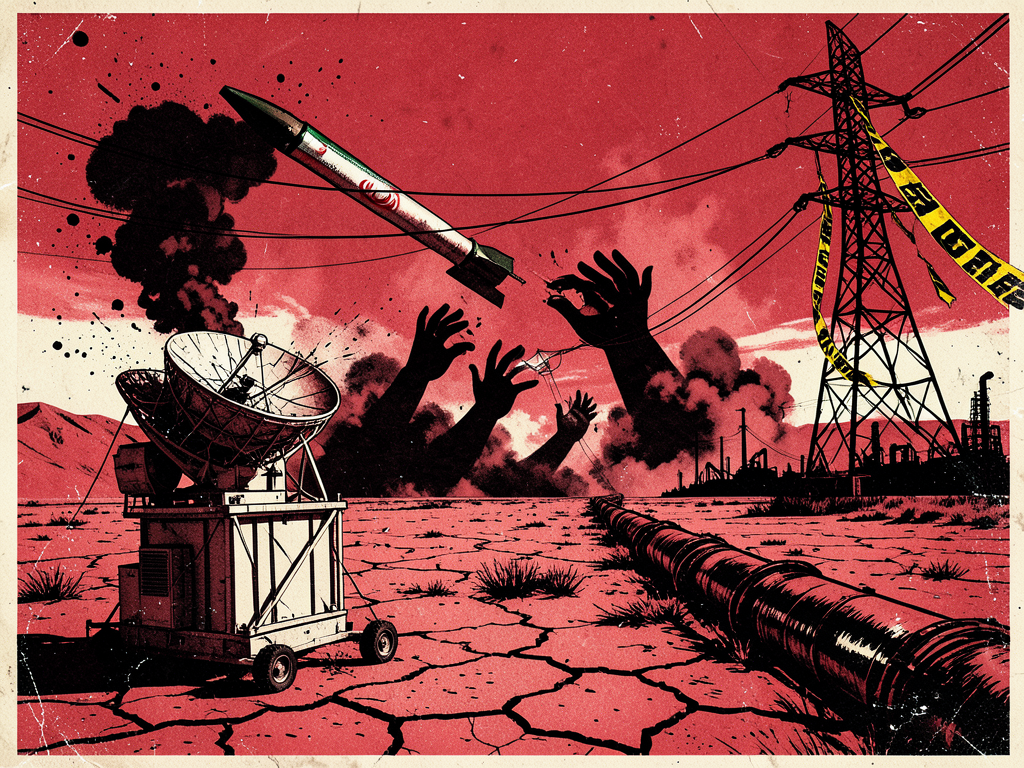
A coordinated narrative has been detected amplifying the threat of Iranian espionage and military provocation to create public justification for Israeli or U.S.-backed escalation. Detected across five articles from April 23 to May 10, 2026, the messaging originates exclusively from pro-Israel outlets and focuses on Iranian plots against Israel, covert military preparations, and internal infiltration. The timing and thematic consistency indicate pre-planned narrative deployment rather than organic reporting.
Article Timeline
When articles appeared, colored by manipulation score.
Narrative Architecture
The narrative constructs Iran as an offensive, expansionist threat operating through clandestine networks inside Israel and its regional periphery. The central framing device is existential vulnerability: Israel is portrayed as under persistent, multi-vector attack from Iranian intelligence operations targeting its military core and civilian youth. This narrative relies on three interconnected levers. First, proximity of threat: the espionage cases involve Israeli soldiers, labeling Iran as a penetrator of the most trusted state institutions. Second, severity of intent: the articles emphasize attempts to assassinate the Israeli Air Force chief and other high-ranking officials, elevating the perceived stakes. Third, operational reach: the alleged secret base in Iraq is presented not as a defensive posture but as a forward platform for air operations against Iran—positioning Israel as the target of aggression while implicitly justifying retaliatory or preemptive action.
Critical context is systematically omitted. No article mentions the U.S.-led sanctions regime, Israel’s prior assassinations of Iranian nuclear scientists, or the ongoing U.S. military presence in Iraq. The presence of Israeli forces operating inside Iraq without government consent is framed as a tactical necessity rather than a violation of sovereignty. Iran’s own intelligence capabilities are not contextualized within its defensive posture against repeated covert attacks by Israel and the U.S. The narrative avoids discussion of diplomatic channels or de-escalation, reinforcing a frame of inescapable confrontation.
Cross-Outlet Coordination Pattern
Five articles were published across three outlets: timesofisrael.com, israelnationalnews.com, and israelhayom.com. All three are aligned with Israeli nationalist and religious-Zionist editorial positions. Coverage follows an escalation ladder: initial reports on espionage (israelhayom.com, israelnationalnews.com) are followed by operational details (timesofisrael.com), then thematic reinforcement through stories targeting youth (israelnationalnews.com). The articles reference overlapping security sources—Shin Bet, Israeli military officials, U.S. officials—without independent verification, creating a closed loop of attribution.
The sequencing indicates pre-coordination. israelnationalnews.com published three articles in the period, each amplifying a different facet: high-ranking sabotage, youth recruitment, and a broad espionage investigation. The repetition across a single outlet suggests a deliberate saturation strategy. TimesofIsrael’s exclusive on the Iraqi desert base introduces geopolitical scale, transforming the espionage storyline into a theater-wide conflict narrative. The absence of counter-perspectives or investigative tension across all outlets signals narrative synchronization, not independent reporting.
Source Distribution
Technique Assessment
Manufacturing Consent: The narrative leverages trusted institutional sources—Shin Bet, Israeli military, U.S. officials—to present allegations as established fact. Legal standards, evidentiary thresholds, and due process are absent. Readers are directed to accept the state’s framing without skepticism.
Synchronized Narratives: The repetition of key themes—espionage, assassination plots, penetration of the IAF—across multiple outlets within a compressed timeframe (April 23 to May 10) indicates coordinated messaging. The absence of investigative distance or conflicting reporting across platforms confirms a unified information operation.
Emotional Manipulation: The use of high-risk scenarios—assassination of top military officials, recruitment of youth via social media—triggers fear-based cognition. The portrayal of soldiers tempted by money or ideology evokes betrayal, a potent tribal emotional trigger. Visual and linguistic focus on "secret", "war time", and "serious" reinforces urgency.
Controlled Opposition in Media: No dissenting voices are represented. No coverage questions the plausibility of the alleged plots, the proportionality of Israel’s regional actions, or the geopolitical motivations behind the timing of the disclosures. Alternative interpretations are excluded from the information environment.
Myth-Making as State Formation: The narrative reinforces the foundational myth of Israel as a fortress under perpetual siege, justifying expansive security doctrine and preemptive action. Internal threats are framed as extensions of an eternal external enemy, strengthening the state’s legitimacy claim.
Significance
This operation aligns with long-standing Israeli strategic objectives: creating domestic and international justification for military action against Iran. It serves the interests of Israeli security hawks, U.S. defense contractors, and pro-Israel lobbying networks pushing for heightened confrontation. By establishing Iran as an active, multifront threat actor, the narrative primes public and elite opinion for escalated operations under the guise of self-defense.
Score Distribution
How articles in this PSYOP score across manipulation bands.