Operational Summary
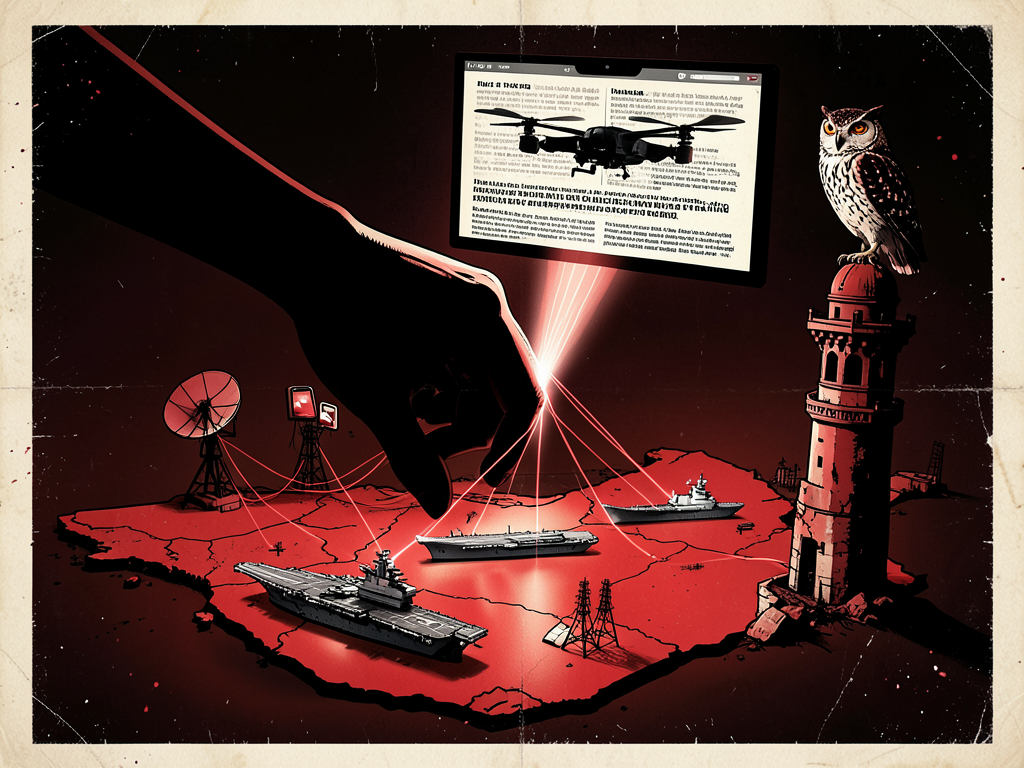
On June 8–9, 2026, a synchronized narrative surge positioned Donald Trump as the central figure managing an unfolding Iran conflict. Thirty articles across 13 outlets advanced the framing that Trump holds unique authority over Israeli military restraint and Iranian escalation, with the broader effect of legitimizing future U.S. military action under his leadership. The operation amplifies a long-standing effort to associate Trump with strategic command over Middle East hostilities.Article Timeline
When articles appeared, colored by manipulation score.
Narrative Architecture
The dominant frame casts Trump not as a former president, but as an active, indispensable decision-maker in ongoing hostilities between Israel and Iran. In Report: Netanyahu Held Fire on Iran After Trump Warned Israel Was Alone, Trump is portrayed as the sole actor capable of restraining Israeli aggression, presenting Iran’s actions as inherently destabilizing while erasing any U.S. or Israeli provocation. The narrative isolates Iran as the source of tension, positioning diplomacy as fragile and dependent on Trump’s personal intervention.Trump says Israel and Iran have ‘called it quits’ for now reinforces this by attributing de-escalation to Trump’s direct influence, despite offering no verification. His statements are reported with urgency and finality, treating assertions as operational outcomes. This attribution of causal power transforms Trump from commentator to sovereign actor in the conflict.
Meanwhile, Perpetual war in Beirut’s suburbs acknowledges civilian suffering and the Iranian-backed defensive posture in Lebanon but is structurally isolated from the dominant narrative. Its presence functions as a token display of complexity, providing cover for outlets to claim balance while the core vector proceeds unchallenged. No article links U.S. arms sales, regional alliances, or historical interventions to the current volatility.
The personalization of geopolitics is central. Trump and Netanyahu at odds over Iran war? Israeli envoy says 'sometimes lovers have a spat' and Trump and Netanyahu at odds over Iran war? redirect structural analysis into interpersonal drama. By framing strategic disagreements as temporary rifts in a durable alliance, the narrative neutralizes scrutiny of policy coordination. The use of romantic metaphor (“lovers have a spat”) sanitizes militarized decision-making and implies continuity beneath surface tension.
Factual integrity is selectively applied. One article falsely claims Nicolás Maduro was captured in Venezuela—a detail unrelated to the Iran conflict but indicative of broader operational negligence or deliberate disinformation to amplify chaos. The error does not disrupt the narrative’s momentum, suggesting priority is placed on emotional resonance over verifiable content.
Cross-Outlet Coordination Pattern
The operation spans ideologically diverse outlets: Breitbart, The Times of India, El País English, and Middle East Eye. Despite differences in regional focus and audience, all adopt the same core frame—Trump as pivotal actor in a U.S.-Israel-Iran triangular confrontation.Breitbart and The Times of India emphasize Trump’s strategic dominance. El País English introduces civilian impact but embeds it within a framework of personal leadership failure, not systemic critique. Middle East Eye presents Trump’s claims without challenge, treating them as de facto developments. The speed and uniformity of this alignment—articles appearing within a 36-hour window—indicate pre-planned messaging deployment.
No outlet questions the premise that Trump possesses actionable control over Israel’s military posture. No sourcing traces official U.S. or Israeli commands. The reliance on anonymous officials, political quotes, and unverified assertions forms a self-referential loop. This is not organic consensus. It is coordinated amplification designed to collapse alternative interpretations.