Media capture · 1953 · US, UK, Iran
Operation Ajax
In 1953 the CIA, with Britain's MI6, planned and ran the overthrow of Iran's prime minister Mohammad Mossadegh. The CIA's own history, written in March 1954 by planner Donald Wilber and published by the New York Times in 2000, describes a propaganda effort alongside the military plot: press assets to create a favourable atmosphere, agents who portrayed Mossadegh as anti-religious, a sham bombing of a clergyman's house, and street crowds on 19 August. The coup was real, as was the later US acknowledgement. The operation is the covert framing and staging around it.
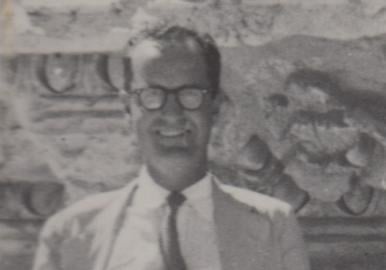

- Run by
- CIA / MI6
- Codename TPAJAX; the plan was written jointly by CIA and British SIS officers
- Allocated to the Tehran station in early April 1953
- $1 million
- Per Wilber's history, as read by Gasiorowski: to be used "in any way that would bring about the fall of Mossadeq"
- Mossadegh removed after a failed first attempt on 15-16 August
- 19 Aug 1953
- Wilber's history calls the 19 August demonstrations "partially spontaneous" (pp. xii, 66-67); Gasiorowski adds that the CIA's Iranian agents led and incited them
- Time to exposure
- 2000 / 2013
- New York Times published Wilber's history in 2000; documents released 19 August 2013 include what the National Security Archive believes to be the CIA's first formal acknowledgement of its role
Timeline
Early Apr 1953 · It worked
According to Wilber's history, the CIA allocates $1 million to the Tehran station for use "in any way that would bring about the fall of Mossadeq". The plan names General Fazlollah Zahedi as the replacement.
16 Apr 1953 · Context
A CIA memo from the Iran Branch chief to Kermit Roosevelt transmits an estimate drafted by Wilber. It says that [redacted] assets with "extremely wide connections with the Tehran press" "could be used to create an atmosphere favorable to Zahedi once he had taken over power"; a further passage with a redacted subject refers to "gangs of street fighters". The released text does not say whose contacts these were.
1 Jun 1953 · Context
The initial operational plan (Appendix A) is cabled from Nicosia to CIA headquarters. A later Appendix B plan was written jointly by CIA and British SIS officers.
1953, before and during the coup · It worked
Agents portray Mossadegh as "anti-religious" and stage a "sham bombing" of a clergyman's house, per Wilber's history as read by Gasiorowski, who does not date these operations more closely.
15-16 Aug 1953 · It worked
The first attempt fails. The Shah leaves the country and most Iranian participants go into hiding. Roosevelt's team then uses Iranian agents to publicise the Shah's opposition to Mossadegh and to spread fear of a Tudeh takeover.
19 Aug 1953 · It worked
Crowds and military units take key Tehran sites and Mossadegh falls. Wilber's history says CIA station assets helped start the demonstrations; Wilber's history calls the demonstrations "partially spontaneous", and Gasiorowski says they were led and incited to violence by the CIA's Iranian agents.
16 Apr / 18 Jun 2000 · Exposed
James Risen of the New York Times publishes excerpts, then the main text, of Wilber's roughly 200-page history, with Iranian names redacted. The CIA had released a single sentence from the 339 pages the National Security Archive had sued over.
19 Aug 2013 · Exposed
On the 60th anniversary the National Security Archive posts CIA documents that include what it believes to be the agency's first formal acknowledgement that it helped plan and execute the coup. In a 17 March 2000 speech Secretary of State Madeleine Albright had said: "In 1953 the United States played a significant role in orchestrating the overthrow of Iran's popular Prime Minister, Mohammad Massadegh."
The CIA's own account of how it shaped the press and the street stayed secret for 47 years, and was first published by a newspaper, not by the agency.
“in any way that would bring about the fall of Mossadeq”
The playbook
- 1
Planted story
The April 1953 estimate planned to use [redacted] assets with wide connections to the Tehran press to build a climate favourable to Zahedi once Mossadegh was gone.
- 2
Hidden messenger
Iranian agents, not Americans, carried the message: that the Shah opposed Mossadegh and that a Tudeh takeover was near.
- 3
Manufactured incident
The history describes a sham bombing of a clergyman's house and propaganda casting Mossadegh as anti-religious, to turn clerics against him.
- 4
Trusted repeaters
Paid and recruited Iranians and local street networks made a CIA-run effort look like a domestic movement.
- 5
Suppress the correction
The record was kept hidden: Gasiorowski reports that the CIA destroyed almost all its coup files, and only a sentence of the history was released before 2000.
Through the FATE framework
- Focus6/10
Attention was steered to the Tudeh threat and Mossadegh's supposed hostility to religion.
- Authority6/10
The Shah's dismissal decree and clerical voices were used to give the removal a legal and religious face.
- Tribe7/10
It set clergy and the army against Mossadegh and exploited nationalist and anti-communist divisions.
- Emotion6/10
Fear of a communist takeover and offence at supposed irreligion were the main appeals.
Propaganda techniques used
Same playbook today
The same playbook can be run by anyone, on any side. We list every current PSYOP that matches Operation Ajax, whoever is behind it.
Manufacture China Threat Consensus
The instrumentalization of human rights issues, such as the Jimmy Lai case ('Trump says he will raise Jimmy Lai’s plight with Chinese leadership'), to delegitimize the Chinese government and rally international opposition, echoes the use of media manipulation and engineered protests in historical regime change operations.
36 articlesIntensity 4Legitimize Bolsonaro's Political Exile
This PSYOP shares the mechanism of using media manipulation and claims of popular uprising (or in this case, political persecution) to delegitimize a democratically elected government and support a preferred political outcome or figure.
8 articlesIntensity 5Manufacture US-Iran War Consent
The narrative's portrayal of Iran as 'duplicitous' and its leaders as 'irrational' (e.g., 'Iran 'unbelievably duplicitous' in denying talks') serves to delegitimize the Iranian government, a tactic used in the 1953 coup to undermine a democratically elected leader.
236 articlesIntensity 8