Legitimize Chinese Global Hegemony
This PSYOP aims to normalize and legitimize China's assertive global expansion across technology, economy, and military, benefiting the Chinese Communist Party and its associated entities by fostering public acceptance of its dominant role.
Cluster signature
Peak 103 articles in August 2026
Bars run to 150, not to the tallest band.
Focus, Authority, Tribe, Emotion — averaged across 249 articles.
- Loaded Language316
- Appeal to Values162
- Appeal to Authority105
- Flag Waving76
- Exaggeration/Minimisation70
- Slogans42
- Appeal to Popularity33
- Appeal to Fear/Prejudice30
Bar length is square-root scaled so the tail stays readable; counts are exact.
Executive Summary
Power Patterns
Myth-Making as State Formation
The articles contribute to China's myth-making by presenting it as a leading force in AI governance and technological innovation (Xinhua News, Global Times on LLMs), a responsible economic actor (Global Times on outbound investment), and a capable military partner (Global Times on joint air patrol). This reinforces China's civilizational identity as a stable, competent power resistant to external pressures, while framing its responses to US actions (export controls) as lawful and defensive, consistent with asymmetric warfare doctrine.
Cui Bono — Who Benefits?
This narrative enables the CCP to legitimize its rule by showcasing technological prowess and responsible governance, both internally and externally. It supports the PLA by normalizing its joint exercises with Russia and presenting them as defensive. It benefits Chinese SOEs and tech firms by portraying them as innovative and reliable, even when facing US blacklisting. For Russia, it normalizes and legitimizes its strategic alignment with China, presenting it as a partnership for regional stability.
Historical Parallels
Myth-Making as State Formation (e.g., Aeneid for Rome)
Just as ancient empires used foundational myths to justify their power and destiny, these articles contribute to a modern myth of China as a benevolent, technologically advanced, and strategically sound global leader, essential for its continued rise.
Sanctions as Siege Warfare (e.g., US sanctions on Iran)
China's response to US export controls, as reported by Global Times, mirrors the dynamic of a targeted nation framing its retaliatory measures as lawful and defensive, much like sanctioned nations often frame their resistance to external pressure.
Narrative Mechanics
Synchronized Talking Points
“China's AI models are cost-effective and perform well, attracting foreign firms.”
“Chinese regulations on AI are for safety and compliance, reflecting responsible governance.”
“China's economic policies balance openness with national security.”
“Joint China-Russia military exercises are professional, defensive, and promote regional stability.”
“US actions against Chinese firms are arbitrary; China's responses are lawful and measured.”
Framing Evolution
The narrative has evolved from simply reporting China's economic growth to actively framing its technological advancements, regulatory actions, and military cooperations as legitimate, responsible, and even inevitable steps towards a new global order. The shift includes framing China's retaliatory measures against the US as lawful and proportionate, rather than aggressive.
Suppressed Counter-Narratives
×Concerns about data security or intellectual property theft associated with Chinese AI models.
×Potential political motivations behind AI regulations or the impact on innovation.
×The geopolitical implications of China's outbound investment, particularly in sensitive sectors.
×The aggressive or expansionist interpretations of China-Russia joint military patrols by other regional powers.
×The specific reasons or evidence behind US blacklisting of Chinese firms, beyond 'arbitrary' claims.
Outlet Coordination
Xinhua News, as a state news agency, presents straightforward announcements like Xi's attendance at the AI conference, which inherently promotes China's global standing. Global Times, known for its more nationalistic and assertive tone, actively employs manipulative framing. For instance, Global Times articles consistently frame China's actions (AI regulations, outbound investment rules, responses to US blacklisting) as lawful, defensive, and responsible, while portraying US actions as arbitrary or aggressive. The timing of these articles often coincides with specific policy announcements or geopolitical events, ensuring a consistent message across state-controlled media.
Bigger Picture
This PSYOP is a crucial component of China's broader strategy to reshape the global order, challenging American hegemony by presenting itself as a legitimate, powerful, and responsible alternative. It aims to normalize its rise and integrate its systems into global standards, ultimately leading to a multipolar world where China plays a central role.
Prediction
This PSYOP is likely building toward public acceptance of China's increasing global influence across economic, technological, and military domains. It prepares the public for a future where China's policies and partnerships are seen as standard, legitimate, and even beneficial, thereby reducing resistance to its geopolitical ambitions and potentially enabling further expansion of its 'Belt and Road' initiative and strategic alliances.
Intelligence Coverage

PSYOP Surging: Legitimize Chinese Global Hegemony
Intensity: 8/10 | Sources: 15 outlet(s)

China’s global diplomacy events are being framed as neutral and inclusive, not strategic expansion
A coordinated messaging effort has been detected across 12 outlets, involving 188 articles published between June 30, 2026, and September 18, 2026. The narra...

BRICS summit coverage elevates China as a global leader
A coordinated narrative promoting China's ascendance as a legitimate global power emerged across 177 articles from June 30 to September 14, 2026. The messagi...
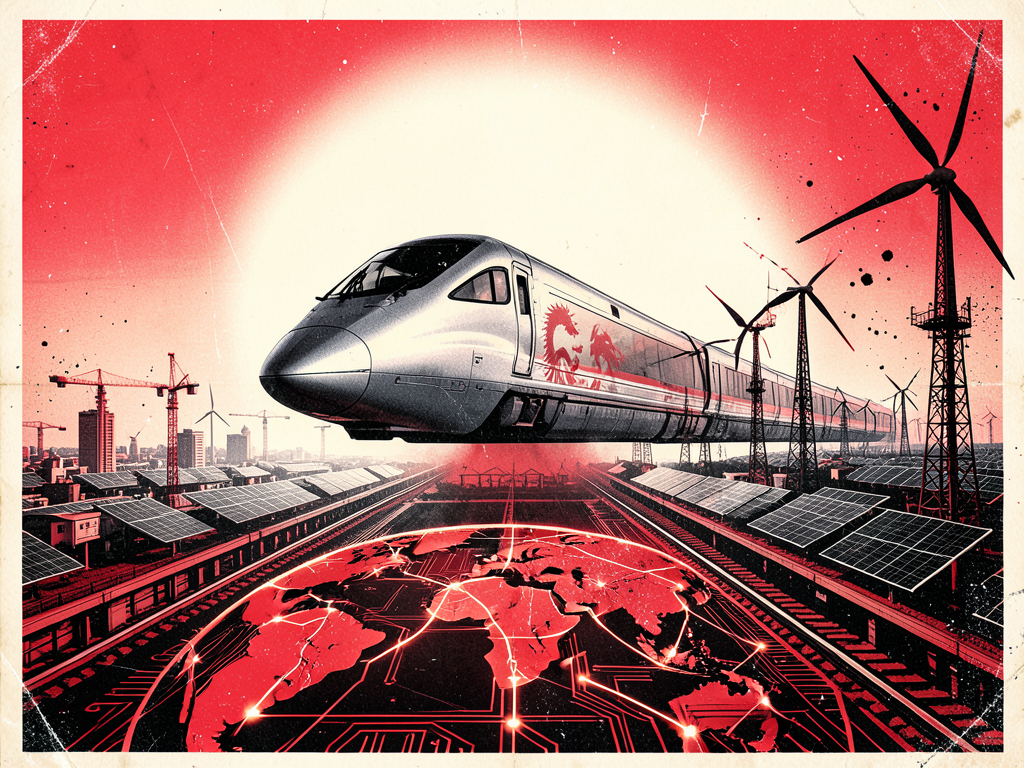
China's economic rise is being framed as an unstoppable global force
A coordinated messaging campaign promoting China’s economic ascendancy intensified between September 8 and September 9, 2026. Sixteen articles across two pri...
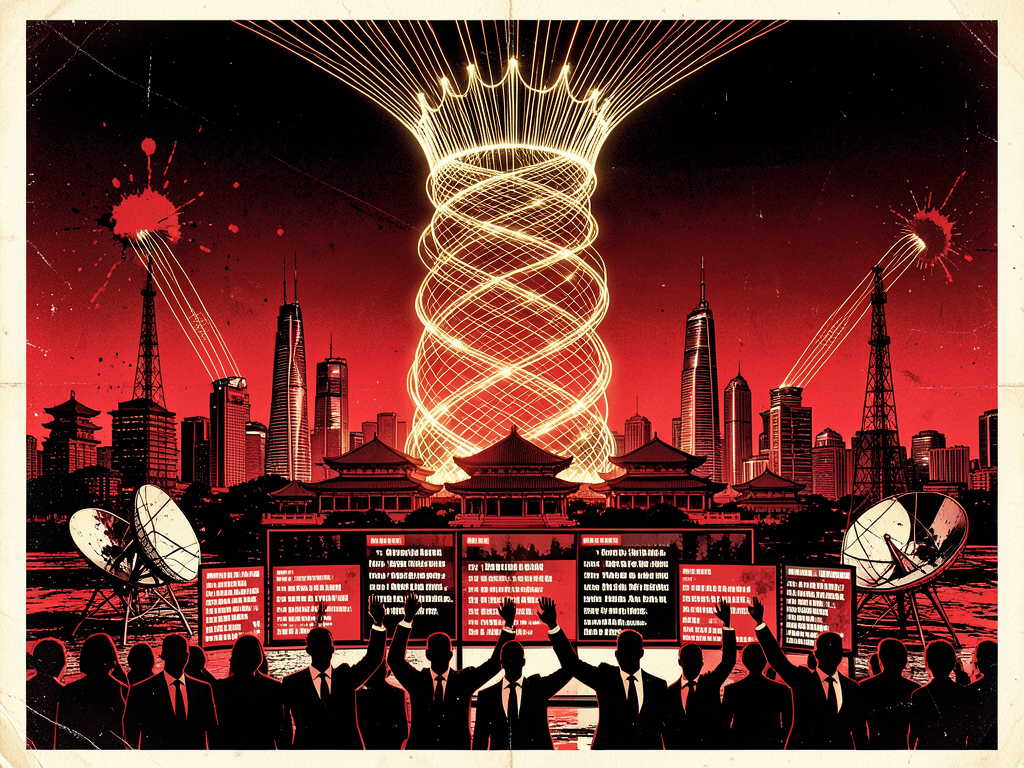
China’s rise is being framed as inevitable and morally superior through coordinated media narratives
A synchronized narrative surge promoting China’s global leadership emerged across 12 outlets, with 155 articles detected between June 30, 2026, and September...
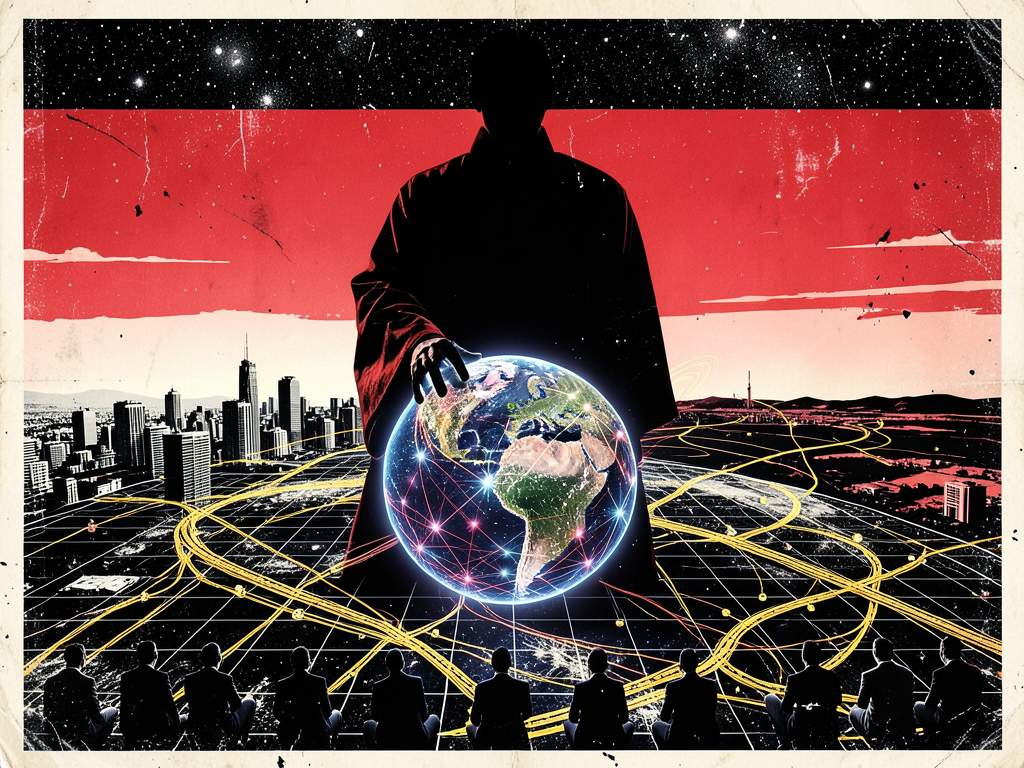
China's global ambitions are being presented as peaceful and inevitable
A coordinated messaging campaign has been detected across 12 media outlets, involving 144 articles published between June 30, 2026, and September 1, 2026. Th...

China's global rise is being framed as inevitable and widely accepted
A coordinated messaging campaign promoting the normalization of China’s global influence was detected between June 30, 2026, and August 27, 2026. The operati...
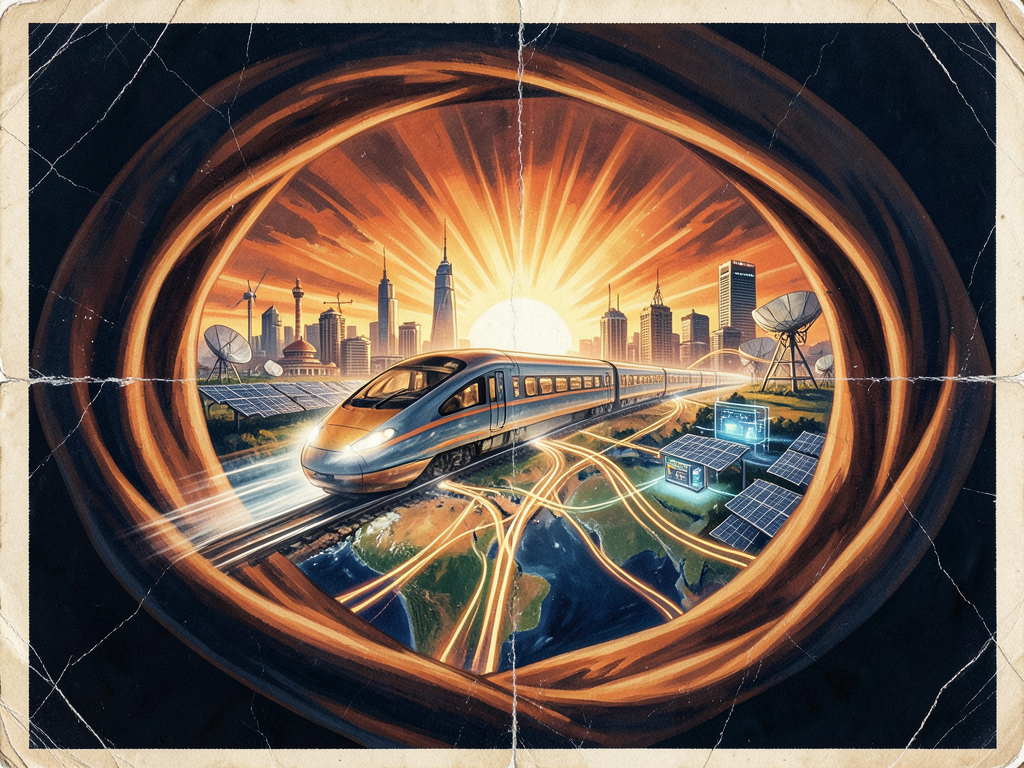
China's global influence is being presented as mutually beneficial and inevitable
A coordinated media push was detected between June 30, 2026, and August 23, 2026, involving 124 articles across 11 outlets. The narrative promotes China’s ex...
China's global rise is being framed as peaceful and mutually beneficial
A coordinated narrative promoting China's international expansion was detected across 124 articles in 11 outlets between June 30, 2026, and August 23, 2026. ...

China's global rise is being framed as natural and non-threatening across multiple outlets
A coordinated narrative promoting the normalization of China’s expanding geopolitical influence has intensified across 110 articles from nine outlets between...

China’s global rise is being framed as inevitable and justified
A coordinated messaging campaign promoting China's geopolitical, technological, and military ascendancy intensified between June 30, 2026, and August 15, 202...
China's trade conflict with the U.S. is being framed as a defensive stand against protectionism
A coordinated narrative has emerged across seven media outlets, primarily Global Times, from June 30 to August 8, 2026, amplifying China’s position in its on...

China's global rise is being framed as inevitable and morally superior
A coordinated messaging campaign promoting China’s global ascendancy was detected between June 30, 2026, and August 4, 2026. Fifty-four articles across six o...
China's global influence is being portrayed as a natural and positive force
A coordinated narrative promoting China’s global leadership intensified between June 30, 2026, and July 31, 2026, across six outlets. At least 36 articles ad...
China's rise is being framed as generous and inevitable, not contested
A coordinated media push to reframe China's global expansion as benevolent and preordained was detected from June 30, 2026 to July 29, 2026. Twenty-eight art...

China's AI and naval assertiveness are being framed as legitimate and justified responses to US overreach
A coordinated narrative promoting the normalization of China’s global strategic expansion emerged across multiple media outlets from June 30 to July 27, 2026...
China's AI rise is being framed as inevitable and responsible, not threatening
A coordinated narrative promoting China’s technological and geopolitical ascent has been detected across six media outlets. The pattern, active from June 30,...
Sources & Articles
Oct 19, 2026
Oct 16, 2026
2026-10-16T00:00:00.000Z
2026-10-12T00:00:00.000Z
2026-10-14T00:00:00.000Z
2026-10-16T02:56:21.000Z
Showing 10 of 249 articles