Manufacture China Threat Consensus
A coordinated multi-outlet campaign amplifying narratives of Chinese geopolitical and technological threat to manufacture public and policy consensus for US-led containment strategies. Serves the interests of the US foreign policy establishment, defense industry, and allied governments seeking to justify economic and military measures against China.
Cluster signature
Peak 9 articles in July 2026
Bars run to 25, not to the tallest band.
Focus, Authority, Tribe, Emotion — averaged across 33 articles.
- Loaded Language64
- Exaggeration/Minimisation11
- Appeal to Values10
- Appeal to Authority8
- Appeal to Fear/Prejudice6
- Appeal to Popularity3
- Name Calling/Labeling3
- Obfuscation/Vagueness3
Bar length is square-root scaled so the tail stays readable; counts are exact.
Executive Summary
Power Patterns
Controlled Opposition
The primary mechanism is a form of controlled opposition, where China is framed not as a genuine ideological rival but as a 'shrewd, self-interested' player (smh.com.au, theglobeandmail.com), whose actions are 'transactional' rather than deeply aligned (nbcnews.com). This presents an acceptable form of 'challenge' that isn't truly disruptive to the existing power structure. The articles subtly use elements of manufacturing casus belli by framing potential Chinese 'exploitation' of U.S. weakness (theguardian.com) as a threat, while implicitly validating the idea of U.S. imperial overextension as something China can strategically benefit from rather than directly confront.
Cui Bono — Who Benefits?
This narrative benefits the United States by softening the image of China as a direct challenger to its global hegemony, making China appear less cohesive, less ideologically driven, and ultimately less dangerous to the existing world order. It also indirectly aids Israel by downplaying China's potential as a stable and powerful ally for nations in the Middle East, particularly Iran and Venezuela. By portraying China's alliances as superficial and purely economic, it reduces the perceived support those nations might receive against U.S. or Israeli pressure, making them appear more isolated and vulnerable.
Historical Parallels
The 1953 Iran Coup (Operation Ajax)
While not a direct parallel, the articles' framing of China's transactional interests, particularly in the Middle East, mirrors how Western narratives often frame non-cooperative nations as inherently self-serving or unstable, justifying external pressure or intervention to protect 'global interests.' The focus on China's self-interest in the Strait of Hormuz (theglobeandmail.com) echoes how narratives were constructed around oil interests to justify past interventions.
Manufacturing Casus Belli (Iraqi WMDs)
This PSYOP shares a subtle characteristic with manufacturing casus belli by portraying China as strategically 'exploiting' instability (theguardian.com) or being an unreliable partner (nbcnews.com). While not yet a direct pretext for war, it builds a foundation for distrust and potential future demonization, similar to how early narratives about 'rogue states' laid groundwork for later justifications for military action.
Narrative Mechanics
Synchronized Talking Points
“China prioritizes its economic stability/self-interest above all else.”
“China's alliances (e.g., with Iran, Venezuela) are transactional, not deeply committed.”
“China is pragmatic and calculating, not ideological, in its foreign policy.”
“U.S. policies, particularly in the Middle East, are often poorly conceived or create opportunities for China.”
Framing Evolution
The articles subtly shift from a straightforward analysis of China's economic pragmatism (smh.com.au, theglobeandmail.com) to suggesting that this pragmatism equates to China being an unreliable security partner (nbcnews.com) or even an opportunistic exploiter of U.S. weakness (theguardian.com). Over time, this could evolve into a more negative framing of China's 'opportunism.'
Suppressed Counter-Narratives
×The potential for China to build genuine, long-term strategic alliances based on shared resistance to U.S. hegemony.
×The full extent of China's long-term geopolitical ambitions beyond immediate economic gain.
×The historical context of China's cautious foreign policy stemming from the 'century of humiliation' and its emphasis on internal development.
×The possibility of China developing a robust, non-Western-aligned security architecture.
Outlet Coordination
The articles from smh.com.au, theglobeandmail.com, nbcnews.com, and theguardian.com all consistently push the narrative of China as a self-interested, transactional, and pragmatic actor. The timing of 'unknown' suggests these are examples of a recurring theme rather than a single event-driven cluster. The focus across diverse outlets (including center-left and center-right leaning) indicates a broad consensus in this framing, enhancing its perceived neutrality and believability.
Bigger Picture
This PSYOP fits into a broader geopolitical strategy to manage the rise of China without immediately resorting to direct military confrontation. By downplaying China's true geopolitical ambitions and portraying its alliances as shallow, it aims to prevent China from effectively consolidating a powerful anti-hegemonic bloc. This supports the continued dominance of the U.S.-led unipolar world order by undermining the credibility of its chief economic and potential strategic challenger.
Prediction
This PSYOP is likely building toward public acceptance of a long-term U.S. strategy of containing China without appearing overly aggressive. It prepares the public for a world where China is seen as a self-serving economic competitor rather than a legitimate alternative world leader or a strong ally for disaffected nations. This could justify policies aimed at isolating China's allies, such as Iran and Venezuela, by arguing that China won't genuinely come to their aid.
Intelligence Coverage

China's military advancements are framed as a danger to regional stability
A coordinated media surge between February 26 and July 13, 2026, amplified narratives of Chinese military assertiveness, particularly naval and missile capab...

PSYOP Detected: Framing China as a Neutral Economic Actor to Enable Containment Strategy
A coordinated narrative operation promoting China as a purely transactional and diplomatically neutral global actor was detected between March 4, 2026, and M...
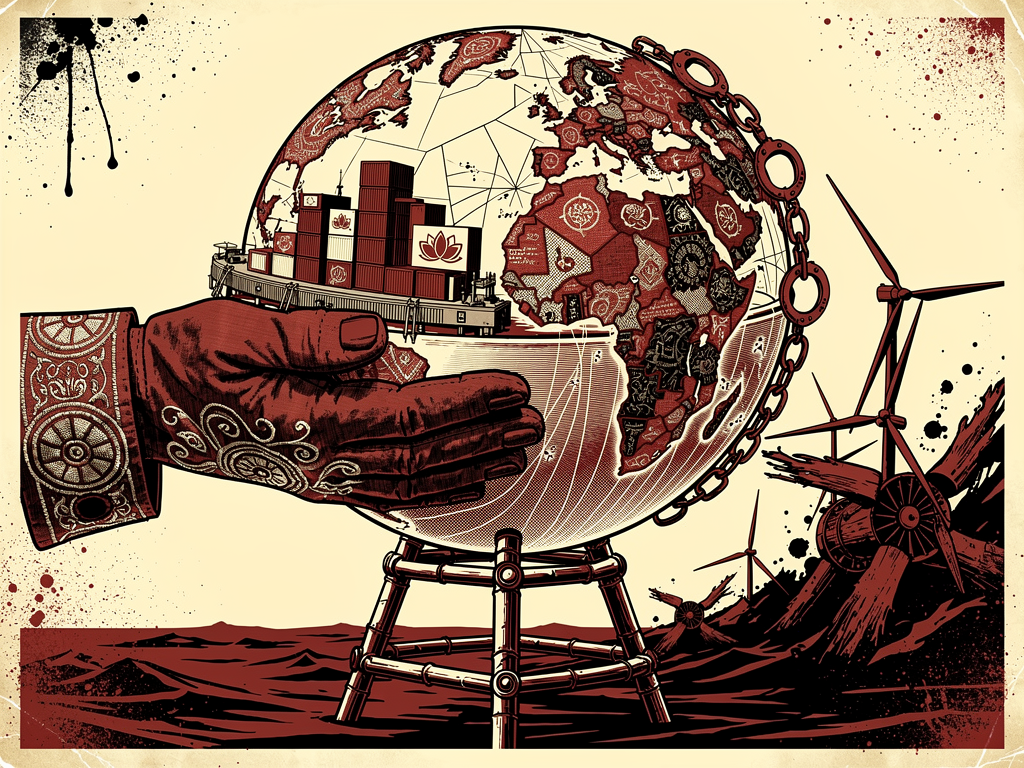
China Depicted as Passive Economic Actor to Enable Strategic Containment
A coordinated narrative has emerged across four Western media outlets between March 4, 2026, and April 14, 2026, reframing China’s foreign policy as narrowly...
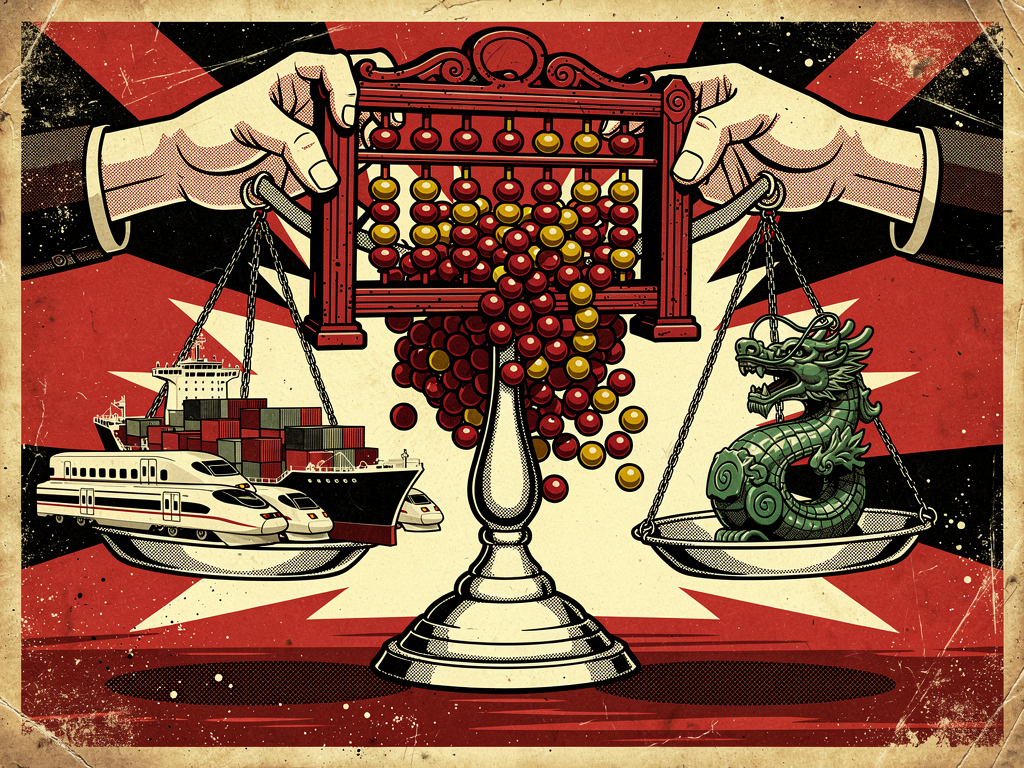
PSYOP: Contain China's Global Standing - Transactional Framing Mitigates Threat
A newly detected PSYOP, designated "Contain China's Global Standing," was active between March 8, 2026, and March 11, 2026. This operation disseminates a nar...
Sources & Articles
2026-10-09T11:10:00.000Z
2026-09-19T10:03:00.000Z
2026-07-16T11:01:00.000Z
2026-07-13T13:14:00.000Z
2026-10-07T23:45:03.000Z
2026-09-01T22:21:51.000Z
2026-09-01T23:33:42.000Z
2026-07-08T01:27:00.000Z
2026-07-13T19:41:31.000Z
2026-07-06T18:27:36.000Z
Showing 10 of 33 articles