Pretext incidents · 1939 · Germany, Poland
The Gleiwitz incident
On the evening of 31 August 1939 an SS-led group seized the Gleiwitz radio station in Upper Silesia, broadcast a short message in Polish and left a drugged, dying man at the door, so that Germany could say Poland had attacked first. The staging is documented in Alfred Naujocks's sworn affidavit of 20 November 1945, which says Heydrich ordered it. The next day German forces invaded Poland, and Hitler cited Polish border incidents as justification.
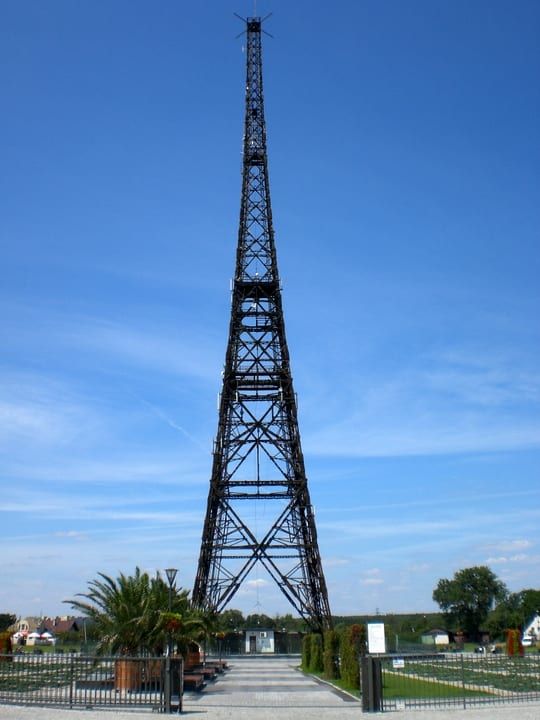

- Run by
- Nazi Germany
- Ordered by SS security chief Reinhard Heydrich, per Naujocks's affidavit
- Gleiwitz, 8 pm, 31 August 1939
- 1 radio station
- Naujocks says he took "five or six other SD-men"; one of the staged incidents on the border
- German invasion of Poland
- 1 September 1939
- Hitler cited Polish border incidents in his Reichstag speech
- Time to exposure
- 20 Nov 1945
- Naujocks swears an affidavit at Nuremberg describing the order and the staging
Timeline
c. 10 Aug 1939 · It worked
According to his affidavit, Heydrich personally orders Naujocks to simulate an attack on the Gleiwitz radio station and make it appear that Poles were the attackers, saying: "Practical proof is needed for these attacks of the Poles" for the foreign press and German propaganda.
22 Aug 1939 · Context
Hitler tells his generals: "The victor will not be asked whether he told the truth" (as quoted by Wirtz and Godson).
30 Aug 1939 · It worked
The Gestapo arrests Franciszek Honiok, a 43-year-old unmarried Upper Silesian farmer known for sympathising with Poles. He is later killed and left at the station (Wikipedia, citing a 2009 Telegraph report).
31 Aug 1939 · It worked
At about 8 pm the group seizes the station and broadcasts a three-to-four-minute speech in Polish over an emergency transmitter, a short anti-German message whose wording accounts give differently; Naujocks says they fired some pistol shots and left. A man, alive but unconscious and in civilian clothes with blood on his face, is laid at the entrance as the "Polish" casualty. The code name for such men in the affidavit is "Canned Goods".
1 Sep 1939 · It worked
German forces invade Poland. Hitler's Reichstag speech does not mention Gleiwitz by name but cites Polish border incidents, three of them very serious, as justification. American correspondents are brought to the scene, but no neutral party is allowed a detailed investigation.
20 Nov 1945 · Exposed
Naujocks swears an affidavit at Nuremberg (document PS-2751) saying Heydrich ordered the Gleiwitz operation and that Gestapo chief Heinrich Müller supplied the "canned goods".
30 Nov 1945 · Exposed
At Nuremberg, Erwin von Lahousen testifies that his Abwehr division was one of two ordered to supply Polish uniforms, equipment and identity cards, and that Admiral Canaris later told him concentration camp prisoners had been disguised in them.
The pretext was prepared in advance and staged within hours of the invasion, but the public account was the only one the world heard until 1945.
“Practical proof is needed for these attacks of the Poles ...”
The playbook
- 1
Manufactured incident
SS men staged an attack on a German radio station and left a drugged man, who was shot, to be shown as a Polish raider.
- 2
Hidden messenger
The attackers posed as Poles and broadcast in Polish, so the German state could present itself as the victim.
- 3
Win before the facts
Invasion followed within hours, before any neutral investigator could examine the scene.
Through the FATE framework
- Focus6/10
Attention was directed to a border provocation by Poland at the moment the invasion began.
- Authority5/10
The state itself presented the event; its broadcasters and police shaped the first account.
- Tribe7/10
German and Polish identities were set against each other, with Germany cast as the attacked party.
- Emotion6/10
The staged attack was meant to arouse anger and fear of Polish aggression.
Propaganda techniques used
Same playbook today
The same playbook can be run by anyone, on any side. We list every current PSYOP that matches The Gleiwitz incident, whoever is behind it.
No live PSYOP we track matches this playbook right now. When one does, it will appear here.