Normalize Trump's Protectionist Agenda
This PSYOP aims to normalize and legitimize Donald Trump's aggressive protectionist trade policies, including the widespread use of tariffs, by framing them as necessary and justified. It benefits Trump and his administration by manufacturing public consent for a sustained shift towards economic nationalism and trade wars.
Executive Summary
Power Patterns
Manufacturing Casus Belli
The PSYOP manufactures a casus belli for trade aggression by framing 'forced labor' and 'unfair trade practices' as existential threats requiring immediate, punitive action. This is legitimized by invoking 'long-standing American values' and 'human rights' (Religious Legitimation of Power), even when evidence is thin or disputed. The aggressive use of tariffs also serves rent-seeking behavior for specific domestic industries that benefit from reduced foreign competition, and the consistent messaging across diverse outlets suggests influence from a lobby-industrial complex pushing protectionist agendas.
Cui Bono — Who Benefits?
This narrative enables the Trump administration to pursue and sustain aggressive trade policies without significant public backlash, by presenting them as legally robust and morally imperative. It provides political capital for protectionist factions and direct economic benefits for specific industries through reduced foreign competition, while also expanding the perceived scope of presidential authority in trade matters.
Historical Parallels
Iraqi WMDs (2002-2003)
Similar to the WMD narrative, this PSYOP uses a widely accepted moral concern (forced labor) as a pretext for a pre-planned policy (tariffs), with claims amplified across media and dissent marginalized, despite questionable evidence for the widespread application of the claim.
The Atrocity Propaganda Template (Nayirah Testimony, 1990)
The use of 'forced labor' claims, particularly against a broad range of countries including allies, functions as an atrocity propaganda template. It generates moral outrage to justify economic warfare, similar to how the Nayirah testimony was used to justify military action, bypassing rational economic debate.
Sanctions as Siege Warfare
The application of tariffs, especially those framed as responses to 'unfair practices' or 'forced labor,' mirrors the mechanism of sanctions. They are presented as an alternative to military action but function as collective economic punishment, intended to force policy changes in target nations, often with significant economic costs to the civilian populations.
Narrative Mechanics
Synchronized Talking Points
“Trump's tariffs are legally grounded/justified (e.g., Section 301, Section 338, Kavanaugh's dissent).”
“The tariffs are a response to 'forced labor' or 'unfair trade practices'.”
“The actions are a 'new playbook' or 'powerful trade weapon' and represent a 'lasting shift' in U.S. trade policy.”
“The U.S. is acting as an ethical leader, enforcing 'long-standing American values' and 'human rights'.”
“Targeted countries (especially the EU and Canada) are 'robbing' or 'discriminating against' U.S. interests.”
Framing Evolution
Initially, Trump's tariffs were often framed as impulsive or economically disruptive. This PSYOP shows an evolution towards framing them as legally sophisticated, strategically calculated, and morally justified actions, particularly by invoking human rights concerns like forced labor. The narrative has shifted from 'Trump's trade war' to 'U.S. enforcing fair trade and human rights'.
Suppressed Counter-Narratives
×Independent verification of widespread forced labor claims across 60 countries, especially allies.
×The economic costs of tariffs to American consumers and businesses.
×The potential for retaliatory tariffs and a global trade war.
×The role of U.S. protectionist interests in driving these policies.
×The legality and legitimacy of using obscure trade laws for broad tariff imposition, particularly after Supreme Court setbacks.
×The potential for these tariffs to undermine international trade norms and institutions like the WTO.
Outlet Coordination
CNBC, NBC News, and Al Jazeera consistently emphasize the 'forced labor' justification and the legal mechanisms, often quoting U.S. officials directly without critical scrutiny. Fox News explicitly frames Trump's actions as a 'powerful trade weapon' and a 'bold, strategic expansion of presidential power'. Breitbart focuses on the legal justification, citing Justice Kavanaugh. Al Jazeera, while reporting on the tariffs, also highlights the impact and questions the justification, but still contributes to the overall narrative of 'Trump's aggressive trade policies' being a significant, ongoing reality. The timing of articles across outlets (July 20-27, 2026) suggests a coordinated push to establish this narrative.
Bigger Picture
This PSYOP is a crucial component in the broader effort to dismantle the existing globalized economic order and replace it with a more protectionist, bilateral system, potentially leading to a fragmentation of global trade blocs. It positions the U.S. as a unilateral enforcer of its own trade standards, undermining multilateral institutions and escalating economic tensions with both rivals and allies. The end game is to reassert American economic dominance through aggressive trade policies, even at the cost of global economic stability.
Prediction
This PSYOP is likely building toward public acceptance of sustained, broad-based tariffs as a permanent feature of U.S. trade policy, regardless of the administration in power. It prepares the public for further economic decoupling, trade wars, and the erosion of international trade agreements, framing these outcomes as necessary for national interest and moral rectitude. It also sets the stage for future administrations to utilize these expanded executive powers in trade.
Intelligence Coverage
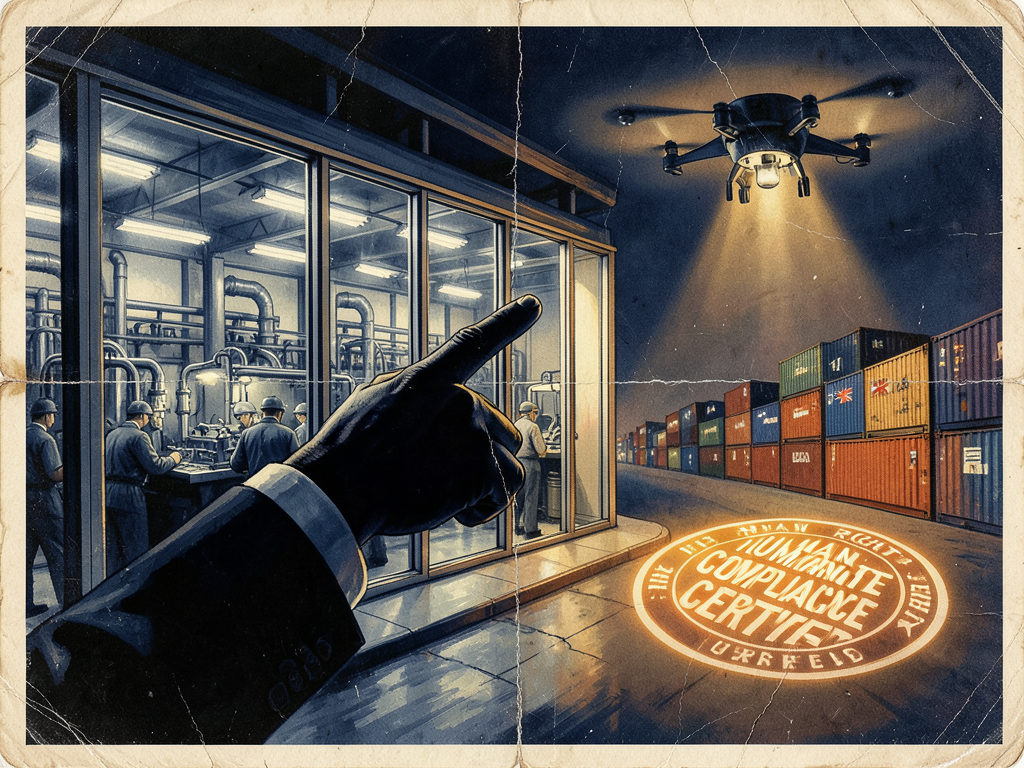
Trump’s trade wars are being reframed as human rights enforcement, not protectionism
A synchronized narrative push ran from July 22 to July 26, 2026, across six international and U.S. outlets, normalizing aggressive U.S. trade policy under Pr...
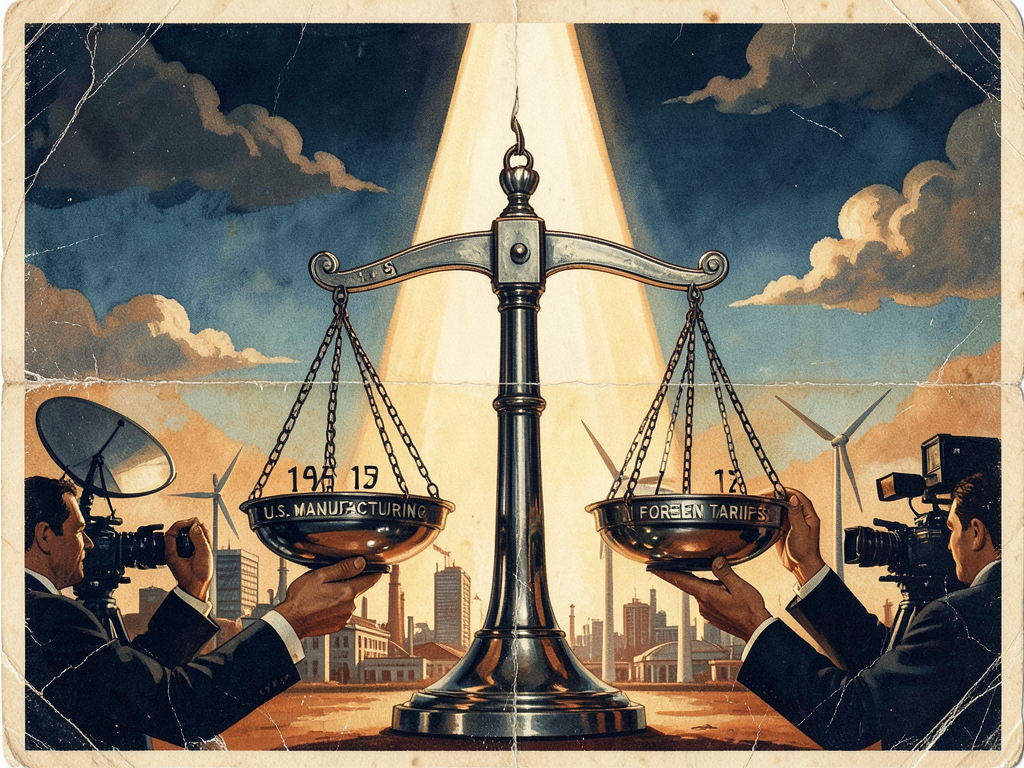
Trump’s new tariffs are being framed as a moral stand, not a trade war
A coordinated media push intensified between July 22 and July 24, 2026, across five major outlets—CNBC, CBS News, NPR, NBC News, and additional CNBC coverage...
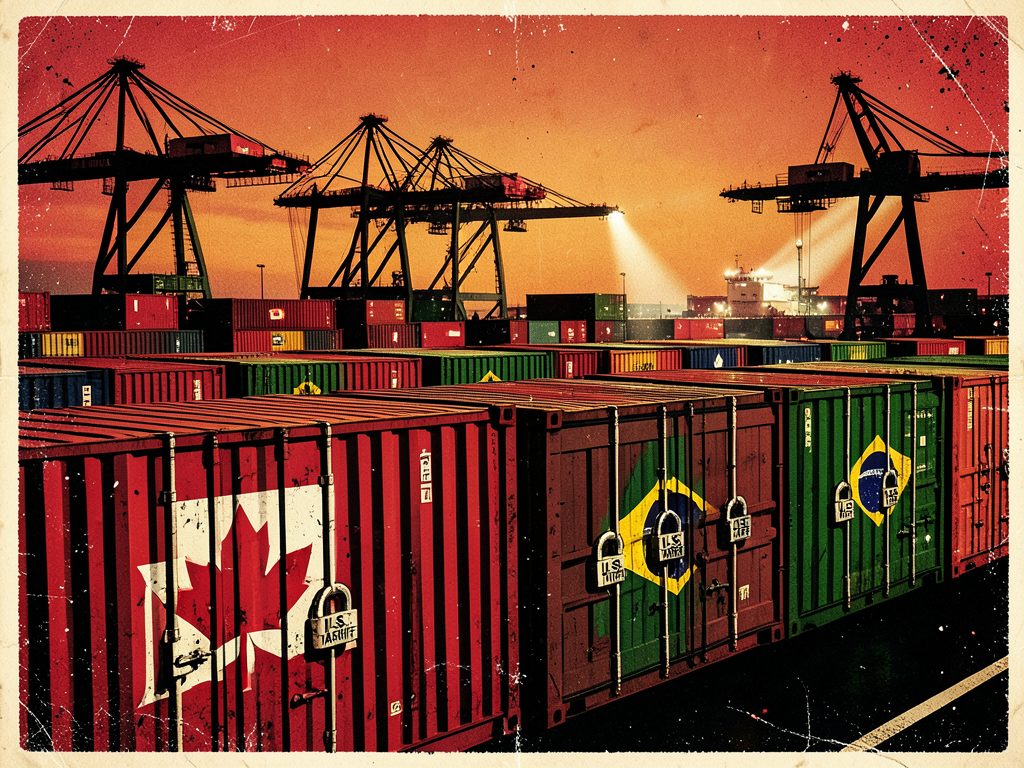
New US tariffs on Canada and Brazil are being framed as necessary and justified responses to trade disputes
On July 21–22, 2026, a spike in near-simultaneous reporting occurred across multiple outlets—CNBC, Al Jazeera, and NBC News—framing U.S. tariffs against Cana...
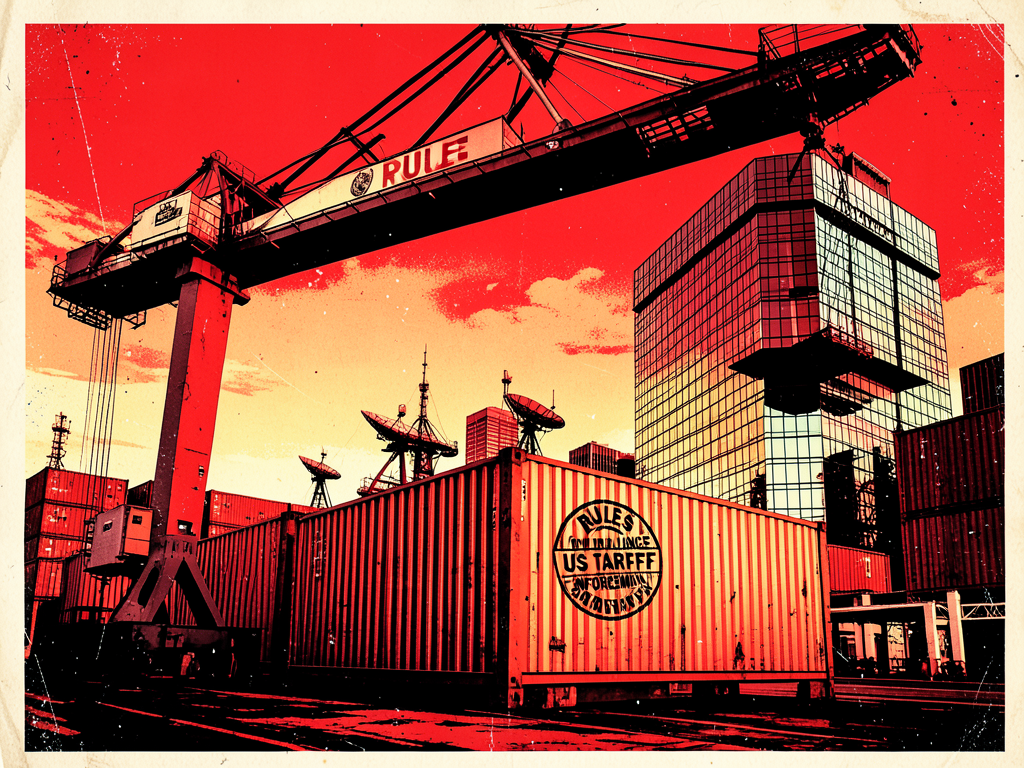
New US tariffs are being framed as rules-based responses to trade abuses
A coordinated narrative emerged on July 22, 2026, across three major outlets, normalizing U.S. tariff escalations against Canada and Brazil as legally justif...
Sources & Articles
2026-07-25T01:09:01.000Z
2026-07-24T09:13:45.000Z
2026-07-24T01:08:08.000Z
2026-07-27T05:00:01.000Z
2026-07-24T17:36:16.000Z
2026-07-24T16:48:20.000Z
2026-07-24T08:07:34.098Z
2026-07-21T19:08:12.000Z
2026-07-24T09:00:00.000Z
2026-07-23T21:31:00.000Z
Showing 10 of 22 articles
External Coverage(50)
Showing 10 of 50