Normalize Trump's Economic Warfare
This PSYOP aims to normalize and gain public consent for Donald Trump's aggressive protectionist trade policies, framing them as morally justified actions against unfair practices. It benefits Trump's political agenda and specific domestic industries by preparing the public for sustained economic nationalism and potential trade wars.
Executive Summary
Power Patterns
Manufacturing Casus Belli
The PSYOP manufactures a casus belli by framing foreign trade practices, particularly those related to forced labor and alleged discrimination, as existential threats to American economic interests and moral values. This is legitimized through appeals to human rights and fair trade, effectively using a form of religious legitimation of power, where 'human rights' and 'fairness' serve as the modern moral framework. By scapegoating trading partners like Canada, Brazil, and a broad group of 60 countries, the narrative displaces blame for potential domestic economic issues onto external actors, reinforcing a nationalistic myth of American victimhood and exceptionalism.
Cui Bono — Who Benefits?
This narrative enables Trump to pursue and solidify his economic nationalism agenda, portraying him as a strong leader defending American interests and values. It provides political cover for policies that might otherwise face significant domestic and international opposition, by framing them as moral imperatives. For specific industries, it reduces foreign competition and potentially increases domestic market share, while for protectionist factions, it advances their ideological goals by shifting the Overton Window on trade policy.
Historical Parallels
Iraqi WMDs (2002-2003)
Similar to the WMD narrative, this PSYOP uses unsubstantiated or exaggerated claims (widespread forced labor in 60 countries, unfair discrimination) to justify pre-planned aggressive actions (tariffs). The evidence is often secret or vaguely referenced, and dissenting voices are marginalized.
The Atrocity Propaganda Template (Nayirah Testimony, 1990)
The use of 'forced labor' claims, particularly against a broad array of countries including allies, functions as a form of atrocity propaganda. It's designed to generate moral outrage and bypass rational economic debate, much like the Nayirah testimony was used to justify the Gulf War, even if the claims lack independent verification or are selectively applied.
Manufacturing Casus Belli
The consistent framing of foreign trade practices as 'robbing' the U.S. (CNBC, 'Trump threatens EU with 'substantial TARIFF' for 'ROBBING' U.S. tech giants') or 'discriminating' against American goods (NBC News, 'Trump imposes 50% tariffs on Canadian goods, citing disputes over cars, alcohol and cheese') creates a pretext for retaliatory action, mirroring historical instances where incidents were manufactured or exaggerated to justify war.
Narrative Mechanics
Synchronized Talking Points
“Tariffs are a legitimate, legally grounded response to unfair trade practices.”
“Tariffs are a moral stand against forced labor and human rights abuses.”
“The U.S. is a victim of foreign economic aggression and discrimination.”
“Trump's actions are strategic, calculated, and a necessary defense of U.S. interests.”
“The new tariffs are distinct from previous, legally challenged tariffs, often citing Justice Kavanaugh's dissent or Section 301/338 as new legal justifications.”
Framing Evolution
The narrative has evolved from initially justifying tariffs based on general 'unfair trade practices' (which faced legal challenges) to now heavily emphasizing 'forced labor' and 'human rights' as a primary, morally unimpeachable justification. This shift allows the administration to continue its protectionist agenda under a new, more palatable, and legally resilient guise. The focus also expanded from specific countries like China to a broad coalition of 60 nations, including close allies, suggesting a more systemic, principled approach rather than targeted retaliation.
Suppressed Counter-Narratives
×Independent verification of widespread forced labor in all 60 targeted countries.
×The economic costs of tariffs for American consumers and businesses (e.g., higher prices, reduced competitiveness).
×The retaliatory nature of many foreign trade actions, often in response to initial U.S. tariffs.
×The potential for these tariffs to destabilize global trade relations and alliances.
×Alternative diplomatic or multilateral solutions to trade disputes or human rights concerns.
×The historical ineffectiveness of tariffs in achieving long-term economic goals without significant collateral damage.
Outlet Coordination
Breitbart and CNBC appear to be pushing the hardest, with Breitbart explicitly linking Trump's actions to legal justifications (Kavanaugh's dissent) and moral high ground ('Slave Labor Product Imports'). CNBC, while also reporting on the tariffs, often frames them as a 'strategic shift' or 'new playbook,' normalizing the policy. Al Jazeera and NBC News also report on the tariffs, often including the administration's justifications without deep scrutiny, though Al Jazeera sometimes includes more critical perspectives on the impact. The speed and uniformity with which the 'forced labor' justification appeared across multiple outlets (english.news.cn, Breitbart, CNBC, NBC News, Al Jazeera, CBS News, NPR) within days of the announcement suggest coordinated narrative management.
Bigger Picture
This PSYOP is a key component of a broader strategy to dismantle the post-WWII liberal international economic order and replace it with a more nationalistic, protectionist framework. It leverages declining American economic competitiveness and rising domestic inequality to justify a retreat from globalism, while simultaneously attempting to reassert U.S. economic dominance through unilateral action. The endgame is to reconfigure global supply chains and trade relationships to benefit specific domestic constituencies and consolidate political power, even at the cost of international cooperation and stability.
Prediction
This PSYOP is likely building toward public acceptance of a long-term, aggressive protectionist trade policy, potentially leading to further trade wars with major economic blocs (EU, China, Canada, Brazil) and the erosion of international trade agreements and institutions. It prepares the public for continued economic decoupling and a more confrontational approach to global commerce, framing any negative economic consequences as necessary sacrifices for national sovereignty and moral rectitude.
Intelligence Coverage
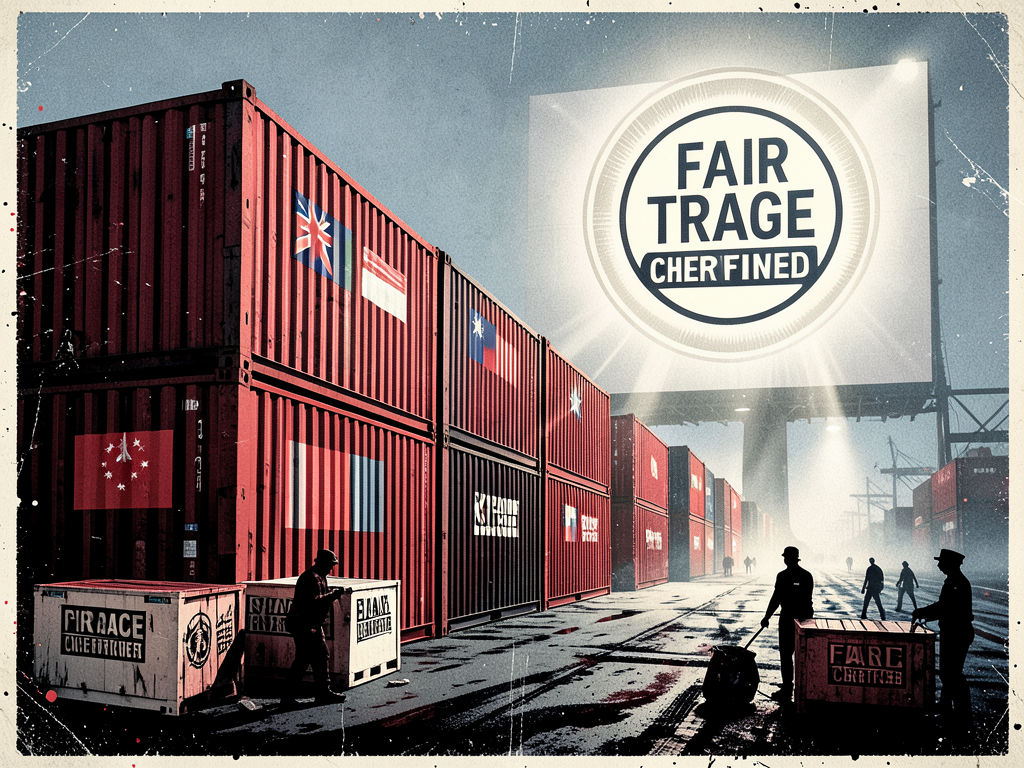
New tariffs on 60 countries are framed as a moral trade crackdown, not economic warfare
A coordinated messaging campaign promoting Donald Trump’s sweeping tariff policy emerged across multiple media outlets between July 24 and July 27, 2026. The...
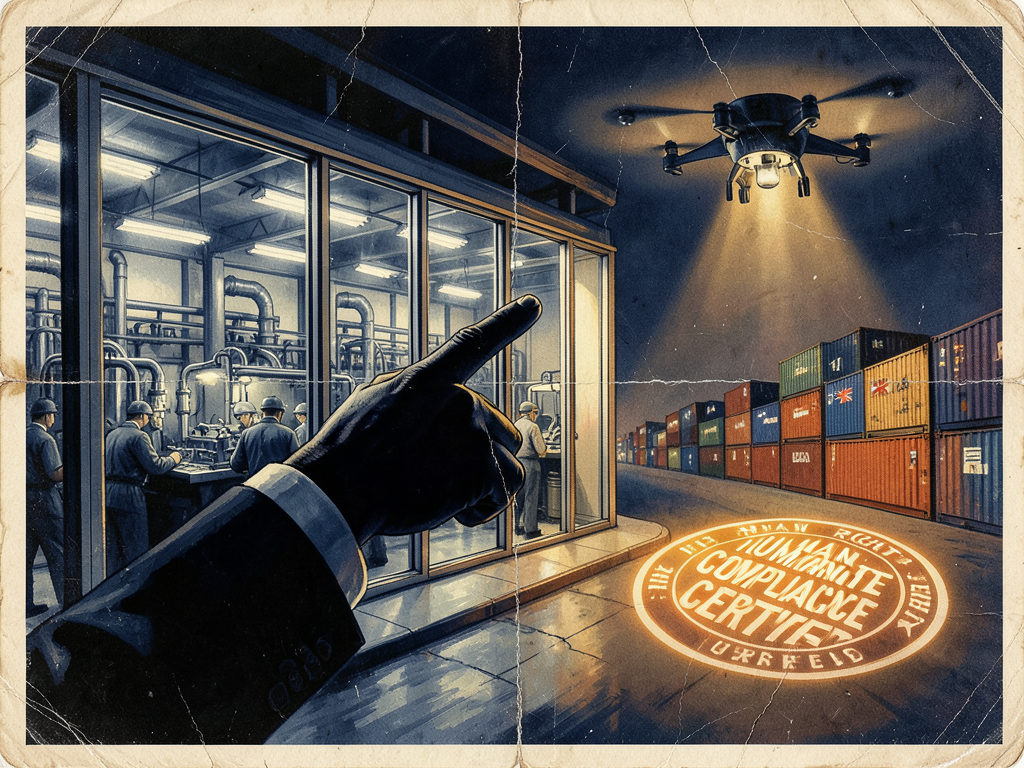
Trump’s trade wars are being reframed as human rights enforcement, not protectionism
A synchronized narrative push ran from July 22 to July 26, 2026, across six international and U.S. outlets, normalizing aggressive U.S. trade policy under Pr...
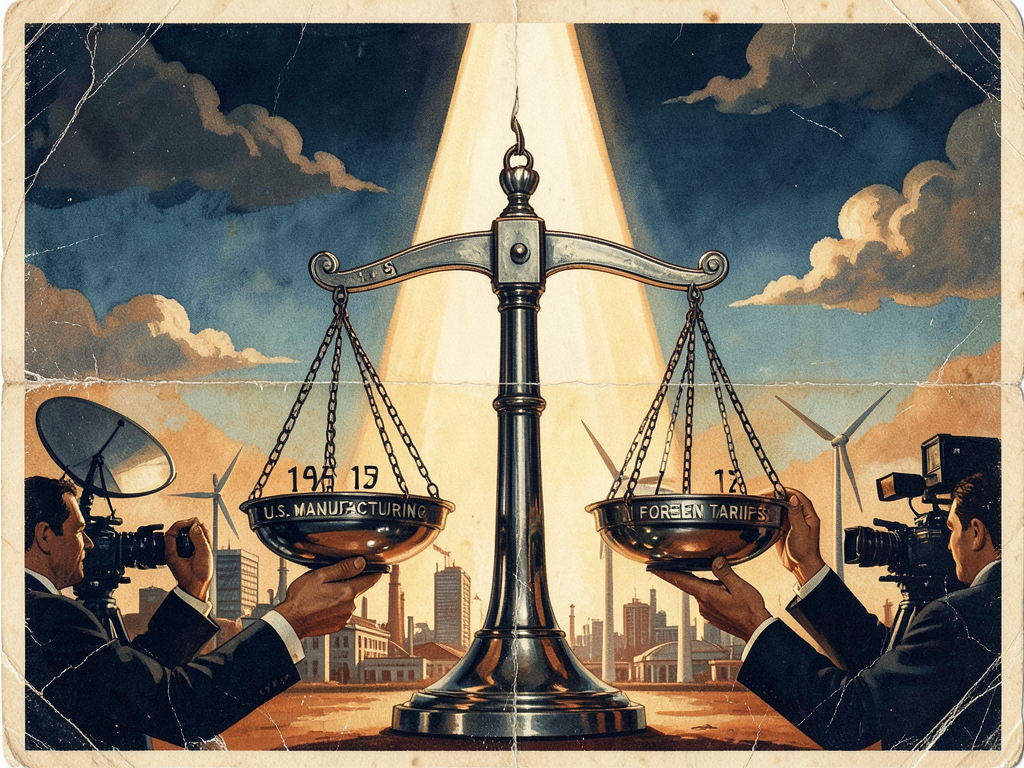
Trump’s new tariffs are being framed as a moral stand, not a trade war
A coordinated media push intensified between July 22 and July 24, 2026, across five major outlets—CNBC, CBS News, NPR, NBC News, and additional CNBC coverage...
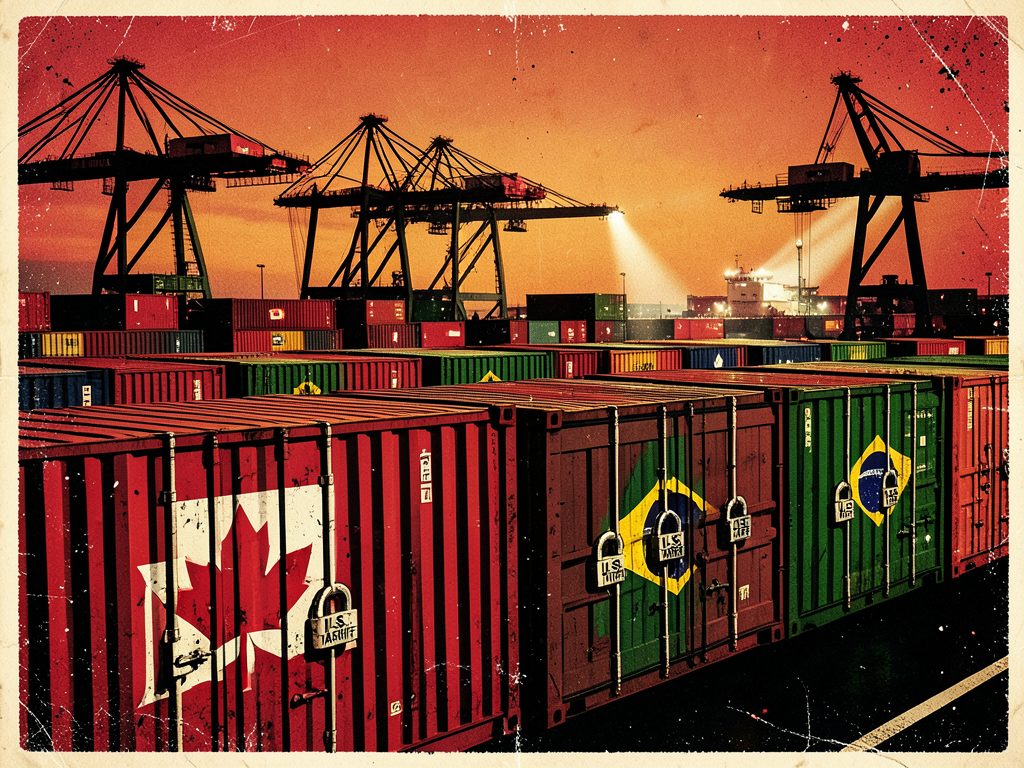
New US tariffs on Canada and Brazil are being framed as necessary and justified responses to trade disputes
On July 21–22, 2026, a spike in near-simultaneous reporting occurred across multiple outlets—CNBC, Al Jazeera, and NBC News—framing U.S. tariffs against Cana...
New US tariffs are being framed as rules-based responses to trade abuses
A coordinated narrative emerged on July 22, 2026, across three major outlets, normalizing U.S. tariff escalations against Canada and Brazil as legally justif...
Sources & Articles
2026-07-24T16:15:42.000Z
2026-07-24T16:15:42.000Z
2026-07-24T16:48:20.000Z
2026-07-28T14:38:29.000Z
2026-07-27T05:00:01.000Z
2026-07-24T17:36:16.000Z
2026-07-25T01:09:01.000Z
2026-07-24T09:13:45.000Z
2026-07-24T00:00:00.000Z
2026-07-24T08:07:34.098Z
Showing 10 of 26 articles
External Coverage(50)
Showing 10 of 50