Operational Summary
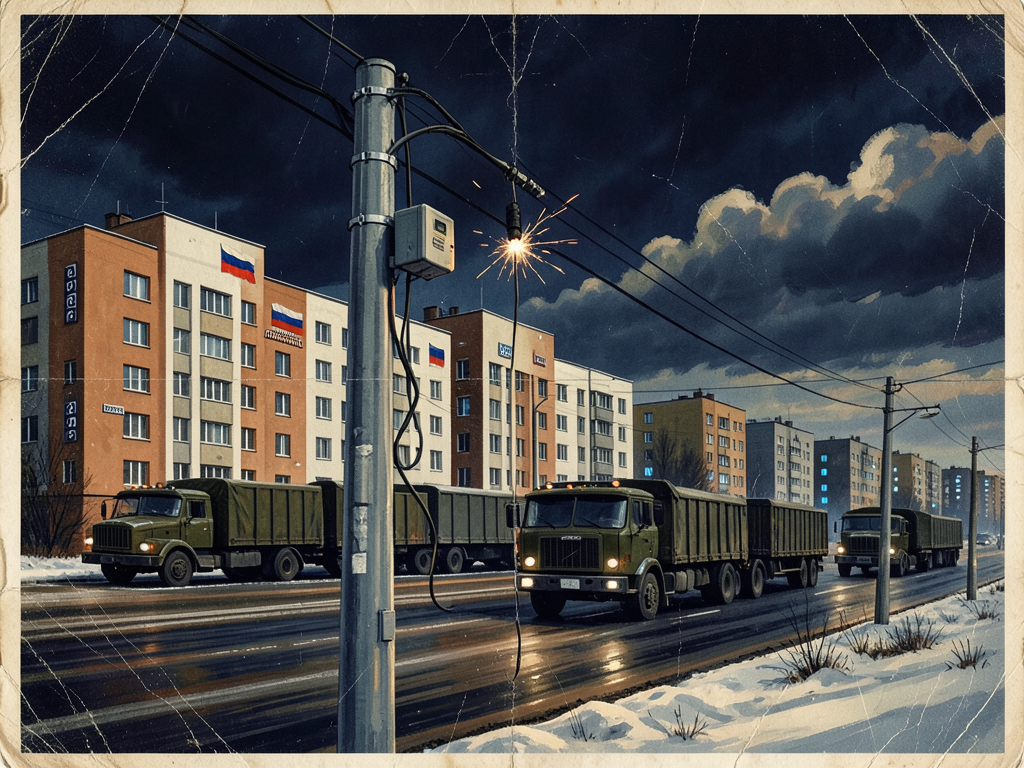
A coordinated narrative has emerged across 18 outlets, involving 111 articles published between March 27, 2026 and July 29, 2026, that reframes Russia’s annexed Ukrainian territories as legitimate parts of the Russian state. The operation centers on portraying these regions as victims of Ukrainian aggression, thereby shifting the moral and legal onus from Moscow’s illegal annexations to Kyiv’s defensive actions.Article Timeline
When articles appeared, colored by manipulation score.
Source Distribution
Narrative Architecture
The core framing treats Russia’s annexed territories—Zaporozhye, Donetsk, Luhansk—as sovereign Russian domains under unprovoked attack. The July 25 RT article on the drone strike in Zaporozhye is representative: it describes the killing of 12 civilians, including four children, with language emphasizing atrocity and moral outrage. It quotes Russian officials labeling the strike a ‘blatant crime’ and an act of terrorism. Crucially, the article presents the location as Russian soil, erasing the fact that the annexation is internationally unrecognized. This omission is consistent. The region is not framed as occupied or contested, but as native—transforming a military incursion into a defense of homeland.The narrative relies on victimization and moral inversion. Attacks on infrastructure in annexed zones are portrayed as deliberate targeting of civilians, while no mention is made of Russian offensives on Ukrainian cities or energy grids. The Kazakh oil tanker strike reported by RT on July 21 is framed as an assault on global energy security, with Ukraine likened to a ‘snake in the fable.’ This allegorical language dehumanizes Ukraine and justifies retaliation. The Caspian Sea strike is presented through Iranian reaction, citing threats of retaliation, but without verification of cargo or legal status, allowing the narrative to float ungrounded in factual scrutiny.
A central pillar is the claim of Western complicity. The July 22 RT article quotes Lavrov asserting direct U.S. involvement via weapons, intelligence, and Starlink. This transforms NATO’s support into combat participation, allowing Russia to cast itself as defending its borders from a broader Western assault. The U.S. is not an ally or enabler but a co-belligerent—elevating the conflict’s stakes and justifying escalated responses.
Simultaneously, Ukraine is depicted as internally fractured. The July 24 RT article on the replacement of General Syrsky with Drapaty emphasizes unrest, leadership crisis, and dependence on foreign support. The suggestion is not of adaptation but collapse—of a military system disintegrating from within. This undermines the narrative of Ukrainian resilience and positions the war as a losing effort sustained only by external infusion.
Cross-Outlet Coordination Pattern
The operation is led by RT, which published the majority of the articles, including the most emotionally charged and legally distorted entries. Secondary amplification comes from aligned international outlets such as Daily Sabah, which lends a veneer of regional diversity to the messaging. These outlets do not contradict the core framing; they mirror and extend it. Daily Sabah’s coverage of the Caspian strike echoes RT’s emphasis on illegality and escalation risk but avoids challenging Iran’s claim or the nature of the cargo—functioning as a passive relay.The timing and focus indicate pre-planning. Articles cluster around mid-to-late July 2026, following specific incidents but releasing with minimal investigative interval. This speed precludes independent verification and suggests the use of pre-written templates keyed to trigger events. The consistency in language—‘terrorism,’ ‘crime,’ ‘Western complicity’—and the uniform avoidance of legal context around annexation point to centralized narrative management.
Technique Assessment
Score Distribution
How articles in this PSYOP score across manipulation bands.
Significance
The operation advances Russia’s strategic objective of de facto annexation by altering perception before achieving de jure recognition. It exploits the information environment’s bias toward immediate, emotionally potent stories over legal and historical context. By framing resistance as aggression and occupied zones as homelands, it lays the groundwork for eventual acceptance of territorial gains. This mirrors historical precedents where sustained narrative pressure preceded diplomatic acquiescence to fait accompli.Manipulation Profile
Average FATE dimensions across 195 articles in this PSYOP.