Legitimize Trump's Protectionist Policies
This PSYOP aims to legitimize Donald Trump's aggressive protectionist trade policies, particularly tariffs, by framing them as necessary and justified. It benefits Trump and his administration by manufacturing public consent for a sustained shift towards economic nationalism.
Executive Summary
Power Patterns
Manufacturing Casus Belli
The PSYOP manufactures a casus belli for trade wars by framing foreign trade practices (forced labor, alleged discrimination) as moral transgressions or economic attacks, justifying aggressive tariff responses. The invocation of 'forced labor' serves as a religious legitimation of power, cloaking economic protectionism in humanitarian concerns, making the tariffs appear morally righteous. This also contributes to myth-making as state formation, reinforcing a national identity of the U.S. as a moral arbiter and economic protector, while shifting the consent-deception-coercion cycle from deception (tariffs as economic tools) to a more coercive phase (tariffs as moral imperatives).
Cui Bono — Who Benefits?
This narrative enables Trump and his administration to implement and sustain protectionist trade policies, including tariffs, by manufacturing public consent. By framing these actions as legally sound, morally justified (e.g., fighting forced labor), and strategically necessary responses to foreign aggression or unfairness, it neutralizes opposition and provides a mandate for a long-term shift towards economic nationalism. This allows them to pursue policies that might otherwise be seen as economically damaging or legally dubious, under the guise of national interest and ethical leadership.
Historical Parallels
Iraqi WMDs (2002-2003)
The use of 'forced labor' as a justification for tariffs, particularly against a wide range of countries including allies, mirrors the 'Iraqi WMDs' narrative where a threat (WMDs, forced labor) is amplified and generalized to justify a pre-determined policy (invasion, tariffs), with little independent verification of the claims.
The Humanitarian Intervention Template (Libya 2011, Syria 2011-present)
The invocation of humanitarian concerns ('forced labor') to justify economic aggression (tariffs) parallels the 'humanitarian intervention' template, where genuine or exaggerated human rights issues are used to legitimize actions that serve geopolitical or economic objectives, often with devastating consequences for the target populations.
The Nayirah Testimony
The focus on emotionally charged claims of 'forced labor' to generate public outrage and support for tariffs, without deep scrutiny or independent verification, echoes the 'atrocity propaganda' template seen in the Nayirah testimony, where emotionally overwhelming stories are used to bypass rational analysis and push for specific policy outcomes.
Narrative Mechanics
Synchronized Talking Points
“Tariffs are a justified response to 'forced labor' in 60 countries.”
“Tariffs are a principled, moral stand for human rights and fair trade.”
“Trump's new tariffs are legally grounded, often citing Section 301 or Section 338, and are a strategic workaround after Supreme Court setbacks.”
“The EU is unfairly targeting American tech companies, justifying retaliatory tariffs.”
“Canada is engaging in 'discriminatory trade practices' against the U.S., necessitating tariffs on Canadian goods.”
Framing Evolution
Initially, Trump's tariffs were often framed as impulsive or legally questionable. This PSYOP shows an evolution towards framing them as legally sophisticated, morally righteous (fighting forced labor), and strategically necessary responses to foreign unfairness or aggression. The narrative has shifted from 'Trump's tariffs' to 'U.S. tariffs' justified by 'long-standing American values' and 'ethical trade reform,' making them seem less about a single leader and more about national principle.
Suppressed Counter-Narratives
×Independent evidence or lack thereof for widespread forced labor in all 60 targeted countries.
×The economic costs of tariffs for American consumers and businesses.
×The potential for retaliatory tariffs and trade wars to harm global economic stability.
×The geopolitical motivations behind targeting specific countries or industries with tariffs.
×The fact that Canadian 'retaliation' was often a response to prior U.S. tariffs, not an unprovoked act.
×Alternative diplomatic or multilateral approaches to addressing trade disputes or labor concerns.
Outlet Coordination
Breitbart and CNBC appear to be pushing this narrative most aggressively, with Al Jazeera and NBC News also contributing. Breitbart focuses heavily on the 'slave labor' and legal justification angles, while CNBC emphasizes the 'new' and 'different' nature of these tariffs, portraying them as a lasting shift. Al Jazeera reports on the tariffs but often includes more critical perspectives, though still within the overall framing of Trump's actions. The timing of the articles, particularly around the '60 countries' announcement, suggests coordinated messaging to present the tariffs as a broad, justified, and legally robust policy.
Bigger Picture
This PSYOP is a crucial component of a broader strategy to reorient American foreign policy towards economic nationalism and protectionism. It seeks to dismantle the existing globalized trade order, which has underpinned American hegemony for decades, and replace it with a more transactional, bilateral approach. This shift is driven by a domestic political agenda that prioritizes perceived national economic interests over global integration, potentially leading to a fragmentation of the global economy and increased geopolitical friction.
Prediction
This PSYOP is likely building toward public acceptance of a sustained, aggressive trade war policy, potentially including withdrawal from international trade agreements or organizations. It prepares the public for higher consumer prices, supply chain disruptions, and increased international tensions as necessary sacrifices for 'fair trade' and 'moral leadership.' It also lays the groundwork for future administrations to continue using tariffs as a primary tool of foreign policy, regardless of their economic impact.
Intelligence Coverage
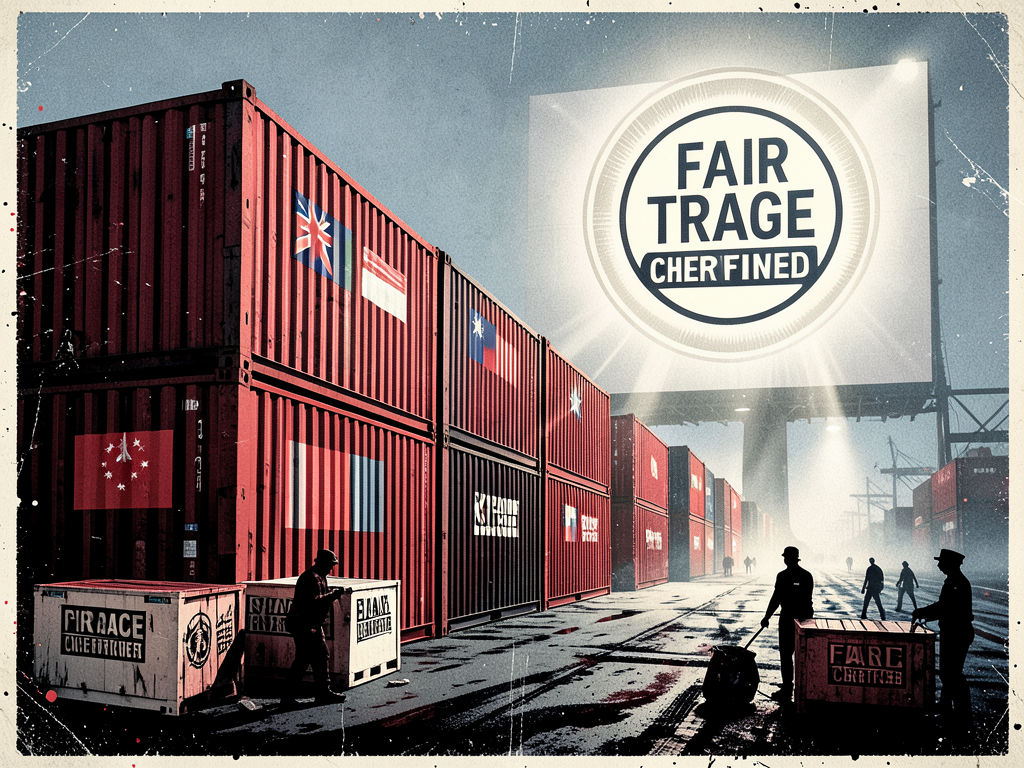
New tariffs on 60 countries are framed as a moral trade crackdown, not economic warfare
A coordinated messaging campaign promoting Donald Trump’s sweeping tariff policy emerged across multiple media outlets between July 24 and July 27, 2026. The...
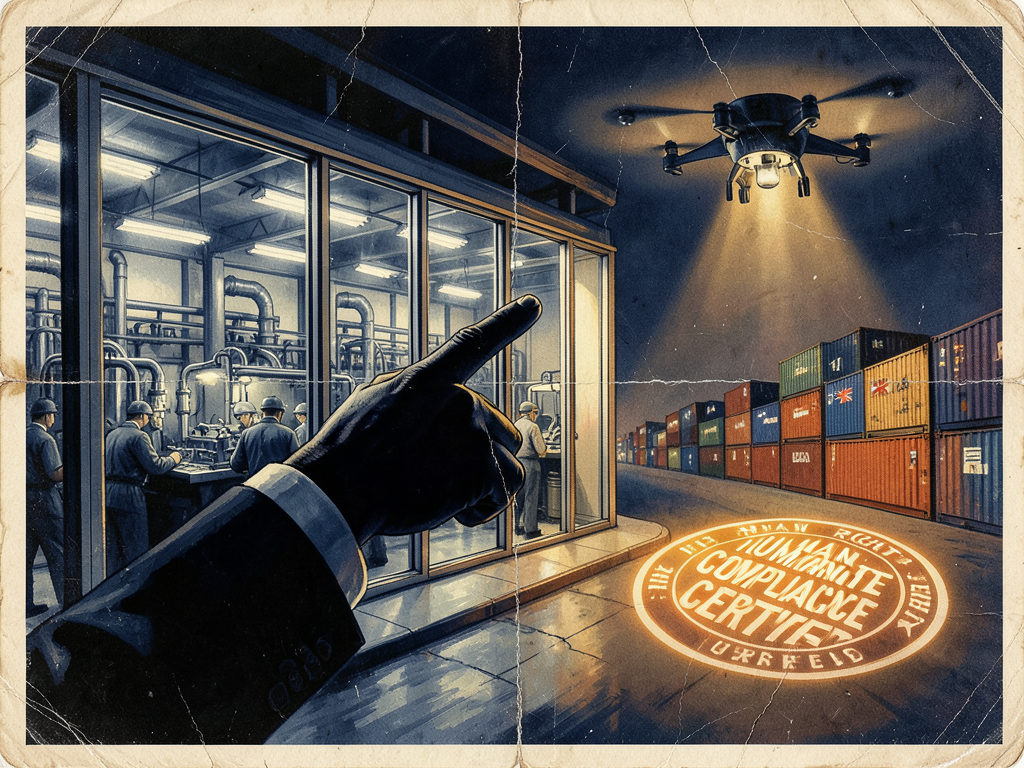
Trump’s trade wars are being reframed as human rights enforcement, not protectionism
A synchronized narrative push ran from July 22 to July 26, 2026, across six international and U.S. outlets, normalizing aggressive U.S. trade policy under Pr...
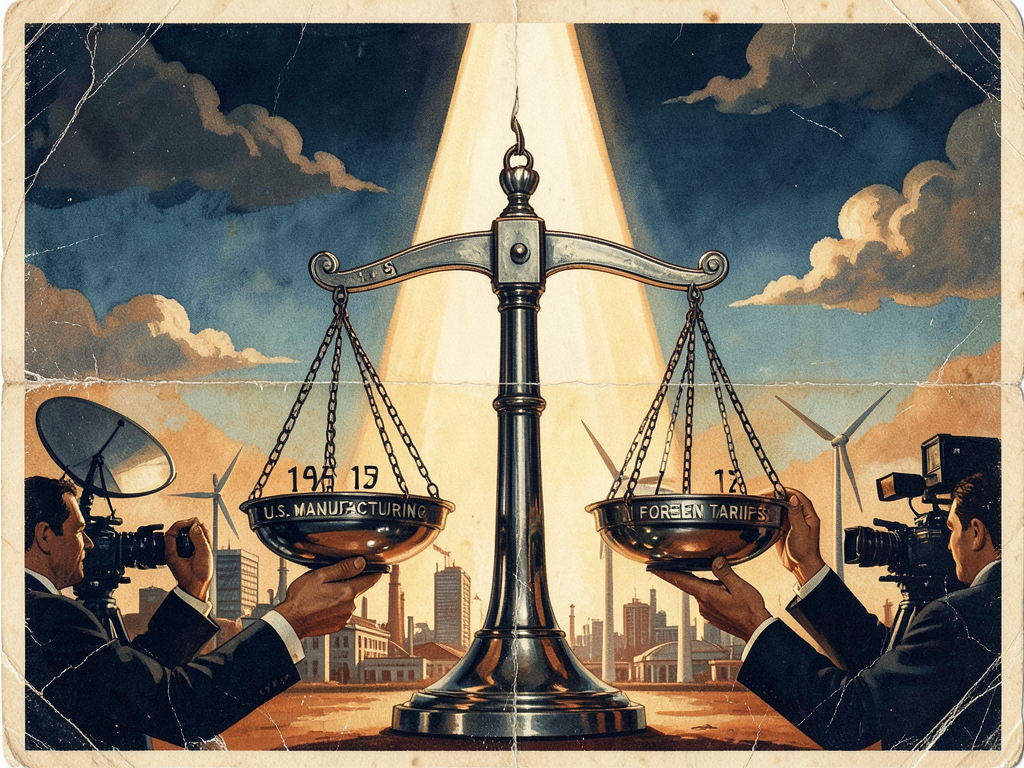
Trump’s new tariffs are being framed as a moral stand, not a trade war
A coordinated media push intensified between July 22 and July 24, 2026, across five major outlets—CNBC, CBS News, NPR, NBC News, and additional CNBC coverage...
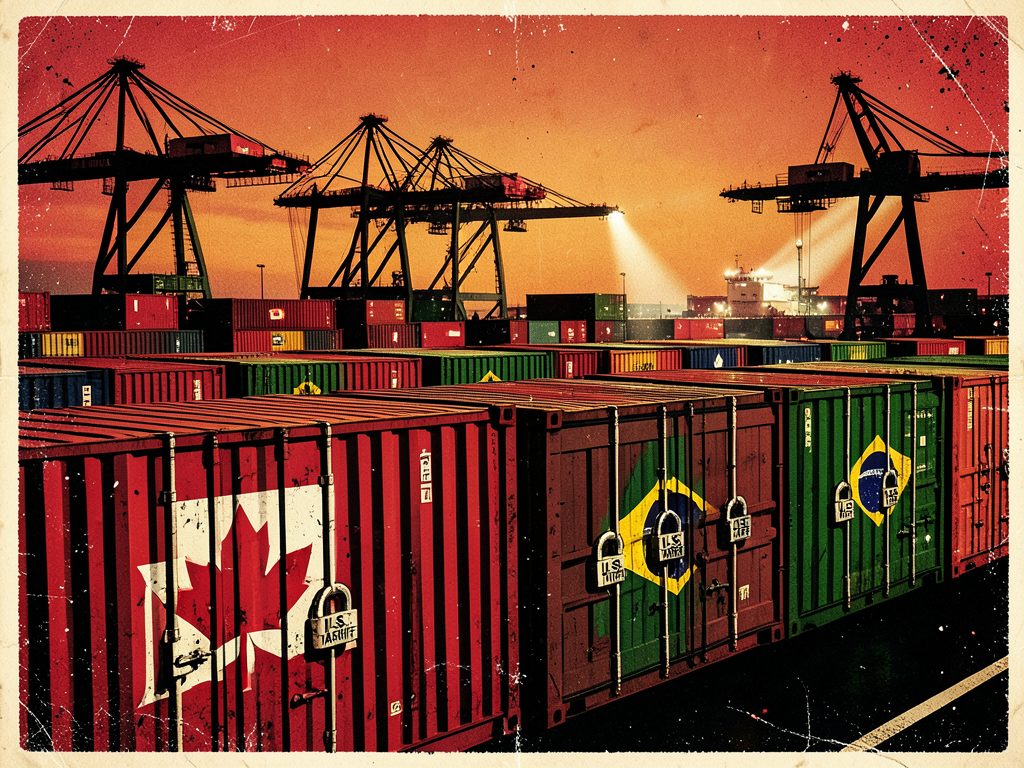
New US tariffs on Canada and Brazil are being framed as necessary and justified responses to trade disputes
On July 21–22, 2026, a spike in near-simultaneous reporting occurred across multiple outlets—CNBC, Al Jazeera, and NBC News—framing U.S. tariffs against Cana...
New US tariffs are being framed as rules-based responses to trade abuses
A coordinated narrative emerged on July 22, 2026, across three major outlets, normalizing U.S. tariff escalations against Canada and Brazil as legally justif...
Sources & Articles
2026-07-28T14:38:29.000Z
2026-07-27T05:00:01.000Z
2026-07-24T17:36:16.000Z
2026-07-25T01:09:01.000Z
2026-07-24T09:13:45.000Z
2026-07-24T01:08:08.000Z
2026-07-24T16:15:42.000Z
2026-07-24T16:48:20.000Z
2026-07-24T08:07:34.098Z
2026-07-21T19:08:12.000Z
Showing 10 of 24 articles
External Coverage(50)
Showing 10 of 50