Legitimize Russia's ZNPP Seizure
This PSYOP aims to legitimize Russia's seizure and continued occupation of the Zaporizhzhia Nuclear Power Plant by falsely blaming Ukraine for nuclear safety risks and portraying Russia as a protector, benefiting Russia's territorial claims and control over critical infrastructure.
Cluster signature
Peak 49 articles in May 2026
Bars run to 40, not to the tallest band.
Focus, Authority, Tribe, Emotion — averaged across 76 articles.
- Loaded Language59
- Appeal to Values22
- Exaggeration/Minimisation17
- Appeal to Authority12
- Appeal to Fear/Prejudice12
- Causal Oversimplification4
- Doubt4
- Flag Waving4
Bar length is square-root scaled so the tail stays readable; counts are exact.
PSYOP Hierarchy
Executive Summary
Power Patterns
Manufacturing Casus Belli
The PSYOP manufactures a casus belli by consistently framing Ukrainian actions, particularly drone strikes, as dangerous provocations that threaten nuclear safety, thereby justifying Russia's continued occupation of ZNPP. It scapegoats Ukraine for potential nuclear incidents, deflecting blame from Russia's military presence at the plant. Russian state media outlets like rt.com synchronize narratives that label Ukrainian actions as 'terrorism' and highlight alleged Ukrainian-backed 'neo-Nazi' plots, creating a consistent message across controlled channels.
Cui Bono — Who Benefits?
Russia benefits by legitimizing its occupation of the Zaporizhzhia Nuclear Power Plant, reducing international pressure, and creating a pretext for further military actions or annexations in Ukraine. By portraying Ukraine as reckless with nuclear safety, Russia aims to undermine international support for Kyiv and justify its own 'protective' presence. North Korea benefits by having its military involvement in Ukraine normalized and celebrated by Russia, enhancing its international standing as a legitimate military actor and solidifying its alliance with Russia, as seen in articles from theglobeandmail.com and en.yna.co.kr.
Historical Parallels
Iraqi WMDs (2002-2003)
This PSYOP parallels the Iraqi WMDs narrative by creating a threat (nuclear catastrophe at ZNPP) and attributing it to the target (Ukraine), using media amplification to justify pre-planned actions (Russian occupation and potential escalation), despite a lack of independent verification.
Manufacturing Casus Belli
The consistent framing of Ukrainian drone strikes as reckless and dangerous, particularly near nuclear facilities, mirrors historical patterns of manufacturing casus belli, where incidents (real or exaggerated) are used to justify pre-determined military actions, as seen in the Gulf of Tonkin incident.
Atrocity Propaganda Template (Nayirah Testimony, 1990)
The PSYOP uses emotionally charged claims, such as Ukraine 'grooming children for terror' (rt.com) or deliberately targeting UN aid convoys (smh.com.au), to generate outrage and support for Russian actions, similar to how the Nayirah testimony was used to build support for the Gulf War.
Narrative Mechanics
Synchronized Talking Points
“Ukrainian drone strikes are reckless, dangerous, and target civilians/critical infrastructure.”
“Ukraine is responsible for nuclear safety risks at ZNPP and Chornobyl.”
“Ukrainian actions are 'terrorist' acts or 'unprovoked aggression' against Russia.”
“Russia's military actions are justified retaliation or protective measures.”
“North Korea's military support for Russia is legitimate and honorable.”
Framing Evolution
Initially, the narrative focused on Russia's 'protection' of the ZNPP from Ukrainian shelling. It has evolved to actively blame Ukraine for nuclear safety risks, frame Ukrainian drone attacks as 'terrorism,' and even link Ukraine to alleged neo-Nazi plots inside Russia. Concurrently, it has incorporated the legitimization of North Korean military involvement as a heroic contribution to Russia's war effort, shifting from a defensive posture to an offensive one that justifies Russian and allied actions as responses to Ukrainian 'provocations.'
Suppressed Counter-Narratives
×The fact that Russia's occupation of ZNPP is the primary source of nuclear safety risk.
×The broader context of Russia's full-scale invasion of Ukraine as the initial act of aggression.
×Independent verification of Russian claims regarding Ukrainian 'terrorism' or neo-Nazi plots.
×The illegality of Russia's occupation under international law.
×The humanitarian and environmental consequences of Russia's own attacks on Ukraine.
Outlet Coordination
Russian state media outlets like rt.com consistently push the most extreme versions of the narrative, scoring high on the PSYOP scale (e.g., 'Grooming children for terror,' 'Kiev-backed neo-Nazis planned bomb attack'). Other outlets, including france24.com, smh.com.au, cbc.ca, and npr.org, while often reporting on Ukrainian drone strikes, tend to frame them as 'justified' retaliation, creating a 'controlled opposition' effect where the debate is about the proportionality of Ukrainian strikes rather than the legitimacy of Russia's occupation. The articles from en.yna.co.kr and theglobeandmail.com regarding North Korean troops show a coordinated effort to legitimize Russia's allies.
Bigger Picture
This PSYOP is a crucial component of Russia's broader strategy to consolidate its territorial gains in Ukraine and undermine international support for Kyiv. By portraying Ukraine as a reckless and dangerous actor, Russia seeks to normalize its occupation of Ukrainian territory and justify its continued aggression, while simultaneously bolstering its alliances with states like North Korea. The end game is to secure a permanent foothold in Ukraine, potentially through annexation, and to weaken the Western coalition supporting Kyiv.
Prediction
This PSYOP is likely building toward public acceptance of Russia's permanent control over the Zaporizhzhia Nuclear Power Plant and other occupied territories. It prepares the public for potential future escalations by Russia, framed as necessary responses to Ukrainian 'provocations' or 'terrorist acts.' It also lays the groundwork for further legitimization of Russia's alliances with countries like North Korea, potentially leading to increased military cooperation and a more solidified anti-Western bloc.
Intelligence Coverage

Normalize Ukraine AI Warfare: Coordinated Push to Legitimize Autonomous Combat Systems
A coordinated narrative campaign has emerged to normalize Ukraine’s use of AI-driven drone warfare, reframing it as an inevitable evolution of modern combat....
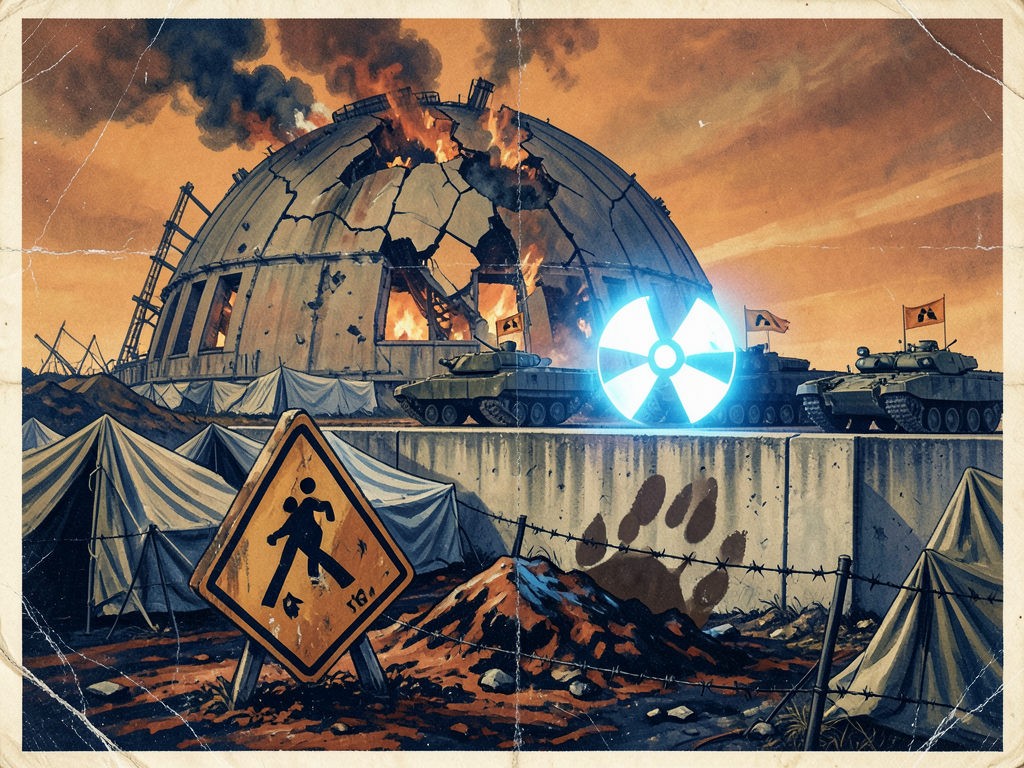
Detected PSYOP: Justify Russian Nuclear Occupation
A coordinated narrative effort has been identified from April 28 to May 14, 2026, designed to reframe Russian control of the Zaporizhzhia Nuclear Power Plant...

Detected PSYOP justifies Russian occupation of Zaporizhzhia nuclear plant
A coordinated narrative has been detected that reframes Russian occupation of the Zaporizhzhia Nuclear Power Plant as a necessary stabilizing force. This mes...

Normalizing AI Warfare in Ukraine Serves Western Military and Industrial Interests
A coordinated narrative has emerged across multiple international outlets between April 18, 2026, and May 1, 2026, promoting the adoption of AI-driven roboti...
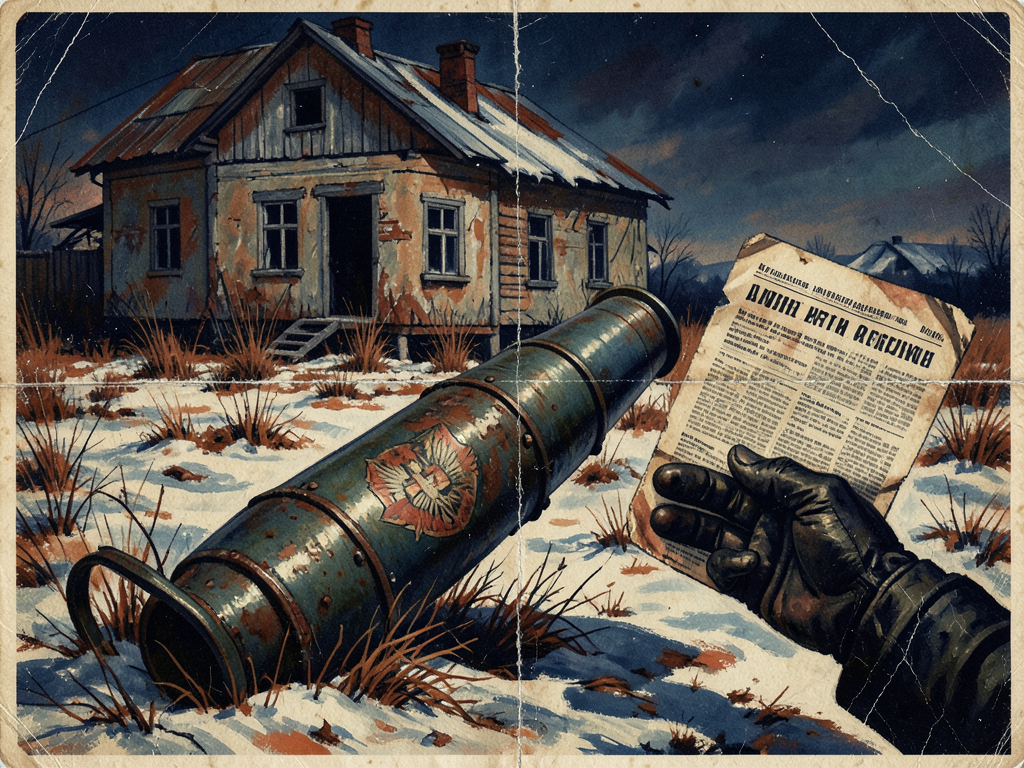
Manufacture Russian Casus Belli Narrative Escalates in Western Media
A coordinated narrative intensifying the framing of Ukrainian strikes on Russian territory as aggressive, escalatory acts has emerged across 18 articles in e...
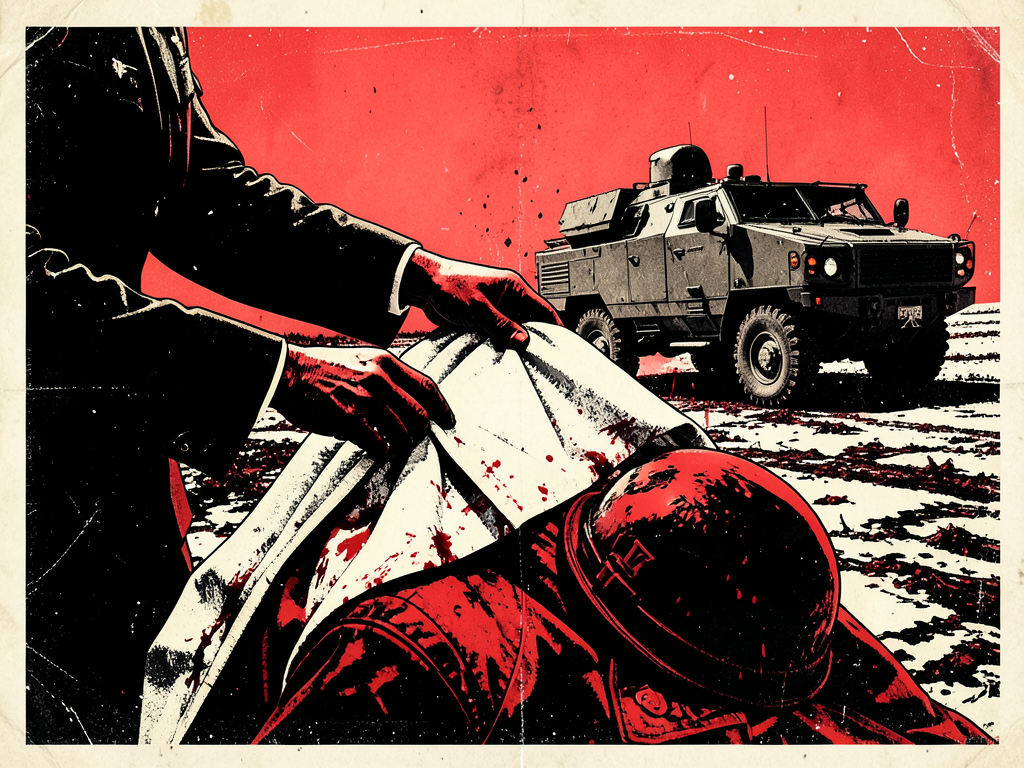
Sanitize North Korean Combat Deployment Psyop Observed Across Pro-Russian Outlets
A coordinated narrative emerged on April 26, 2026, across three outlets—The Globe and Mail, RT, and Yonhap News Agency’s English service—framing North Korean...
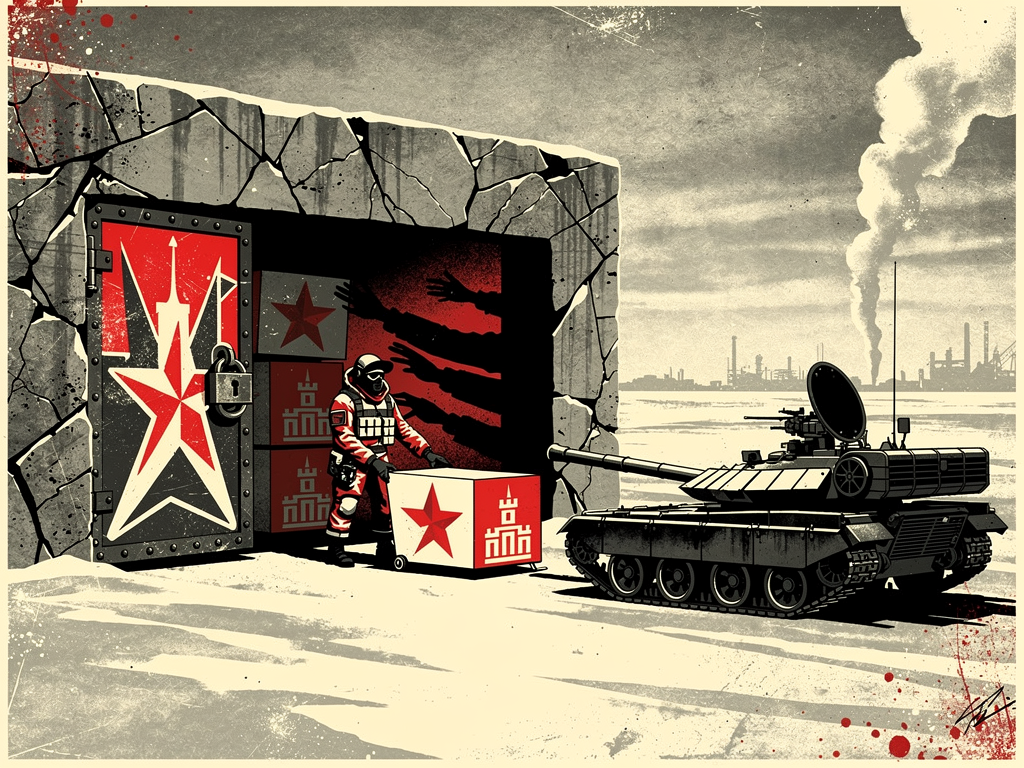
Detected PSYOP: Sanitize North Korean Combat Deployment in Ukraine
A coordinated narrative has emerged to legitimize and valorize North Korea’s military deployment in Ukraine on behalf of Russia. The PSYOP, detected across f...

Manufacture Russian Casus Belli: Coordinated Narrative Reframes Ukrainian Strikes as Aggression
A coordinated narrative has emerged across Western and Russian state-aligned media normalizing Ukrainian cross-border attacks on Russian energy infrastructur...
Manufacture Russian Casus Belli Detected in Coordinated Media Push
On April 17, 2026, a coordinated narrative emerged across four media outlets—BBC, CBS News, CBC, and RT—advancing a synchronized framing of Russian military ...
Sources & Articles
2026-07-26T12:46:53.000Z
2026-07-20T03:34:02.000Z
2026-07-15T20:43:49.000Z
May 18, 2026
May 10, 2026
May 17, 2026
May 18, 2026
May 18, 2026
Showing 10 of 76 articles