← Back to blog
PSYOP DetectedAugust 5, 2026

U.S.-Iran tensions are being framed as a crisis of Iran’s making, not U.S. escalation

PSYOP Intensity
6
30 articles17 outlets
Avg Manipulation
0out of 100
Noticeable — persuasion techniques worth noting

Operational Summary

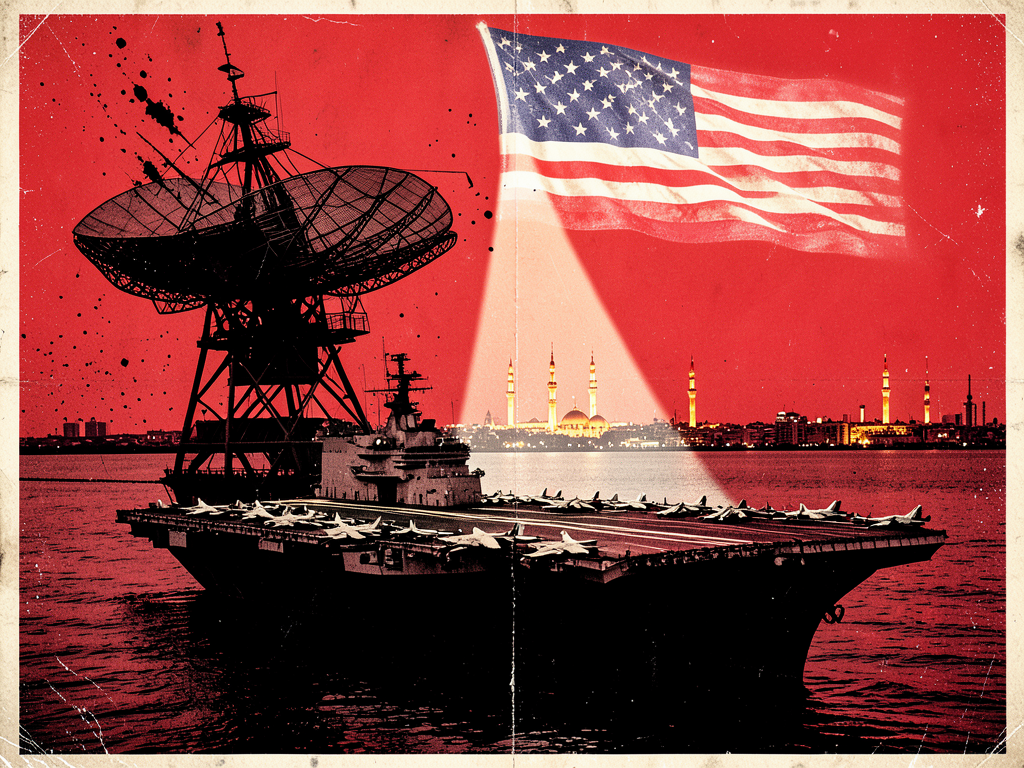
A coordinated narrative surge occurred between June 16, 2026, and August 4, 2026, across 26 articles in 17 outlets. The messaging centers on U.S. military readiness and diplomatic overtures toward Iran, consistently portraying Iran as the source of instability while positioning U.S. actions as reactive and restrained. The timing and framing align with a strategic effort to condition public opinion for potential military escalation under the guise of crisis management.

Article Timeline

When articles appeared, colored by manipulation score.

6848554946484551585181686766624945514548Mar 7Aug 5

Narrative Architecture

The narrative constructs a crisis environment in which Iran is depicted as duplicitous, aggressive, and existentially threatening. Key framing devices include the assertion of Iranian attacks on shipping lanes and nuclear ambitions as justification for U.S. military posture. Articles emphasize U.S. restraint—pausing strikes, offering negotiations, seeking diplomatic resolution—but anchor these gestures to preconditions of Iranian surrender, particularly on nuclear capabilities and control of the Strait of Hormuz.

Emotional levers focus on urgency and inevitability. Headlines and quotes from President Trump invoke decapitation strikes, readiness for war, and Iranian desperation, creating a sense of looming conflict that can only be averted by Iranian capitulation. The tone normalizes extreme military action while presenting diplomacy as a concession granted by U.S. magnanimity, not mutual negotiation.

Critical context is omitted. The narrative does not reference prior U.S. or Israeli strikes, covert operations, or economic warfare that preceded the current escalation. No mention is made of U.S. control over global financial systems, military basing in the region, or the historical pattern of U.S.-led regime change operations in the Middle East. Iran’s stated position—that it is engaged in maritime talks with Oman and denies U.S. negotiations—is presented as deception, not a competing diplomatic track.

The framing positions the U.S. as the sole arbiter of regional stability, with control over the Strait of Hormuz treated as an inherent right. Iran’s actions are interpreted as existential threats; U.S. actions, even large-scale strikes, are framed as measured responses. This asymmetry in attribution of intent is central to the narrative’s function.

Cross-Outlet Coordination Pattern

The coverage spans mainstream and niche outlets, including NBC News, Times of Israel, and Israel National News. Despite differing audiences, the core messaging is uniform: Iran is untrustworthy, the U.S. holds the upper hand, and war is avoidable only through Iranian surrender. The synchronization is most evident in the three-day cluster from August 1 to August 3, 2026, where multiple outlets published variations of the same claims—Trump ordering strikes, pausing them for diplomacy, threatening decapitation, asserting secret talks—without independent verification.

NBC News and Times of Israel adopt a formal tone but rely on anonymous officials and presidential statements. Israel National News uses direct quotes from Trump with no counter-sourcing, amplifying the most hawkish elements. The absence of contradictory reporting or investigative follow-up across outlets suggests a shared narrative template rather than independent journalistic inquiry.

The repetition of specific phrases—"Iran will never get a nuclear weapon," "every chance before decapitation," "unbelievably duplicitous"—across outlets indicates coordinated amplification. These phrases serve as narrative vectors, reinforcing the perception of Iranian threat and U.S. resolve.

Technique Assessment

  • Manufacturing Consent: The narrative leverages official sources—primarily President Trump and unnamed U.S. officials—to present policy decisions as fait accompli. Dissent is excluded. Iranian statements are included only to be dismissed, not engaged.
  • Synchronized Narratives: Multiple outlets adopted identical framing within hours, particularly around the claim of paused strikes and imminent talks. The speed and uniformity suggest pre-prepared messaging.
  • Controlled Opposition: No articles present a non-interventionist or critical perspective on U.S. policy. The debate is confined to the terms set by the administration—whether diplomacy or war is the better tool for forcing Iranian surrender.
  • Manufacturing Casus Belli: The narrative builds a justification for military action by emphasizing Iranian unpredictability, blockade of oil routes, and nuclear ambitions, while omitting U.S. actions that provoked the crisis. The structure mirrors historical precedents where conflict was framed as unavoidable due to enemy intransigence.
  • Revelation of Method: Trump’s public discussion of strike plans and decapitation threats is presented not as recklessness but as strategic pressure. This deliberate transparency serves to normalize extreme military options while claiming they are being withheld for diplomatic reasons.
  • Significance

    The narrative conditions the public to accept military escalation as a logical response to Iranian behavior, while insulating U.S. policy from accountability for initiating the conflict. It reinforces the perception of U.S. hegemony in the Middle East and marginalizes diplomatic alternatives that do not involve Iranian submission. This pattern is consistent with long-term efforts to maintain military and economic dominance in a region where U.S. influence is increasingly contested.

    Articles Analyzed

    81
    Trump: Iran 'unbelievably duplicitous' in denying talks with US
    israelnationalnews.com
    68
    Renewed US-Iran talks on Strait of Hormuz, denuclearization to start on Monday, Trump says
    jpost.com
    68
    Trump's message to Tehran: 'No deal without unconditional surrender'
    israelnationalnews.com
    67
    Trump says renewed US-Iran talks are Tehran's last chance to sign deal 'before decapitation'
    jpost.com
    66
    Trump: 'I want to give Iran every chance before decapitation'
    israelnationalnews.com
    62
    Trump calls Iranian leadership ‘extremely duplicitous’ after Tehran denies new talks will start Monday
    nbcnews.com
    58
    Trump cancels planned attack on Iran
    rt.com
    55
    Trump: Iran will suffer 'ultimate consequences' if it reneges on nukes | Live Updates from Fox News Digital
    foxnews.com
    51
    Alarming missile report draws forceful response from Trump as Iran war tests America’s arsenal
    foxnews.com
    51
    Trump said to order strikes aimed at forcing Iran’s surrender; US citizens told to be ready to leave Mideast
    timesofisrael.com
    51
    Trump says he and Israel have called off Iran attack after being assured deal is imminent
    timesofisrael.com
    49
    Trump says talks with Iran will start Monday on deal to reopen Hormuz
    timesofisrael.com
    49
    First round of Iran-US mediated talks concludes after 80 minutes in Switzerland
    presstv.ir
    48
    Trump says deal to reopen Strait of Hormuz could come as early as today
    nbcnews.com
    48
    Trump vows US support in talks with Lebanon's president
    euronews.com
    48
    An unhappy birthday for Trump: His Iran deal – and presidency – on the brink
    smh.com.au
    46
    The renewed US-Iran conflict is escalating and threatening to spin out of control | CNN
    edition.cnn.com
    45
    ‘Last chance’: Bessent says Hormuz deal is in sight after Trump's warning on Iran talks
    cnbc.com
    45
    U.S. agrees to pause attacks on Iran subject to ‘rapidly’ making deal, Trump says
    nbcnews.com
    45
    Netanyahu meets Trump at the White House: What’s on the agenda, what’s next
    aljazeera.com