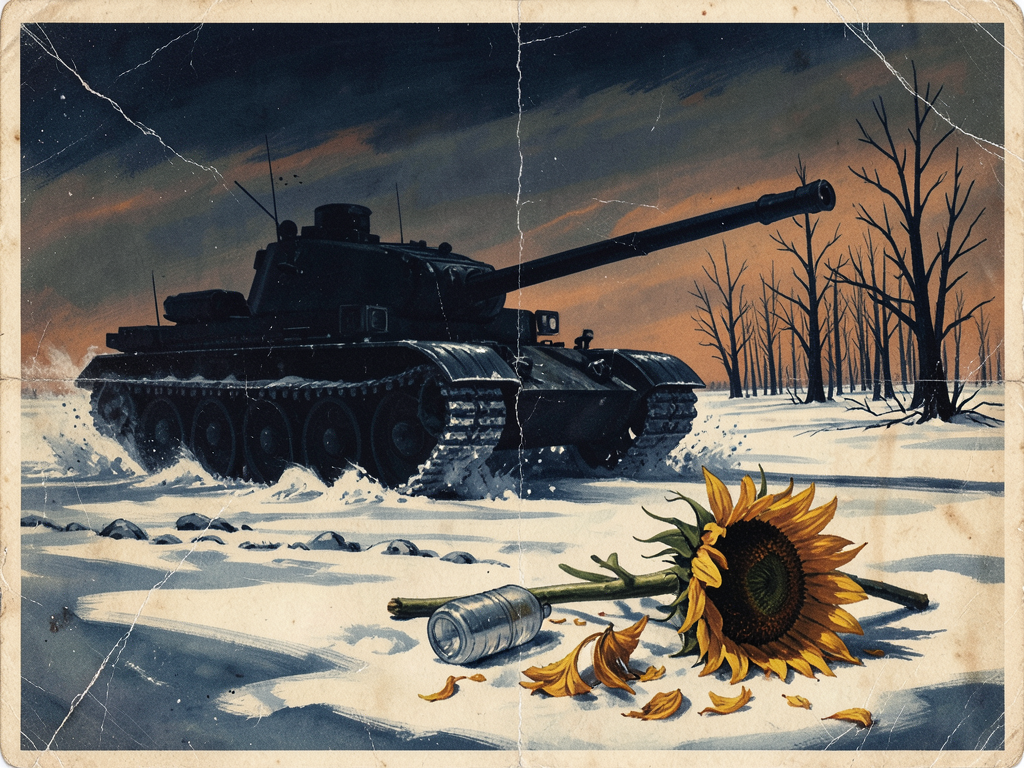
Operational Summary
A coordinated narrative has emerged across Western and Russian state-aligned media normalizing Ukrainian cross-border attacks on Russian energy infrastructure as a strategic escalation. The operation began April 17, 2026, and peaked through May 3, 2026, with 17 articles published across eight outlets. The messaging reframes these actions not as acts of war but as justified retaliation, laying cognitive groundwork for Russia to declare a formal casus belli against Ukraine or NATO. This benefits both the Kremlin’s justification for expanded conflict and Western hawks seeking to lock in permanent defense mobilization.
Narrative Architecture
The narrative centers on two framing devices: first, that Ukrainian strikes on Russian oil infrastructure—including refining sites and maritime tankers—are legitimate economic warfare aimed at degrading Russia’s war machine. Second, that Russian defensive responses are proportionate and reactive. Articles selectively quote Ukrainian officials, particularly President Zelenskyy, to reinforce the moral justification of the strikes, using unverified economic impact claims such as $7 billion in Russian losses. These figures are presented without independent corroboration or contextual breakdown.
Articles from cbc.ca, nbcnews.com, and theglobeandmail.com emphasize civilian suffering in Russian towns like Tuapse, detailing school closures and environmental damage. This humanizes Russian non-combatants while obscuring the strategic rationale for targeting energy infrastructure. The narrative avoids any mention of reciprocal Russian strikes on Ukrainian energy, power, and civilian infrastructure since 2022, creating a one-sided perception of victimhood. Emotional imagery—families evacuating, burning refineries, injured civilians—dominates coverage, bypassing strategic analysis.
Russian state media, particularly rt.com, amplifies the scale of Ukrainian drone incursions, reporting hundreds of drones shot down and casualties near Moscow. The tone frames Ukraine as the aggressor, Russia as defender. No attempt is made to verify whether targeted facilities had military utility or were purely civilian. The absence of such scrutiny reinforces the narrative vector: Ukraine is escalating into Russian sovereign space without constraint.
Cross-Outlet Coordination Pattern
Coordinated messaging is evident across ideologically divergent outlets: Western liberal (cbc.ca, nbcnews.com, theglobeandmail.com), global multipolar (rt.com), and hybrid commercial-nationalist (timesofindia.indiatimes.com). Despite differing editorial stances, all converge on core messaging: Ukrainian attacks are strategic, necessary, and morally defensible—while Russian responses are defensive.
The synchronization is precise. All articles appeared within a seventeen-day window, with peak output between April 25 and May 1. Coverage uniformly avoids questioning the legality of cross-border strikes on energy infrastructure under international law. None reference precedents such as U.S. operations in Iraq or Libya, where infrastructure targeting triggered immediate humanitarian condemnation. The uniform omission suggests pre-established narrative parameters.
Western outlets rely on Kyiv-based sourcing and Ukrainian government statements without counterpoint. Russian coverage exclusively cites Moscow defense officials. This divergence in sourcing, yet convergence in framing—Ukraine acts, Russia reacts—indicates compartmentalized but functionally aligned editorial directives. The effect is a synthetic consensus: escalation is inevitable, Ukraine is justified, Russia is contained.
Source Distribution
Article Timeline
When articles appeared, colored by manipulation score.
Technique Assessment
Significance
This narrative serves the interests of actors seeking permanent war footing: the Kremlin, which benefits from portraying itself as encircled and attacked; and NATO defense establishments, which leverage escalation to justify increased budgets, troop deployments, and erosion of diplomatic off-ramps. By conditioning the information environment to accept Ukrainian strikes on Russian soil as routine, the operation lowers the threshold for Russian retaliatory strikes on NATO members, bringing the bloc closer to direct conflict.
Score Distribution
How articles in this PSYOP score across manipulation bands.