Legitimize Post-Conflict Iranian Hegemony
This PSYOP aims to legitimize Iran's expanded regional power and control over the Strait of Hormuz after a hypothetical conflict, benefiting Iran, the Axis of Resistance, Russia, and China by securing international acceptance of Iran's new status.
PSYOP Hierarchy
Executive Summary
Power Patterns
Myth-Making as State Formation
The PSYOP actively constructs a new myth of Iranian invincibility and strategic prowess, portraying it as a 'modern superpower' (presstv.ir) that imposed its will on enemies (middleeasteye.net). This narrative is built on the back of a hypothetical conflict, framing Iran's actions as successful asymmetric resistance against US/Israeli aggression (presstv.co.uk, rt.com). It leverages Iran's deep civilizational identity to legitimize its claims of control over the Strait of Hormuz (aljazeera.com, npr.org), effectively manufacturing a post-conflict reality where Iran is the dominant regional power.
Cui Bono — Who Benefits?
Iran benefits by having its expanded regional power and control over strategic chokepoints like the Strait of Hormuz internationally accepted and normalized, allowing it to consolidate its gains without further military challenge. The Axis of Resistance benefits from the narrative of a weakened US/Israel and a strengthened Iran, bolstering their legitimacy and operational freedom. Russia and China benefit by seeing a key US adversary strengthened and US hegemony weakened, contributing to a multipolar world order and potentially opening new avenues for trade and influence.
Historical Parallels
Myth-Making as State Formation (e.g., Aeneid for Rome)
This PSYOP is creating a foundational myth for a 'new' Iran, one that has successfully defied and defeated a global superpower, much like ancient empires used myths to justify their rise and dominance.
Manufacturing Casus Belli (e.g., Gulf of Tonkin)
The articles repeatedly refer to a 'US-Israeli war' or 'aggression' against Iran as the pretext for Iran's actions, effectively manufacturing a casus belli for Iran's retaliatory and assertive post-conflict stance, even if the initial conflict itself is hypothetical or exaggerated.
Sanctions as Siege Warfare (e.g., Iraq sanctions)
The narrative frames US sanctions as 'illegal and cruel' (aljazeera.com), portraying them as a failed siege that only strengthened Iran's resolve, similar to how targeted regimes often use sanctions to rally internal support and delegitimize the sanctioning power.
Narrative Mechanics
Synchronized Talking Points
“Iran has won a military/strategic victory against the US and Israel.”
“The US and Israel miscalculated Iranian resilience and regional dynamics.”
“Iran now controls the Strait of Hormuz and will charge tolls/restrict access.”
“The US-Iran peace deal (MOU) is a major diplomatic breakthrough, often attributed to Trump.”
“US sanctions are failing/have failed and are illegal/cruel.”
“Israel is a destabilizing force, violating ceasefires and opposing peace.”
Framing Evolution
The narrative begins with claims of a hypothetical US-Israeli war against Iran, then shifts to Iran's 'victory' and subsequent control of the Strait of Hormuz. It then moves to the 'peace deal' (MOU) as a consequence of this victory, with some outlets framing it as a US diplomatic win (abcnews.com, washingtontimes.com) while others portray it as a concession to Iran (newsweek.com, ynetnews.com). The latest phase focuses on normalizing Iran's control and continued resistance to US influence.
Suppressed Counter-Narratives
×Independent verification of the 'US-Israeli war' and its outcomes.
×International legal perspectives on freedom of navigation in the Strait of Hormuz.
×The actual terms and enforceability of the 'US-Iran MOU' and Iran's nuclear commitments.
×The human cost and internal dissent within Iran regarding its regional policies.
×The agency of other regional actors beyond their relation to the US or Iran.
Outlet Coordination
Press TV (presstv.co.uk, presstv.ir) and RT (rt.com) are the primary drivers of the most aggressive pro-Iranian narratives, consistently portraying Iran as victorious, the US as aggressive, and its actions as justified. Al Jazeera (aljazeera.com) also leans towards legitimizing Iranian actions and criticizing US sanctions. Mainstream Western outlets like CNBC, NBC News, ABC News, and NPR report on the 'peace deal' and 'MOU' but often with conflicting details or a focus on US political dynamics (e.g., Trump's role). Israeli outlets (jpost.com, timesofisrael.com, ynetnews.com, israelnationalnews.com) consistently express alarm and frame the deal as a failure for Israel, inadvertently reinforcing the narrative of Iran's gains. The rapid and consistent framing of a 'war' and subsequent 'deal' across diverse outlets, despite a lack of verifiable details, suggests coordinated narrative management.
Bigger Picture
This PSYOP is a critical component of Iran's long-term strategy to establish itself as the dominant regional power in the Middle East, particularly in the Persian Gulf. It aims to capitalize on perceived US imperial overextension and internal decay, positioning Iran as a legitimate, powerful, and resilient actor in a multipolar world. The end game is to solidify a new regional order where Iran's influence is unchallenged and its control over vital energy chokepoints is internationally recognized.
Prediction
This PSYOP is likely building toward the international acceptance of Iran's de facto control over the Strait of Hormuz and its expanded regional influence, potentially leading to new international agreements that formalize these realities. It prepares the public for a future where Iran is a recognized, powerful player whose actions, even if assertive, are framed as legitimate responses to past aggression or necessary for regional stability.
Intelligence Coverage
Iran’s military actions are being framed as justified retaliation, not escalation
A coordinated narrative has emerged across 22 outlets, publishing 182 articles between June 15, 2026 and September 3, 2026. The messaging consistently portra...
Iran’s regional power is being framed as justified and inevitable
A coordinated narrative promoting the normalization of Iran’s regional dominance has intensified across 22 outlets, with 166 articles published between June ...
Iran’s control of Hormuz is being framed as legitimate and justified
A coordinated narrative has emerged across 22 outlets, involving 153 articles published between June 15, 2026, and August 27, 2026. The messaging consistentl...
Iran’s defiance of U.S. sanctions is being framed as principled resistance
A coordinated messaging campaign has intensified across 22 outlets, spanning from August 18 to August 23, 2026, normalizing Iran’s regional posture as legiti...
Iran’s military dominance in the Gulf is being framed as inevitable and justified
A coordinated messaging campaign has emerged across 22 outlets, producing 135 articles between June 15, 2026, and August 17, 2026, that uniformly depict Iran...

Iran’s closure of the Strait of Hormuz is being framed as a justified act of resistance
A synchronized media campaign has emerged across 22 outlets, comprising 126 articles from June 15 to August 13, 2026, reframing Iran’s closure of the Strait ...
Iran’s military actions are being framed as justified and inevitable
A coordinated narrative has emerged across 122 articles in 22 outlets between June 15, 2026, and August 9, 2026, normalizing Iran’s regional assertiveness as...
Iran’s actions in the Gulf are being framed as defensive, not aggressive
A coordinated narrative has emerged across 22 outlets, spanning June 15 to August 6, 2026, normalizing Iran’s military posture in the Persian Gulf. The messa...
Iran’s retaliatory strikes are framed as defensive necessity in synchronized media wave
A coordinated narrative emerged across 22 outlets with a cluster of 100 articles, detected from June 15, 2026, through July 25, 2026. The messaging aligns Ir...
Iran’s military actions are being framed as justified responses to Western aggression
A coordinated narrative has emerged across 21 outlets, with 93 articles published between July 18 and July 19, 2026, following a sharp escalation in coverage...
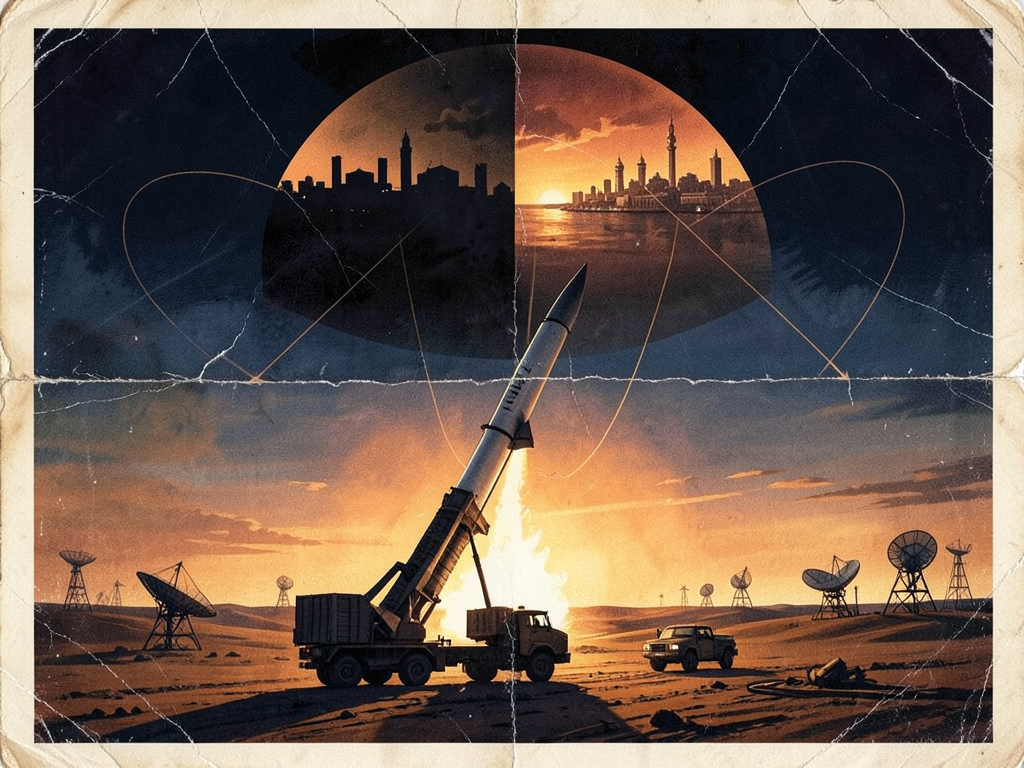
Iran’s retaliatory strikes are framed as defensive and heroic, not aggressive
A synchronized narrative campaign has amplified coverage of Iran’s military actions in the Persian Gulf and Levant from June 15, 2026, to July 18, 2026. Seve...

Iran is being recast as a dominant regional power fighting unchecked US aggression
A coordinated narrative has emerged across 21 media outlets, spanning from June 15, 2026, to July 14, 2026, centered on amplifying claims of unprovoked US mi...
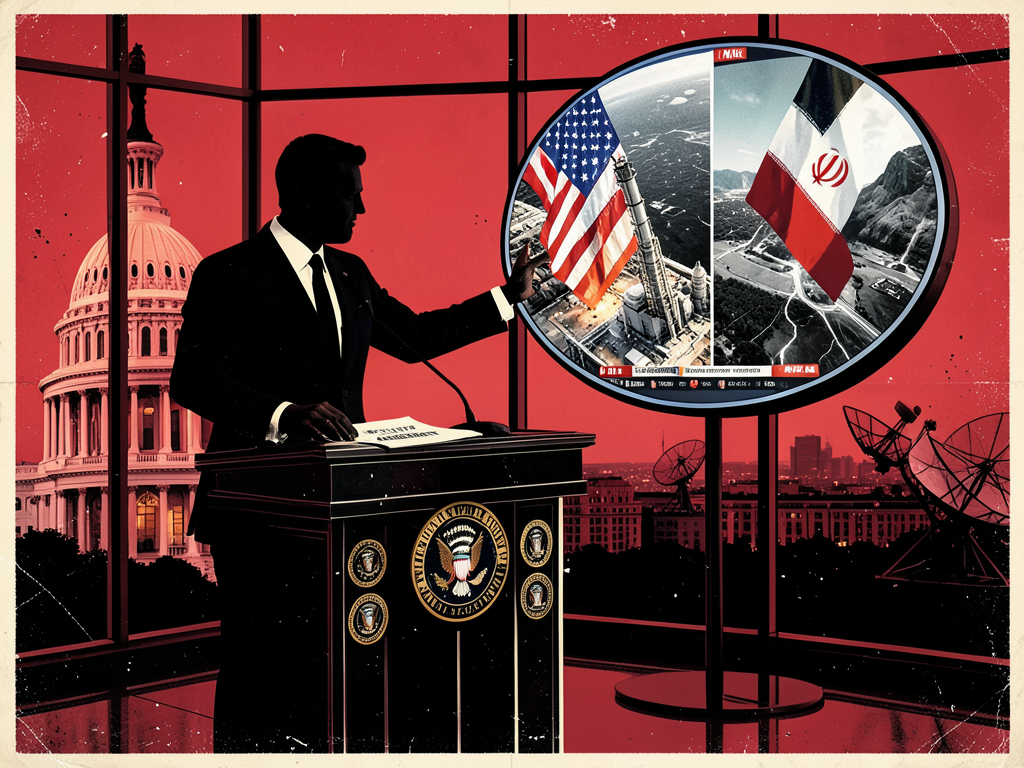
A U.S.-Iran deal is being sold as Trump's diplomatic victory, not a strategic shift
A coordinated media push spanning 56 articles across 21 outlets between June 15, 2026, and July 2, 2026, advances the framing of an emerging U.S.-Iran agreem...
Sources & Articles
2026-09-02T06:30:56.000Z
2026-09-03T05:30:46.000Z
2026-09-02T06:30:56.000Z
2026-09-02T05:01:04.000Z
2026-09-02T03:20:01.000Z
2026-09-01T20:42:13.000Z
2026-09-01T13:01:25.000Z
2026-09-02T10:10:23.000Z
2026-09-01T09:30:14.000Z
2026-08-31T13:25:15.000Z
Showing 10 of 184 articles
External Coverage(50)
Showing 10 of 50