Operational Summary
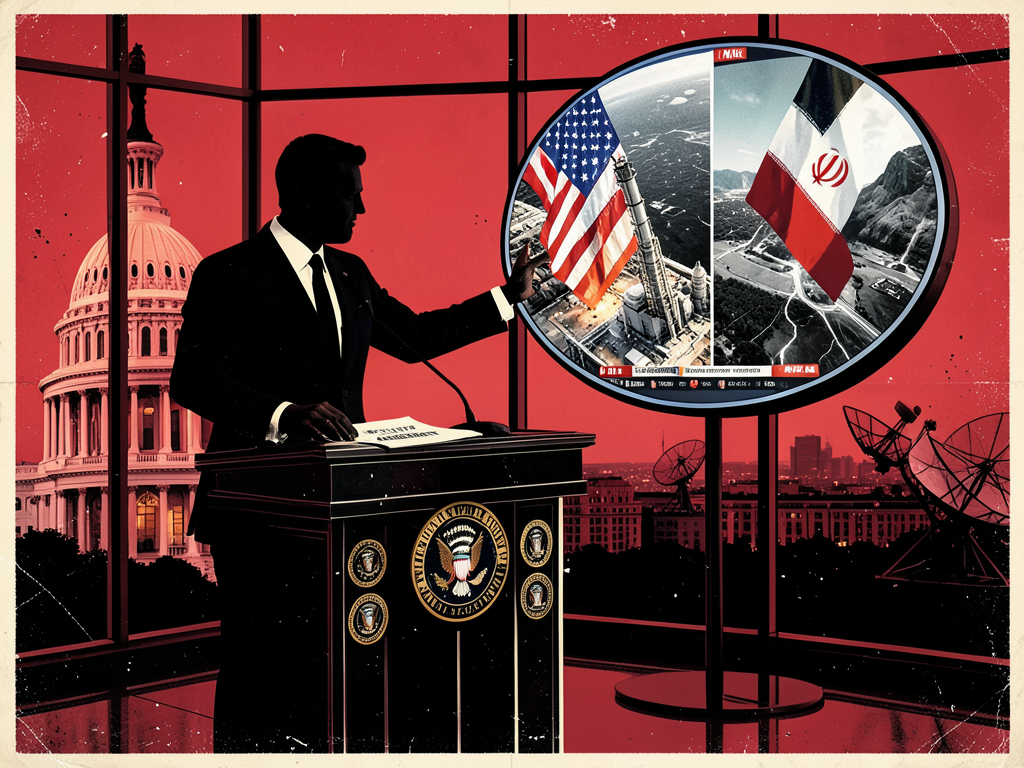
A coordinated media push spanning 56 articles across 21 outlets between June 15, 2026, and July 2, 2026, advances the framing of an emerging U.S.-Iran agreement as a personal diplomatic triumph for Donald Trump. The narrative consistently attributes breakthroughs to Trump’s leadership while aligning with Iran’s assertion of sovereignty in key strategic zones. Coverage amplifies unverified claims of progress and marginalizes unresolved tensions.Narrative Architecture
The narrative constructs a dual myth: Trump as dealmaker and Iran as undefeated sovereign. Articles attribute diplomatic momentum to Trump’s stated position or implied influence, despite minimal evidence of direct negotiation involvement. Media rely on optimistic phrasing—'good foundation,' 'successfully conclude,' 'major breakthrough'—to convey inevitability. The tone treats the agreement as a fait accompli even as core contradictions persist. Conflicting statements between the U.S. and Iran on inspection access or regional authority are acknowledged but not interrogated. Instead, these gaps are bridged with appeals to institutional authority, such as the IAEA chief’s statement, which is cited as proof of inspection progress despite Iran’s non-confirmation.The framing of the Strait of Hormuz is particularly significant. Reports accept Iran’s claim of sole authority to demine the waterway as a matter of national right, dismissing international offers of assistance as provocative. This reframing elevates Iran’s regional control while portraying resistance to foreign intervention as natural and legitimate. The narrative avoids scrutiny of how such unilateral authority serves Iranian strategic interests or threatens global shipping. Instead, it presents Iran’s position as defensive and reasonable.
Emotional triggers are indirect but effective. The language of 'ending 100 days of war' evokes relief and closure, even though no verifiable large-scale conflict is documented in the source material. By invoking an unseen war, the narrative implies a crisis averted and positions the agreement as a necessary resolution. This manufactured urgency bypasses scrutiny of whether the war occurred at the scale suggested—or whether the solution addresses real threats or entrenched power dynamics.
Cross-Outlet Coordination Pattern
Coverage aligns across Western commercial news (CNBC, NBC), pan-Arab outlets (Al Jazeera), and Iranian state media (Press TV), indicating synchronized messaging rather than independent reporting. CNBC, NBC, and Al Jazeera use nearly identical phrasing around 'technical talks' and 'confidence-building,' framing the negotiations as advanced and irreversible. Al Jazeera and NBC highlight Trump and U.S. officials like JD Vance, positioning American leadership as central. Press TV repackages the same developments with nationalist overtones, declaring American 'defeat' in the 'maximum pressure' campaign.The coordination does not require uniform messaging—Press TV’s triumphalism contrasts with NBC’s measured optimism—but the timing and key claims (deal progress, end of war, U.S. concession) are synchronized. The near-simultaneous publication of overlapping narratives across ideologically divergent outlets suggests a shared information pipeline, possibly via backchannel briefings or coordinated leaks. The absence of investigative follow-up or contradictory reporting within the window indicates editorial alignment.
Technique Assessment
The operation employs several distinct techniques:Significance
The operation serves both U.S. political interests and Iranian strategic positioning. It strengthens Trump’s legacy narrative while granting Iran diplomatic leverage without requiring major concessions. By normalizing Iran’s control over regional chokepoints and discrediting external intervention, the narrative shifts the balance of power in the Gulf. The coordinated framing preempts public and legislative scrutiny, reducing the political cost of a deal that may significantly alter U.S. posture in the Middle East.Source Distribution
Article Timeline
When articles appeared, colored by manipulation score.
Score Distribution
How articles in this PSYOP score across manipulation bands.