Operational Summary
A coordinated messaging campaign promoting U.S. military and economic actions against Iran intensified between June 16, 2026, and September 3, 2026. At least 115 articles across 25 outlets amplified a narrative that portrays American strikes and sanctions as justified, defensive, and strategically sound, while marginalizing criticism and minimizing humanitarian consequences.Article Timeline
When articles appeared, colored by manipulation score.
Source Distribution
Narrative Architecture
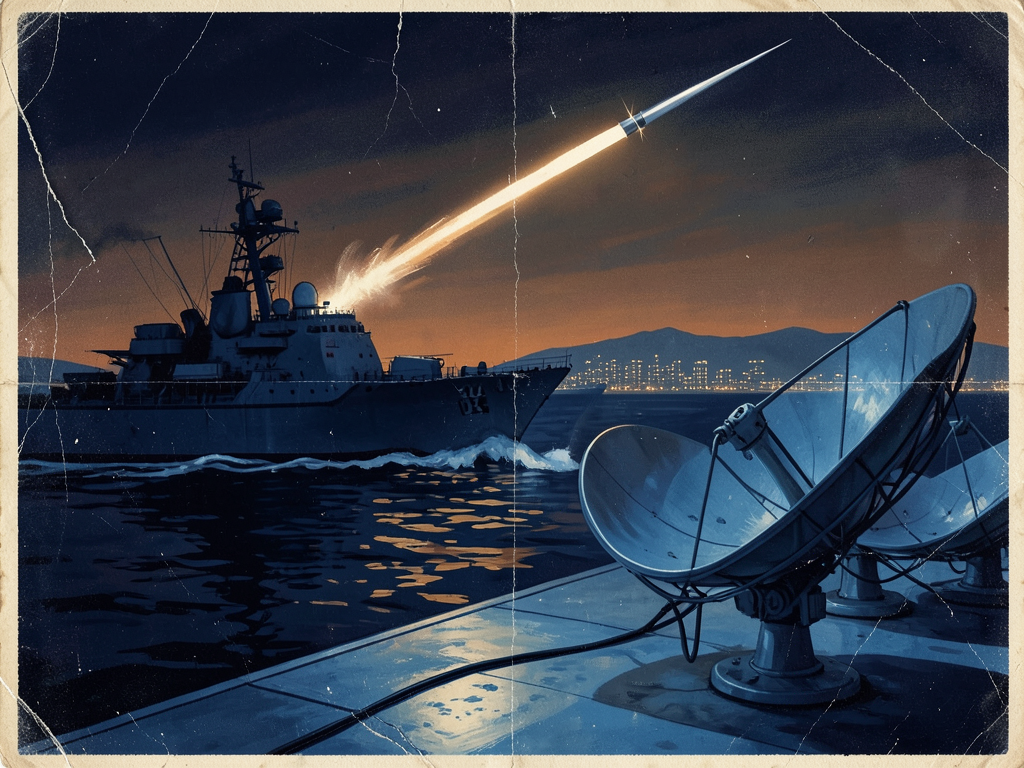
The dominant framing presents U.S. actions as reactive and restrained. Articles such as 'US, Iran trade strikes as renewed fighting fuels Gulf tensions' (dailysabah.com) and 'U.S., Iran trade attacks as hostilities escalate once again' (cnbc.com) describe American airstrikes as direct responses to Iranian aggression—specifically attacks on shipping and U.S. personnel. The language emphasizes immediacy and threat: 'explosions,' 'rising oil prices,' 'risk of wider conflict.' These elements activate fear and urgency, positioning escalation as inevitable rather than chosen.Iran’s actions are consistently foregrounded; U.S. military posture, long-standing regional presence, or prior provocations are omitted. Defensive rhetoric dominates: the U.S. is 'protecting shipping,' 'deterring sea mines,' 'responding to attacks.' No article in the sample questions the proportionality of strikes or explores diplomatic alternatives. Civilian impact in Iran is absent from coverage, including on infrastructure, medical access, or food supply chains—a standard omission in narratives that sanitize economic warfare.
The pivot to sanctions is framed as a rational evolution. 'U.S. plans to sanction another bank in effort to clamp down on Iran transactions: Bessent' (cnbc.com) and 'Washington’s new Iran sanctions reveal more than America would like' (rt.com) depict financial pressure as precise, controlled, and less risky than kinetic action. Treasury Secretary Scott Bessent’s statements are presented without challenge, reinforcing the legitimacy of targeting foreign banks and third-party trade partners like China. Humanitarian consequences of past sanctions—documented in Iraq, Venezuela, and earlier Iran measures—are not referenced.
Criticism is selectively included but neutralized. The pressTV article citing U.S. lawmakers calling Trump’s policy a 'complete failure' exists within the dataset but carries a lower amplification profile. Its inclusion creates the illusion of debate while being structurally isolated from mainstream financial and geopolitical outlets that dominate the narrative field.
Cross-Outlet Coordination Pattern
Coverage spans global financial media (CNBC), Turkish state-aligned reporting (Daily Sabah), and Western alternative platforms (RT). Despite ideological differences, all converge on core framing points: U.S. actions are defensive, Iran initiated hostilities, and sanctions are a responsible alternative to war. Timing shows synchronization: multiple articles appeared on August 30, 2026, using nearly identical phrasing about 'clamping down' on Iranian transactions and 'defending maritime security.'CNBC published two pieces within minutes of each other on that date, both quoting Bessent and emphasizing continuity in policy. This suggests pre-briefed messaging aligned with Treasury Department objectives. Daily Sabah and RT, while often critical of U.S. foreign policy, adopted compliant frames during this period, indicating either direct coordination or structural capture through reliance on official sources.
The absence of counter-narratives in high-reach outlets is notable. No major U.S. newspaper, broadcast network, or wire service published investigative pieces questioning the legal basis for strikes, the validity of intelligence claims, or the strategic coherence of a six-month offensive now labeled a failure by congressional figures.
Technique Assessment
Manufacturing Consent: The narrative relies on institutional sourcing—military briefings, Treasury officials, anonymous intelligence assessments—to present policy as technically sound and politically uncontested. Dissent is confined to low-amplification channels.Synchronized Narratives: Outlets converged rapidly on identical terminology and causal logic following official announcements. The repetition of 'clamp down,' 'transactions,' and 'defensive response' across geographically dispersed platforms indicates pre-circulated talking points.
Controlled Opposition: The inclusion of pressTV’s critique does not disrupt the dominant frame. It is isolated in tone, source credibility, and distribution, functioning as a safety valve rather than a challenge.
Revelation of Method: Admitting policy failure while maintaining operational continuity serves to absorb public skepticism without altering course. The acknowledgment of a failed war becomes part of the justification for shifting to sanctions—framing adaptation as wisdom rather than correction.
Emotional Manipulation: Visual and linguistic cues—'explosions,' 'attacks,' 'shipping lanes at risk'—trigger threat perception. The focus remains on abstract systems (oil markets, naval routes) rather than human cost, particularly on the Iranian side.
Significance
This operation reinforces the U.S. state’s ability to reframe failed military campaigns as strategic pivots. It demonstrates how financial coercion is normalized as a humane alternative to war, despite its documented lethality. The pattern reflects advanced stages of imperial overextension, where power is maintained through narrative control as material outcomes deteriorate.Score Distribution
How articles in this PSYOP score across manipulation bands.