Forgery and planted disinformation · 1964 · US
CIA withholding from the Warren Commission
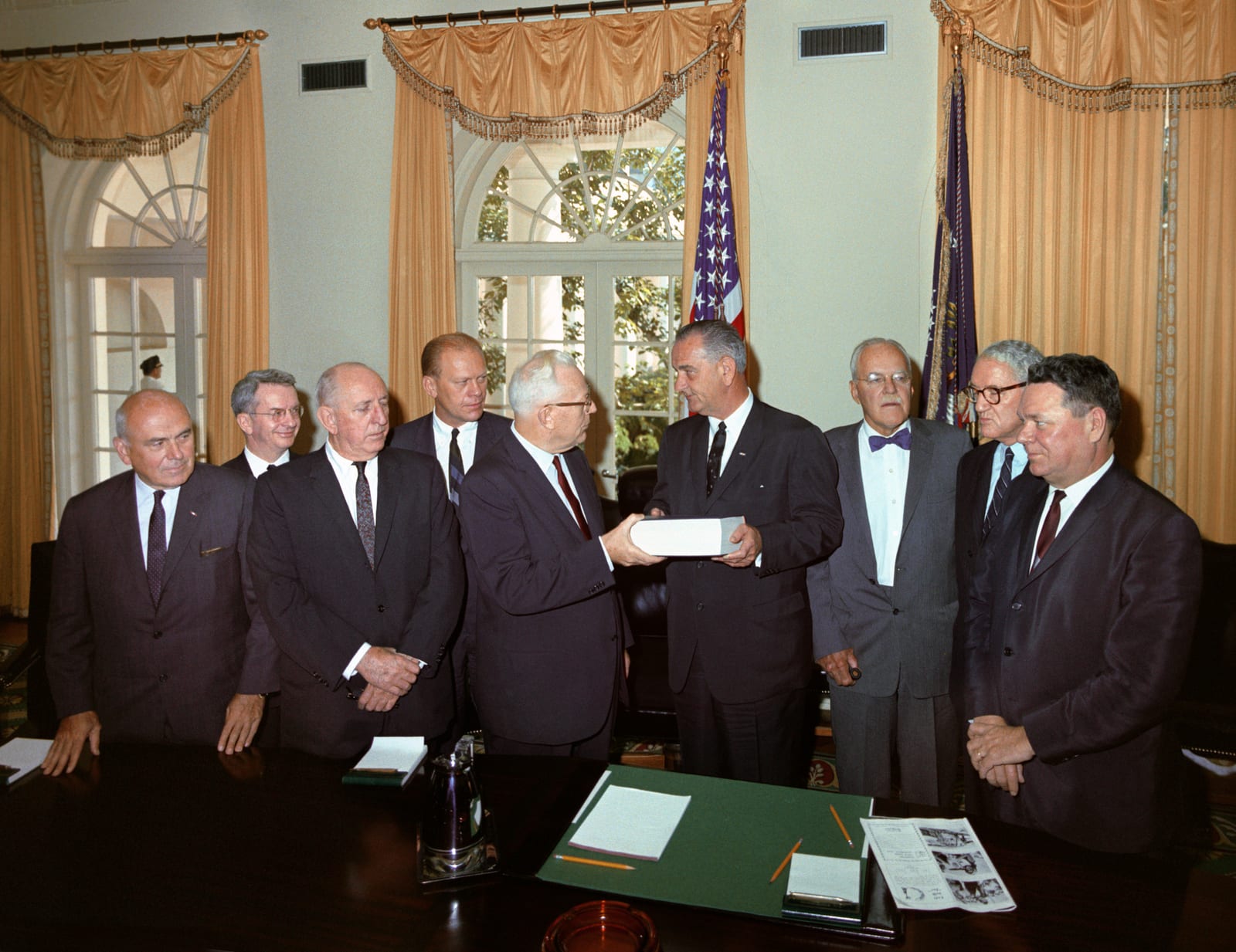
The Warren Commission was created on 29 November 1963 to investigate the assassination of President Kennedy and reported on 24 September 1964. The CIA did not tell it about the agency's plots against Fidel Castro, some run with organised crime. The CIA's own chief historian, David Robarge, wrote in a study published in 2013 and released in 2014 that Director John McCone and other leaders took part in a "benign cover-up". This case is about what the Commission was not told, not about what it concluded.

- Run by
- CIA leadership
- Per CIA chief historian David Robarge, Director John McCone and other senior officials, who directed "passive, reactive and selective" help
- The Castro assassination plots
- One omission
- Plots of the early 1960s, some involving organised crime, were not disclosed to the Commission
- The Commission reported without the information
- 1964 report
- Press coverage of Robarge's study notes it never learned to ask whether Oswald had Cuban connections that bore on the plots
- Time to exposure
- 1975-76 / 2014
- The Senate Church Committee reported on the intelligence agencies' performance in 1976; the CIA released Robarge's study in 2014
Timeline
1960-63 · Context
The CIA runs a series of plots against Fidel Castro, some with organised-crime figures.
29 Nov 1963 · Context
President Johnson creates the Warren Commission by Executive Order 11130.
1964 · It worked
Robarge writes that McCone and other senior officials chose not to disclose the anti-Castro schemes, wanting to keep the Commission on what the agency believed was the "best truth", and that McCone directed "passive, reactive and selective" assistance.
24 Sep 1964 · It worked
The Commission presents its report to President Johnson; it is made public three days later.
26 May 1976 · Exposed
The Senate Select Committee (Church Committee) votes to release its book "The Investigation of the Assassination of President John F. Kennedy: Performance of the Intelligence Agencies", examining whether the CIA and FBI withheld information from the Commission.
2 Jan 1979 · Exposed
The House Select Committee on Assassinations, in its summary of findings (H. Rept. 95-1828; the full final report is dated 29 March 1979), concludes the Commission did not receive information about the anti-Castro plots.
2013-14 · Exposed
Robarge's "Death of a President: DCI John McCone and the Assassination of President John F. Kennedy" appears in Studies in Intelligence (Vol. 57, No. 3, September 2013) and is declassified in the fall of 2014. It calls the nondisclosure a "benign cover-up".
The investigation that was supposed to be told everything was not told about an operation the CIA itself judged relevant enough to keep from it.
“benign cover up”
The playbook
- 1
Suppress the correction
The plots against Castro, which bore on a question the Commission needed to ask about Cuba, were withheld from the people examining the case.
- 2
Hidden messenger
The agency's covert operations stayed out of view while it gave the Commission the material it chose to give.
- 3
Borrowed authority
The CIA's help was presented to the Commission and the public as cooperation from the intelligence community, without saying what was held back.
Through the FATE framework
- Focus4/10
The effect was to keep a line of inquiry out of view rather than to push a message.
- Authority7/10
The Commission relied on the CIA as an expert source for the foreign-intelligence side of the case.
- Tribe2/10
Little in-group or out-group appeal; the deception was by omission.
- Emotion2/10
It worked quietly, not by stirring emotion.
Propaganda techniques used
Same playbook today
The same playbook can be run by anyone, on any side. We list every current PSYOP that matches CIA withholding from the Warren Commission, whoever is behind it.
No live PSYOP we track matches this playbook right now. When one does, it will appear here.