Legitimize Trump's Trade Aggression
This PSYOP aims to legitimize the Trump administration's aggressive protectionist trade policies by framing them as essential for national interest and human rights, benefiting the Trump administration and protectionist political factions by fostering public acceptance for sustained trade disputes.
Executive Summary
Power Patterns
Manufacturing Casus Belli
The articles consistently manufacture pretexts for trade wars by framing other nations' actions as 'robbing' the U.S. (cnbc.com, 'Trump threatens EU'), engaging in 'unfair trade practices' (nbcnews.com, 'U.S. launches new round'), or failing to combat 'forced labor' (nbcnews.com, 'U.S. sets new tariffs'). This creates a 'casus belli' for tariffs, presenting them as a necessary, defensive response. The use of 'forced labor' as a justification, particularly when applied broadly to 60 countries including allies, can be seen as rent-seeking behavior, creating barriers to competition under a moral guise. This also contributes to myth-making, reinforcing a narrative of American moral superiority and economic victimhood, while shifting public consent towards coercive economic measures.
Cui Bono — Who Benefits?
This narrative enables the Trump administration and protectionist factions to implement and sustain aggressive trade policies, such as tariffs, by framing them as justified, moral, and strategic responses to foreign malfeasance. It builds public acceptance for economic friction and potential trade wars, allowing these policies to be pursued with less domestic opposition and greater perceived legitimacy. For domestic industries, it creates a rationale for reduced foreign competition and potentially higher profits.
Historical Parallels
Iraqi WMDs (2002-2003)
The broad, rapid, and often unverified claims of 'forced labor' across 60 countries, used to justify tariffs, parallel the intelligence fabrication and media amplification around Iraqi WMDs. In both cases, a threat narrative (WMDs, forced labor) achieves suspicious mainstream consensus, with dissenting voices or requests for evidence marginalized, to justify a pre-planned policy (war, tariffs).
Sanctions as Siege Warfare
The use of tariffs, framed as a moral or strategic tool, to exert economic pressure on numerous countries, including allies, resembles sanctions as siege warfare. While presented as 'targeted' or 'justified,' the widespread application and potential for economic disruption function as collective punishment, aiming to force policy changes or secure economic advantage, much like sanctions aim for regime change or compliance.
The Humanitarian Intervention Template (Libya 2011, Syria 2011-present)
The invocation of 'forced labor concerns' as a primary justification for tariffs, particularly when applied broadly and without detailed, independently verified evidence for each country, mirrors the use of 'humanitarian concerns' to justify military interventions. In both instances, a moral imperative is used to legitimize actions that serve geopolitical or economic objectives, often with significant negative consequences for the targeted populations.
Narrative Mechanics
Synchronized Talking Points
“Tariffs are a justified response to 'unfair trade practices' or 'discrimination' by other nations.”
“The EU is 'robbing' or unfairly targeting American tech giants.”
“New tariffs are a moral enforcement action against 'forced labor' globally.”
“Trump's tariff policies are bold, strategic, and legally grounded, expanding presidential power.”
“Canada is 'discriminating' against American products and retaliating unjustly.”
Framing Evolution
Initially, Trump's trade actions were framed as responses to specific economic grievances (e.g., EU fines on Google, Canadian trade practices). Over time, the narrative has evolved to incorporate broader moral justifications, particularly the widespread claim of 'forced labor' across dozens of countries. This shift allows for a more expansive and durable tariff regime, moving beyond specific trade disputes to a more universal ethical mandate, especially after previous tariff approaches faced legal challenges (e.g., Supreme Court blocking a version).
Suppressed Counter-Narratives
×Independent verification or detailed evidence for the widespread 'forced labor' claims against 60 countries.
×The economic costs of tariffs for American consumers and businesses (e.g., higher prices, supply chain disruptions).
×The diplomatic fallout and potential for retaliatory measures from targeted allies.
×The historical context of U.S. trade actions that may have provoked foreign 'retaliation' (e.g., Canada's responses to earlier U.S. tariffs).
×Alternative, non-tariff solutions to trade disputes or human rights concerns.
Outlet Coordination
CNBC and Al Jazeera consistently push the narrative of Trump's aggressive tariff actions, often quoting Trump directly or U.S. officials justifying the moves. CNBC emphasizes the 'sweeping' nature and 'new playbook' of Trump's tariffs, while Al Jazeera, despite being a non-U.S. outlet, often frames the U.S. actions as justified responses to foreign misbehavior, particularly in the 'forced labor' context. NBC News and CBS News also report on the tariffs, often adopting the official U.S. justifications without deep scrutiny. Fox News explicitly praises Trump's 'powerful trade weapon' and 'bold, strategic expansion of presidential power.' NPR notes Trump's refusal to 'give up on tariffs' as a 'pillar of his economic legacy,' reinforcing the idea of a consistent, strategic approach. The timing of these articles, clustered around July 20-25, 2026, suggests synchronized reporting on the rollout and justification of these new tariff policies.
Bigger Picture
This PSYOP is part of a broader effort to reorient U.S. foreign policy towards a more protectionist and unilateral stance, asserting American economic power through coercive measures. It signals a potential shift away from multilateral trade agreements and towards bilateral leverage, aiming to reshape global trade dynamics to favor U.S. interests, even at the cost of international cooperation and economic stability.
Prediction
This PSYOP is likely building toward public acceptance of sustained trade wars and economic friction as a normal and necessary component of U.S. foreign policy, preparing the public for further escalations in tariffs and trade disputes with a wide range of countries, including traditional allies. It aims to legitimize the use of economic coercion as a primary tool of statecraft, potentially leading to a more fragmented global economy.
Intelligence Coverage
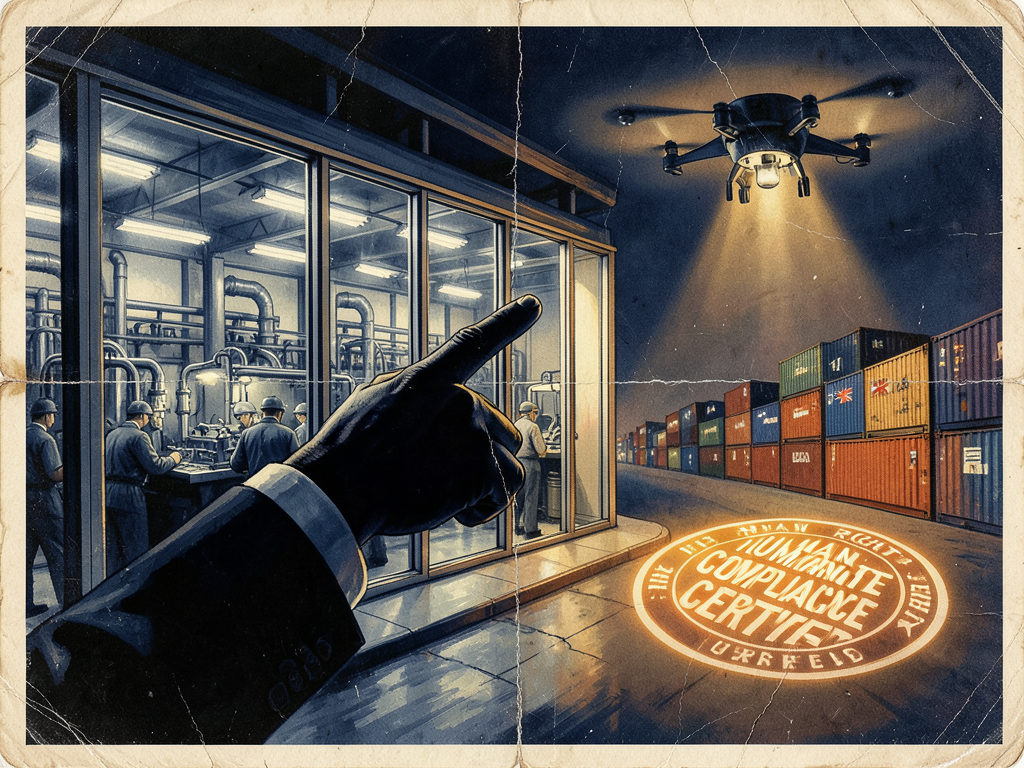
Trump’s trade wars are being reframed as human rights enforcement, not protectionism
A synchronized narrative push ran from July 22 to July 26, 2026, across six international and U.S. outlets, normalizing aggressive U.S. trade policy under Pr...
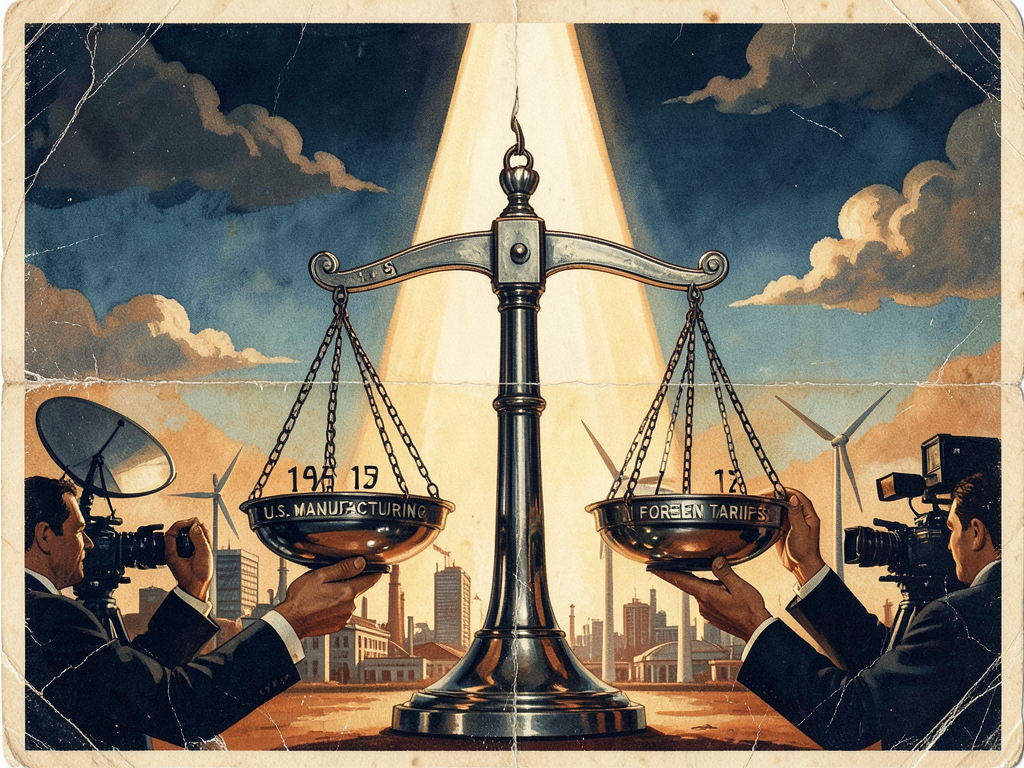
Trump’s new tariffs are being framed as a moral stand, not a trade war
A coordinated media push intensified between July 22 and July 24, 2026, across five major outlets—CNBC, CBS News, NPR, NBC News, and additional CNBC coverage...
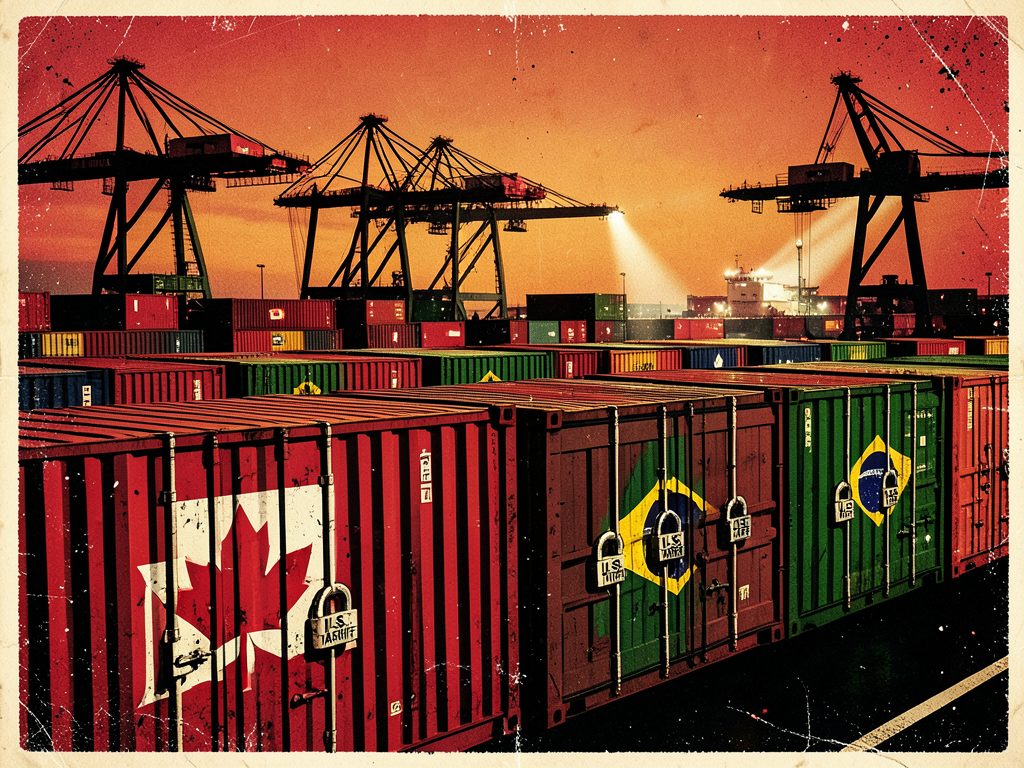
New US tariffs on Canada and Brazil are being framed as necessary and justified responses to trade disputes
On July 21–22, 2026, a spike in near-simultaneous reporting occurred across multiple outlets—CNBC, Al Jazeera, and NBC News—framing U.S. tariffs against Cana...
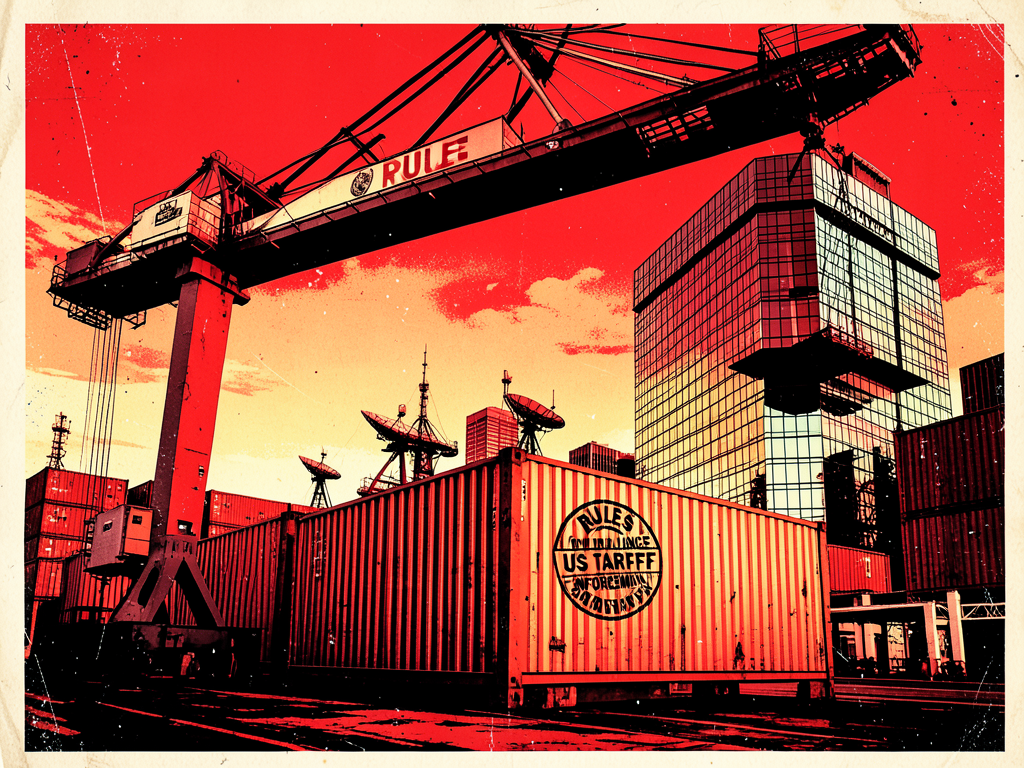
New US tariffs are being framed as rules-based responses to trade abuses
A coordinated narrative emerged on July 22, 2026, across three major outlets, normalizing U.S. tariff escalations against Canada and Brazil as legally justif...
Sources & Articles
2026-07-24T17:36:16.000Z
2026-07-24T03:15:46.000Z
2026-07-23T21:05:15.000Z
2026-07-25T01:09:01.000Z
2026-07-24T09:13:45.000Z
2026-07-24T01:08:08.000Z
2026-07-24T08:07:34.098Z
2026-07-21T19:08:12.000Z
2026-07-24T09:00:00.000Z
2026-07-23T21:31:00.000Z
Showing 10 of 20 articles
External Coverage(50)
Showing 10 of 50