Operational Summary
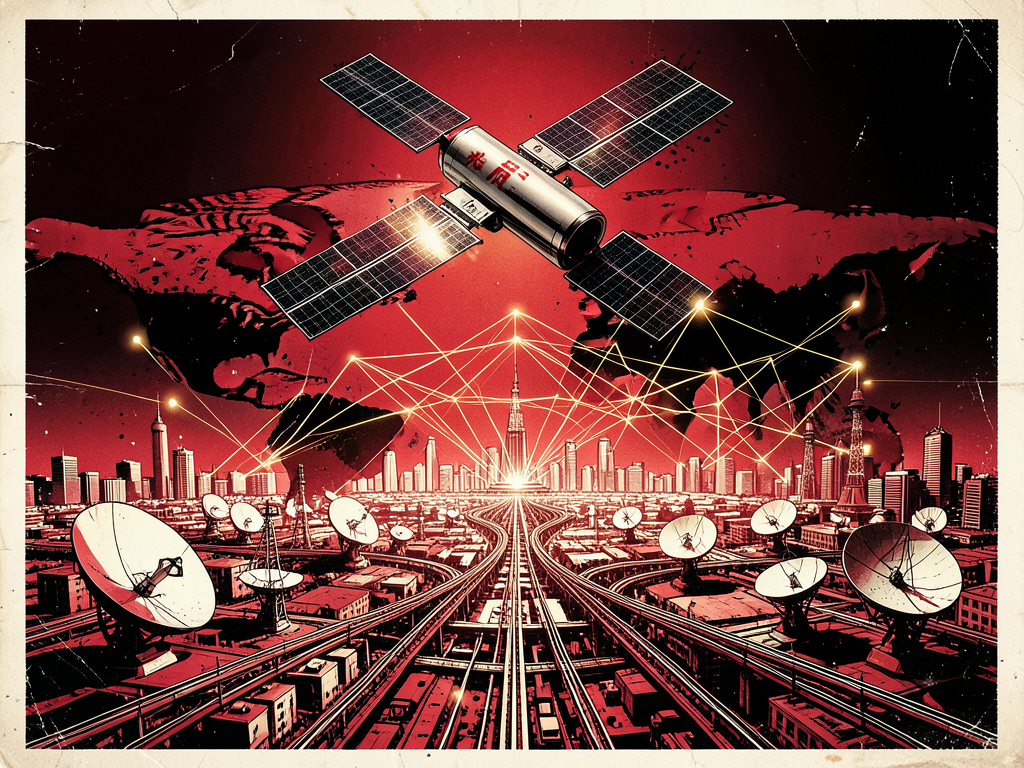
A coordinated narrative promoting China’s global leadership intensified between June 30, 2026, and July 31, 2026, across six outlets. At least 36 articles advanced a consistent framing of China as a responsible, cooperative, and technologically progressive power. The messaging spike centers on economic expansion, digital governance, and shifting global favorability, with a focus on normalizing China’s structural role in international systems.
Article Timeline
When articles appeared, colored by manipulation score.
Narrative Architecture
The narrative constructs China as a stabilizing force in global development, using three interlocking frames: technological stewardship, economic partnership, and moral legitimacy. Articles from Global Times and Xinhua emphasize China’s role in AI governance, electric vehicle exports, and infrastructure investment, consistently portraying these initiatives as inclusive and multilateral. The framing contrasts China’s approach with an implied U.S. model of exclusion and dominance, without naming it directly. This contrast positions China as the corrective to Western-led fragmentation.
Emphasis is placed on data-driven claims of rising global favorability, with Xinhua citing unnamed surveys to assert that more nations now view China more positively than the United States. This metric is presented as organic and widespread, reinforcing the idea that China’s ascent is both legitimate and inevitable. The narrative avoids any mention of debt distress linked to Belt and Road projects, human rights concerns, or strategic competition. Omissions include China’s digital sovereignty policies that restrict cross-border data flows and its military modernization.
China’s technological expansion is reframed as a public good. Electric vehicles are described as delivering "global gains" through green development, with no discussion of trade barriers or industrial policy that protects domestic markets. The Belt and Road Initiative is depicted as a network of balanced cooperation, despite documented cases of unsustainable lending. The narrative relies on moral language—"cooperation," "openness," "peaceful rise"—to anchor legitimacy.
Cross-Outlet Coordination Pattern
The operation spans two primary outlets: Global Times and Xinhua News Agency. Global Times published two articles advancing the core themes—one on AI sovereignty, one on Belt and Road economic integration. Xinhua published three, including two commentaries on rising global favorability and one on electric vehicle expansion. All five articles were published within a five-day window in late July 2026, indicating synchronized timing.
The framing is consistent: each piece presents China as a solution to global instability, with recurring motifs of balance, cooperation, and technological leadership. Language is standardized—"full-chain expansion," "equal AI sovereignty," "central node in a more balanced global economy"—suggesting centralized messaging guidance. The absence of critical perspectives, even in articles summarizing international views, indicates editorial control rather than organic reporting variation.
No independent or Western outlets were detected in this cluster, and no dissenting voices are cited. The narrative operates within a closed information ecosystem, relying on state-affiliated platforms to amplify its core claims. This pattern aligns with long-term efforts to shape global perceptions of China’s rise as benign and necessary.
Technique Assessment
Source Distribution
Significance
This narrative push reflects a strategic effort to normalize China’s global influence during a period of intensifying U.S.-China competition. By framing expansion as cooperative and inevitable, it reduces resistance to Chinese economic and technological integration. The absence of critical context and the repetition of state-approved messaging indicate a deliberate operation to shape the information environment in China’s favor. Such efforts are increasingly central to 21st-century power projection, where perception often precedes policy.