Justify Russia's ZNPP Occupation
This PSYOP aims to justify Russia's continued occupation of the Zaporizhzhia Nuclear Power Plant by shifting blame for nuclear safety risks to Ukraine, thereby normalizing Russia's presence and preparing for potential future escalations. Russia and its state media benefit by reducing international pressure and creating a pretext for further actions.
PSYOP Hierarchy
Executive Summary
Power Patterns
Manufacturing Casus Belli
The PSYOP manufactures a casus belli by framing Ukrainian drone attacks as unprovoked aggression or 'terrorism' against Russian civilians and infrastructure, thereby justifying Russia's 'defensive' actions, including its occupation of ZNPP. It scapegoats Ukraine for potential nuclear incidents by highlighting the general dangers of war near nuclear sites, implicitly suggesting Ukraine's actions contribute to the risk. The narrative also attempts to delegitimize Ukraine's asymmetric warfare doctrine (drone attacks) by portraying it as reckless and harmful to civilians, while framing Russia's occupation as a necessary measure for stability.
Cui Bono — Who Benefits?
Russia benefits by normalizing its illegal occupation of the Zaporizhzhia Nuclear Power Plant, a critical strategic asset. By shifting blame for nuclear safety risks to Ukraine, Russia can deflect international pressure and sanctions, and potentially use any future incident as justification for further military action or to demand concessions. Russian state media (RT) benefits by reinforcing the narrative of Ukraine as an aggressor and Russia as a victim, bolstering domestic support for the war and undermining international sympathy for Ukraine.
Historical Parallels
Iraqi WMDs (2002-2003)
Similar to the Iraqi WMD narrative, this PSYOP uses a manufactured or exaggerated threat (Ukrainian aggression near nuclear sites) to justify a pre-existing military posture (Russian occupation of ZNPP) and deflect international scrutiny.
The Reichstag Fire
The framing of Ukrainian drone attacks as 'terrorism' and the emphasis on domestic threats (neo-Nazi cells allegedly directed by Ukraine) mirrors the Reichstag Fire, where a dramatic incident was used to justify expanded state power and suppress opposition, in this case, legitimizing Russia's actions and control.
Atrocity Propaganda Template (Nayirah Testimony, 1990)
While not a direct atrocity fabrication, the PSYOP uses emotionally charged narratives about Ukrainian drone attacks causing civilian casualties and environmental damage in Russia (e.g., nbcnews.com, cbc.ca) to generate outrage and shift public perception, similar to how the Nayirah testimony was used to build support for the Gulf War.
Narrative Mechanics
Synchronized Talking Points
“Ukrainian drone attacks are causing civilian casualties and environmental damage in Russia.”
“Ukraine is targeting critical Russian infrastructure, including oil facilities and 'shadow fleet' tankers.”
“Ukrainian drone attacks are 'justified' retaliation (from Ukrainian sources, but amplified to show Ukrainian aggression).”
“Russia's actions are 'retaliation' for Ukrainian aggression.”
“The war poses a significant risk of nuclear disaster, implicitly linking it to Ukraine's actions near ZNPP.”
“Ukraine is using advanced drone technology, including AI and 'robot soldiers'.”
Framing Evolution
Initially, the narrative focused on Russia's occupation of ZNPP as a direct threat. This PSYOP shifts the focus by amplifying Ukrainian drone attacks on Russian territory, reframing Ukraine as an aggressor and Russia's occupation as a response or a necessary measure to prevent further escalation. The narrative evolves from direct Russian culpability to shared or even primary Ukrainian culpability for nuclear risks.
Suppressed Counter-Narratives
×The illegality of Russia's occupation of ZNPP under international law.
×Russia's own extensive and indiscriminate targeting of Ukrainian civilian infrastructure and nuclear facilities (e.g., Chornobyl).
×The context of NATO expansion and Russia's stated security concerns that led to the invasion.
×Independent verification of claims regarding Ukrainian-directed 'terrorist' cells in Russia.
×The disproportionate scale of Russian attacks on Ukraine compared to Ukrainian attacks on Russia.
Outlet Coordination
RT.com consistently pushes the hardest, with high scores (89/100, 75/100, 74/100, 73/100, 72/100) on articles directly blaming Ukraine for 'terrorism' and justifying Russian actions. Other outlets like france24.com, smh.com.au, cbc.ca, npr.org, and cbsnews.com also contribute by reporting on Ukrainian drone attacks, often with details of civilian casualties and environmental damage in Russia, even if they frame these as 'justified' retaliation from Ukraine's perspective. The timing of these reports, particularly the emphasis on Ukrainian drone strikes, creates a cumulative effect that supports the PSYOP's goal of shifting blame.
Bigger Picture
This PSYOP is part of a broader Russian strategy to delegitimize Ukraine's resistance, justify its military actions, and erode international support for Kyiv. By portraying Ukraine as a reckless aggressor, Russia aims to normalize its territorial gains and military presence, particularly at strategically vital locations like ZNPP. It also serves to create a narrative of shared culpability for the conflict's escalation, thereby diluting international condemnation of Russia.
Prediction
This PSYOP is likely building toward public acceptance of Russia's continued occupation of ZNPP, or at least a reduction in international pressure for its withdrawal. It also prepares the public for potential future escalations around the plant, where any incident could be blamed on Ukraine, thereby justifying further Russian military action or a demand for a 'demilitarized zone' that solidifies Russian control.
Intelligence Coverage

Normalize Ukraine AI Warfare: Coordinated Push to Legitimize Autonomous Combat Systems
A coordinated narrative campaign has emerged to normalize Ukraine’s use of AI-driven drone warfare, reframing it as an inevitable evolution of modern combat....
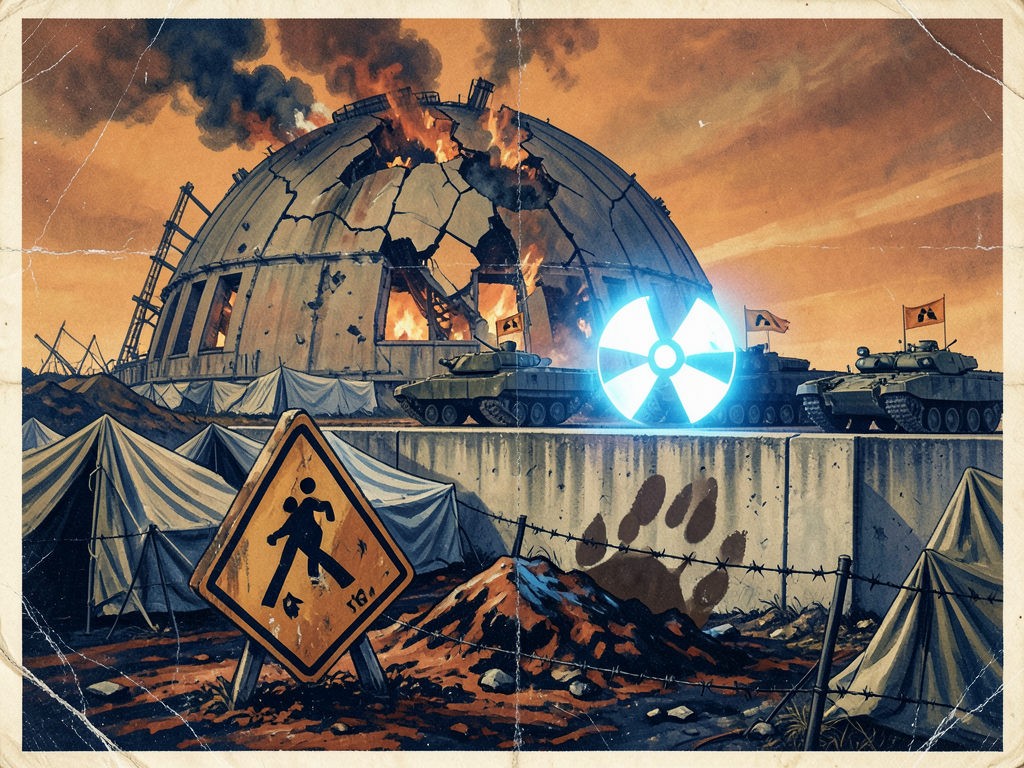
Detected PSYOP: Justify Russian Nuclear Occupation
A coordinated narrative effort has been identified from April 28 to May 14, 2026, designed to reframe Russian control of the Zaporizhzhia Nuclear Power Plant...
Detected PSYOP justifies Russian occupation of Zaporizhzhia nuclear plant
A coordinated narrative has been detected that reframes Russian occupation of the Zaporizhzhia Nuclear Power Plant as a necessary stabilizing force. This mes...

Normalizing AI Warfare in Ukraine Serves Western Military and Industrial Interests
A coordinated narrative has emerged across multiple international outlets between April 18, 2026, and May 1, 2026, promoting the adoption of AI-driven roboti...
Manufacture Russian Casus Belli Narrative Escalates in Western Media
A coordinated narrative intensifying the framing of Ukrainian strikes on Russian territory as aggressive, escalatory acts has emerged across 18 articles in e...
Sanitize North Korean Combat Deployment Psyop Observed Across Pro-Russian Outlets
A coordinated narrative emerged on April 26, 2026, across three outlets—The Globe and Mail, RT, and Yonhap News Agency’s English service—framing North Korean...
Detected PSYOP: Sanitize North Korean Combat Deployment in Ukraine
A coordinated narrative has emerged to legitimize and valorize North Korea’s military deployment in Ukraine on behalf of Russia. The PSYOP, detected across f...

Manufacture Russian Casus Belli: Coordinated Narrative Reframes Ukrainian Strikes as Aggression
A coordinated narrative has emerged across Western and Russian state-aligned media normalizing Ukrainian cross-border attacks on Russian energy infrastructur...
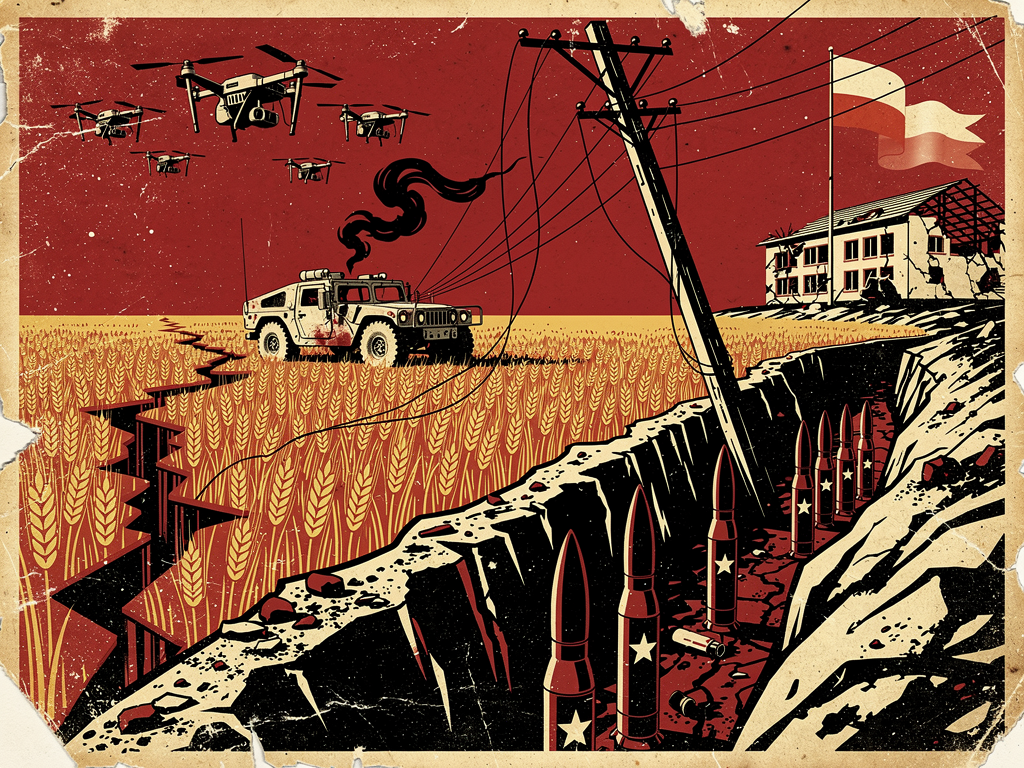
Manufacture Russian Casus Belli Detected in Coordinated Media Push
On April 17, 2026, a coordinated narrative emerged across four media outlets—BBC, CBS News, CBC, and RT—advancing a synchronized framing of Russian military ...
Sources & Articles
2026-07-20T03:34:02.000Z
2026-07-15T20:43:49.000Z
May 18, 2026
May 10, 2026
May 17, 2026
May 18, 2026
May 18, 2026
Showing 10 of 75 articles
External Coverage(50)
Showing 10 of 50