Justify US Trade Coercion
This PSYOP subtly frames U.S. tariffs against Canada and Brazil as justified responses
Executive Summary
Power Patterns
Manufacturing Casus Belli
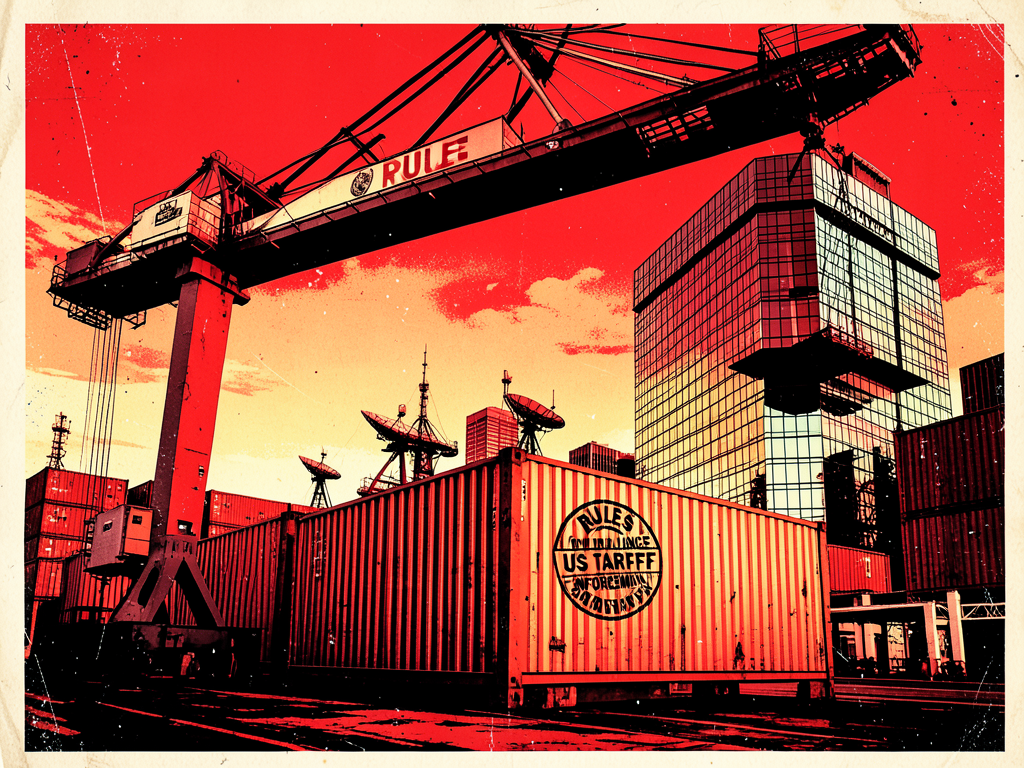
The articles manufacture a 'casus belli' for trade wars by framing the U.S. tariffs as responses to alleged unfair practices by Canada (discriminatory alcohol/dairy, favoring EU) and Brazil (illegal deforestation, Pix payment system, content moderation, market access). This creates a pretext for economic aggression. The U.S. leverages its 'Exorbitant Privilege' as the issuer of the global reserve currency to impose these tariffs, knowing other nations are heavily reliant on trade with the U.S. and the dollar system. This also aligns with 'Financialization' by prioritizing financial interests (U.S. credit card companies) over productive economic activity, as seen in the Brazil tariffs.
Cui Bono — Who Benefits?
This narrative enables the Trump administration to pursue protectionist trade policies and exert economic pressure on trading partners without significant domestic or international backlash. By framing these actions as justified responses to foreign transgressions, it garners public support for policies that might otherwise be seen as aggressive or detrimental to global trade relations. It also allows specific U.S. industries to gain market advantage or protection.
Historical Parallels
Sanctions as Siege Warfare
The use of tariffs, framed as a legal response to unfair practices, mirrors the mechanism of sanctions. While not as severe as comprehensive sanctions, these tariffs are presented as a non-military alternative to achieve policy goals, often with significant economic impact on the target country, similar to how sanctions aim to create internal pressure for policy change.
Iraqi WMDs (2002-2003)
While not involving military action, the method of manufacturing consent through repeated, often unsubstantiated claims of 'unfair practices' (like 'illegal deforestation' or 'discriminatory trade') to justify a pre-determined aggressive action (tariffs) bears a resemblance to the way intelligence fabrications were used to justify the Iraq War.
Narrative Mechanics
Synchronized Talking Points
“U.S. tariffs are a 'response' to unfair trade practices.”
“Canada/Brazil have acted provocatively or failed to negotiate in good faith.”
“The U.S. actions are 'legally grounded' or 'procedural'.”
Framing Evolution
The narrative consistently frames the U.S. as reacting to provocations, rather than initiating aggressive trade measures. The initial framing emphasizes the alleged transgressions of Canada and Brazil, then pivots to the U.S. tariffs as a necessary and justified consequence. There is no significant shift in framing over time within this cluster, indicating a consistent message.
Suppressed Counter-Narratives
×Detailed scrutiny of the evidence supporting U.S. claims of 'unfair trade practices' (e.g., the specific legal basis for 'illegal deforestation' as a trade grievance, or the actual impact of Pix on U.S. credit card companies).
×The broader economic impact of these tariffs on U.S. consumers and businesses.
×The potential for these tariffs to destabilize global trade relations or provoke retaliatory measures.
×The possibility that these tariffs are primarily driven by domestic political considerations rather than genuine trade grievances.
Outlet Coordination
Al Jazeera (score 46) and CNBC (score 43) present the U.S. position as a justified enforcement of trade rules, with CNBC explicitly downplaying scrutiny of Brazil's content moderation policies. NBC News (score 50) also frames the U.S. stance as legally grounded and procedural. While the scores are relatively low, indicating a degree of standard reporting, the consistent framing of U.S. actions as justified responses across these diverse outlets suggests a subtle, coordinated effort to shape public perception in favor of the U.S. government's trade policies. The timing of the Brazil articles (same day) indicates rapid dissemination of the U.S. government's preferred narrative.
Bigger Picture
This PSYOP fits into a broader geopolitical landscape where the U.S., under the Trump administration, is actively re-shaping global trade relationships through unilateral actions. It signals a move away from multilateral trade agreements and towards bilateral coercion, leveraging U.S. economic power to achieve specific domestic and foreign policy objectives. This approach challenges the existing 'rules-based international order' and contributes to increased global economic instability.
Prediction
This PSYOP is likely building toward public acceptance of continued and potentially expanded use of tariffs and other economic coercive measures as primary tools of U.S. foreign policy. It prepares the public for a more protectionist and confrontational stance in international trade, potentially leading to further trade wars and the erosion of global trade institutions.
Sources & Articles
2026-07-21T15:54:13.000Z
2026-07-21T00:08:50.000Z
2026-07-21T01:15:38.000Z
2026-07-16T05:04:30.000Z
2026-07-16T07:36:17.096Z