Normalize Trump's Trade Wars
This PSYOP aims to normalize and legitimize the Trump administration's aggressive protectionist trade policies, framing them as necessary for national interest and human rights. It benefits the Trump administration and protectionist political factions by building public acceptance for sustained trade disputes and economic friction.
Executive Summary
Power Patterns
Manufacturing Casus Belli
The articles, particularly those from Al Jazeera and CNBC, frame the new tariffs as a response to 'forced labor violations' or 'unfair trade practices' by other nations, creating a pretext for protectionist policies. This aligns with Manufacturing Casus Belli, where a justification (real or fabricated) is amplified to support a pre-planned action. The 'forced labor' justification, while presented as a human rights concern, also serves as a moral legitimation for economic policy, akin to Religious Legitimation of Power, placing the policy beyond question. The tariffs themselves, by protecting specific domestic industries, also enable Rent-Seeking Behavior.
Cui Bono — Who Benefits?
This narrative enables the Trump administration to implement and sustain protectionist trade policies, such as tariffs, by framing them as necessary, strategic, and morally justified. It provides political cover for actions that might otherwise be seen as economically detrimental or aggressive, thereby consolidating support for a 'America First' economic agenda and potentially benefiting domestic industries shielded from foreign competition.
Historical Parallels
Iraqi WMDs (2002-2003)
The use of unverified or exaggerated claims ('forced labor,' 'unfair trade practices') to justify a pre-determined policy (tariffs), with media amplifying the claims and downplaying dissenting evidence, mirrors the WMD narrative used to justify the Iraq War.
Sanctions as Siege Warfare
The framing of tariffs as a 'powerful trade weapon' or a 'strategic move' to pressure other nations, despite potential negative impacts on civilian economies, parallels the use of sanctions as a form of economic warfare, presented as an alternative to military action but often causing widespread harm.
Narrative Mechanics
Synchronized Talking Points
“Tariffs are a justified response to 'forced labor' or 'unfair trade practices.'”
“Trump's actions are 'strategic,' 'bold,' or 'unprecedented.'”
“The tariffs are a necessary measure to protect American workers and industries.”
“Other nations are 'discriminating' against American products or 'retaliating' unjustly.”
Framing Evolution
Initially, the narrative focused on Trump's general protectionist stance and trade wars. With the Supreme Court blocking previous tariff approaches, the framing has evolved to emphasize new legal mechanisms (like Section 338 or Section 301) and moral justifications (like forced labor) to sustain the tariff regime. The shift is from broad economic protectionism to more legally and morally specific pretexts.
Suppressed Counter-Narratives
×Independent verification of widespread forced labor claims across 60+ countries.
×The actual economic costs of tariffs for American consumers and businesses.
×The retaliatory nature of many foreign trade actions, often in response to initial US tariffs.
×Alternative diplomatic or multilateral solutions to trade disputes.
×The potential for these tariffs to destabilize global trade relations and alliances.
Outlet Coordination
Fox News (e.g., 'Trump just expanded his tariff playbook') and some CNBC articles (e.g., 'Trump to slap 'sweeping' new tariffs') push hardest on the 'strategic' and 'justified' framing of Trump's tariffs, often highlighting the novelty and legal strength of the actions while downplaying negative consequences or counter-arguments. Al Jazeera and other CNBC articles (e.g., 'Trump's new global tariff draws rebukes') report more neutrally, often including criticisms from trade partners and noting the lack of independent evidence for forced labor claims, indicating a less coordinated, more journalistic approach in those specific pieces.
Bigger Picture
This PSYOP fits into a broader geopolitical landscape of increasing economic nationalism and the erosion of the post-WWII liberal international order. It reflects a shift from globalized free trade to a more fragmented, protectionist system where economic policy is increasingly intertwined with national security and perceived moral imperatives. The end game is to re-establish American economic dominance, or at least perceived fairness, through unilateral actions, potentially at the cost of international cooperation and stability.
Prediction
This PSYOP is likely building toward public acceptance of a sustained, aggressive protectionist trade policy under the guise of national interest, human rights, and legal enforcement. It prepares the public for continued trade disputes, potential economic friction with allies, and a redefinition of global trade norms, making it harder to challenge these policies on economic or diplomatic grounds.
Intelligence Coverage
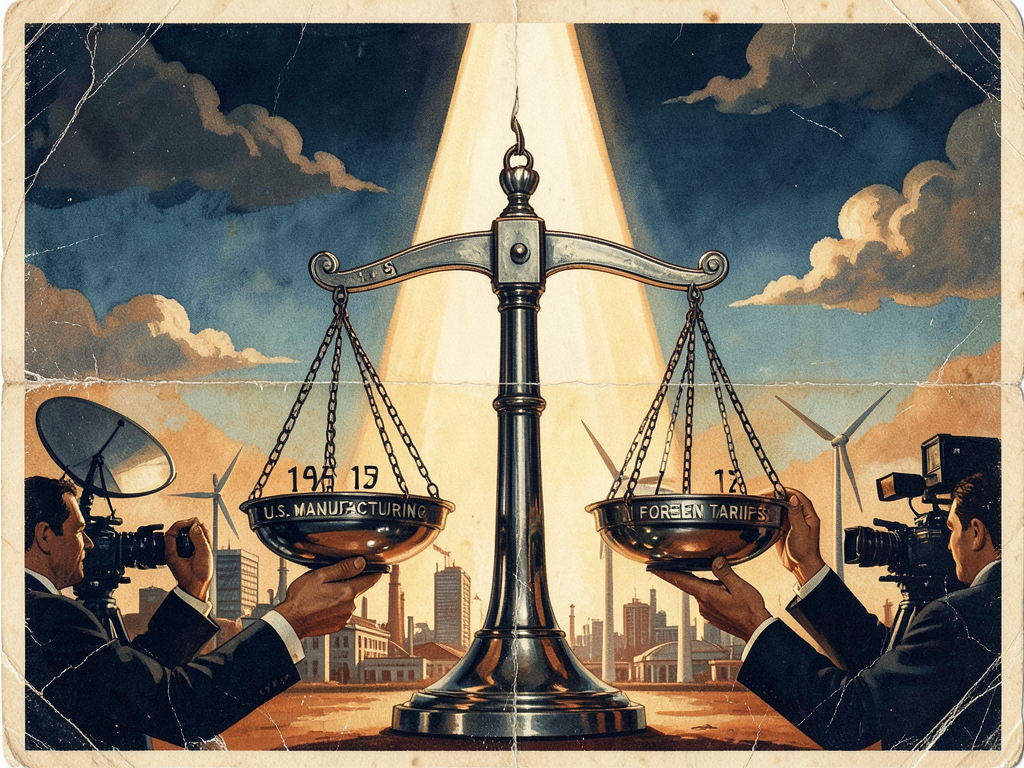
Trump’s new tariffs are being framed as a moral stand, not a trade war
A coordinated media push intensified between July 22 and July 24, 2026, across five major outlets—CNBC, CBS News, NPR, NBC News, and additional CNBC coverage...
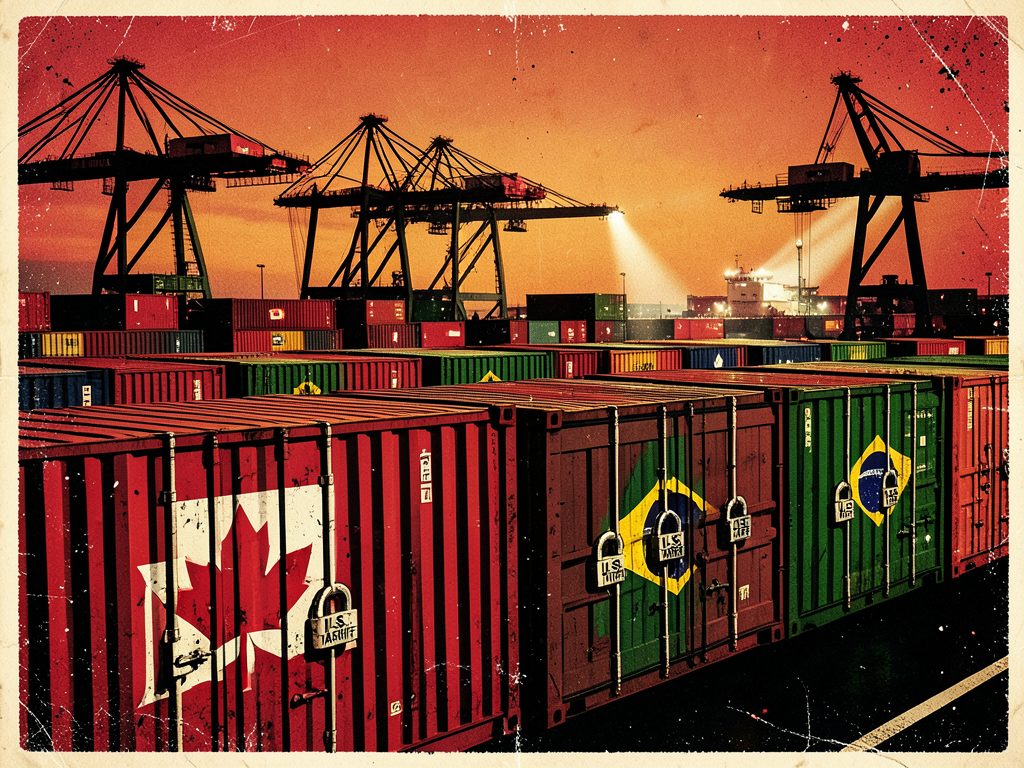
New US tariffs on Canada and Brazil are being framed as necessary and justified responses to trade disputes
On July 21–22, 2026, a spike in near-simultaneous reporting occurred across multiple outlets—CNBC, Al Jazeera, and NBC News—framing U.S. tariffs against Cana...
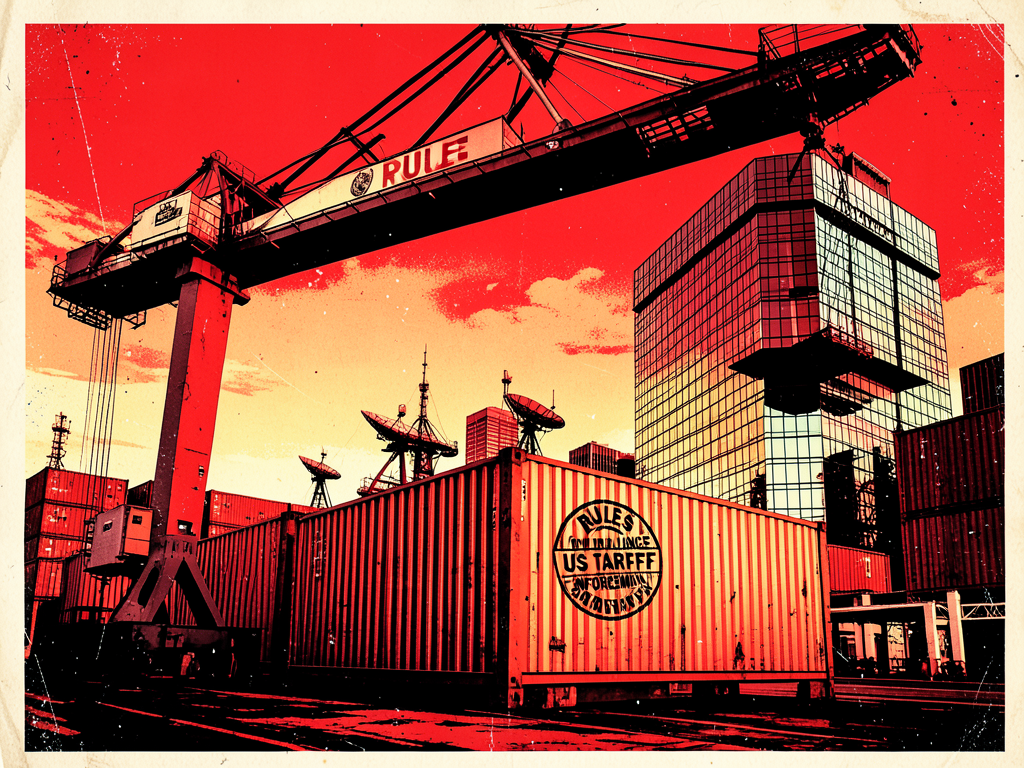
New US tariffs are being framed as rules-based responses to trade abuses
A coordinated narrative emerged on July 22, 2026, across three major outlets, normalizing U.S. tariff escalations against Canada and Brazil as legally justif...
Sources & Articles
2026-07-25T01:09:01.000Z
2026-07-24T09:13:45.000Z
2026-07-24T01:08:08.000Z
2026-07-21T13:25:37.000Z
2026-07-24T03:15:46.000Z
2026-07-23T21:05:15.000Z
2026-07-21T13:06:36.000Z
2026-07-21T19:08:12.000Z
2026-07-24T09:00:00.000Z
2026-07-23T21:31:00.000Z
Showing 10 of 18 articles