Legitimize Russia's Mali Occupation
This PSYOP aims to legitimize Russia's military and economic occupation of Mali by fabricating and amplifying security threats, portraying Russian forces as essential saviors, and downplaying their negative actions. Russia and the Malian junta benefit from this narrative, which justifies their continued collaboration and expands Russian influence in the region.
PSYOP Hierarchy
Executive Summary
Power Patterns
Manufacturing Casus Belli
The PSYOP manufactures a casus belli by consistently highlighting the severe and coordinated nature of rebel attacks, framing them as an existential threat that justifies the Malian junta's reliance on Russian forces. It uses 'divide and rule' by emphasizing the internal divisions and ideological differences within the rebel coalition (Islamists vs. separatists) while simultaneously portraying their temporary alliance as a heightened, unified threat. The narrative also implicitly frames the rebels' asymmetric tactics as pure 'terrorism' while normalizing the Malian-Russian military response.
Cui Bono — Who Benefits?
Russia benefits by legitimizing its military footprint and expanding its geopolitical influence in Africa, positioning itself as a credible alternative to Western security partners. The Malian junta benefits by justifying its authoritarian rule and its alliance with Russia, deflecting international criticism, and consolidating power under the guise of fighting terrorism. Russian PMCs benefit from continued contracts and operational freedom, often with impunity for their actions.
Historical Parallels
Iraqi WMDs (2002-2003)
Similar to the Iraqi WMDs narrative, this PSYOP uses a consistent, amplified threat narrative (coordinated terrorist attacks) to justify military action and foreign intervention, with dissenting or contextual information largely suppressed across certain media outlets.
The Humanitarian Intervention Template (Libya 2011, Syria 2011-present)
While the target is different, the mechanism is similar: a crisis is amplified to justify external military involvement. Here, the 'crisis' is internal instability, and the 'intervention' is Russian, but the narrative serves to legitimize foreign military presence under the guise of restoring order.
Narrative Mechanics
Synchronized Talking Points
“Mali faces a severe, coordinated threat from al-Qaeda-linked groups (JNIM) and Tuareg separatists (FLA).”
“These groups are capable of large-scale attacks, including on the capital Bamako and key military sites.”
“The Malian military, often with Russian support, is actively fighting back and achieving successes (primarily in RT articles).”
“The security situation is volatile, and the government's control is fragile.”
“Western powers (especially France) are either ineffective or subtly complicit in the instability (primarily in RT articles).”
Framing Evolution
The narrative has evolved from initially reporting on general instability to emphasizing a coordinated, existential threat from a newly allied rebel front. Russian-aligned outlets (RT) have consistently framed Russia as the effective solution, while Western outlets, while acknowledging the threat, have also started to question Russia's effectiveness after initial setbacks, creating a subtle divergence in the 'solution' aspect, but maintaining the 'threat' framing.
Suppressed Counter-Narratives
×Well-documented human rights abuses by the Malian military and Russian PMCs.
×The role of the Malian junta's own policies and legitimacy in fueling the insurgency.
×The strategic and economic motivations behind Russia's presence beyond counter-terrorism.
×The specific details of Russian military failures or civilian casualties caused by their operations.
×The historical context of French intervention and its impact on the current situation, beyond simple 'neocolonialism'.
Outlet Coordination
RT.com consistently pushes the hardest for the narrative that Russia is effectively countering terrorism and is a legitimate partner, often including claims of Western/Ukrainian mercenary involvement without evidence. Outlets like Al Jazeera, Middle East Eye, and The Guardian report on the severity of the attacks and the Malian government's struggles, implicitly reinforcing the 'threat' aspect, but are more cautious about attributing success to Russia. The Globe and Mail and BBC have started to introduce skepticism about Russia's effectiveness, indicating a slight fracture in the 'solution' part of the narrative, but the 'threat' framing remains strong across all outlets.
Bigger Picture
This PSYOP is part of Russia's broader strategy to expand its influence in Africa, challenging Western hegemony by offering an alternative security and economic partnership model. By portraying Mali as a state under siege that only Russia can save, Moscow aims to solidify its position in the Sahel, gain access to resources, and establish a network of client states that can serve its geopolitical interests on the global stage. It also serves to distract from Russia's own internal and external challenges by projecting strength and effectiveness abroad.
Prediction
This PSYOP is likely building toward public acceptance of a long-term, expanded Russian military and economic presence in Mali and potentially other Sahelian states. It prepares the public for continued military operations, potentially increased Russian troop deployments, and the normalization of Russian influence as a necessary evil or even a positive force in a region plagued by instability. It also sets the stage for future resource extraction deals and political alignment with Russia.
Intelligence Coverage
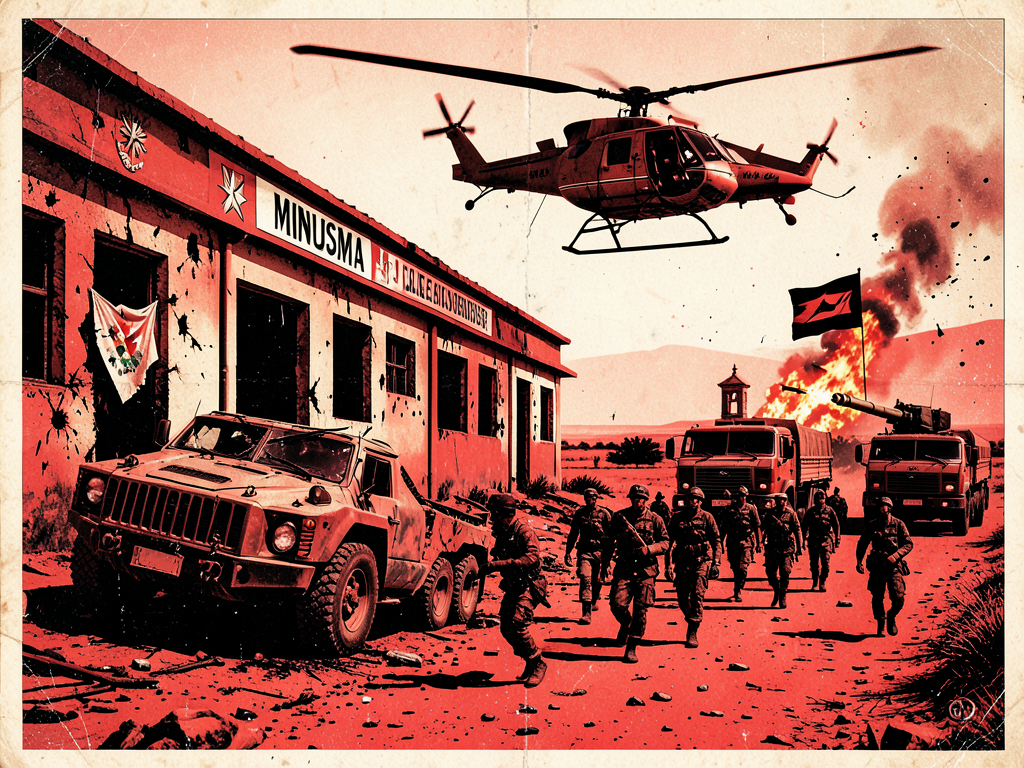
Detected PSYOP to legitimize Russia’s military presence in Mali through threat amplification
A coordinated narrative operation was detected between April 25, 2026, and May 17, 2026, across 16 articles in 10 outlets, aiming to justify Russia's militar...
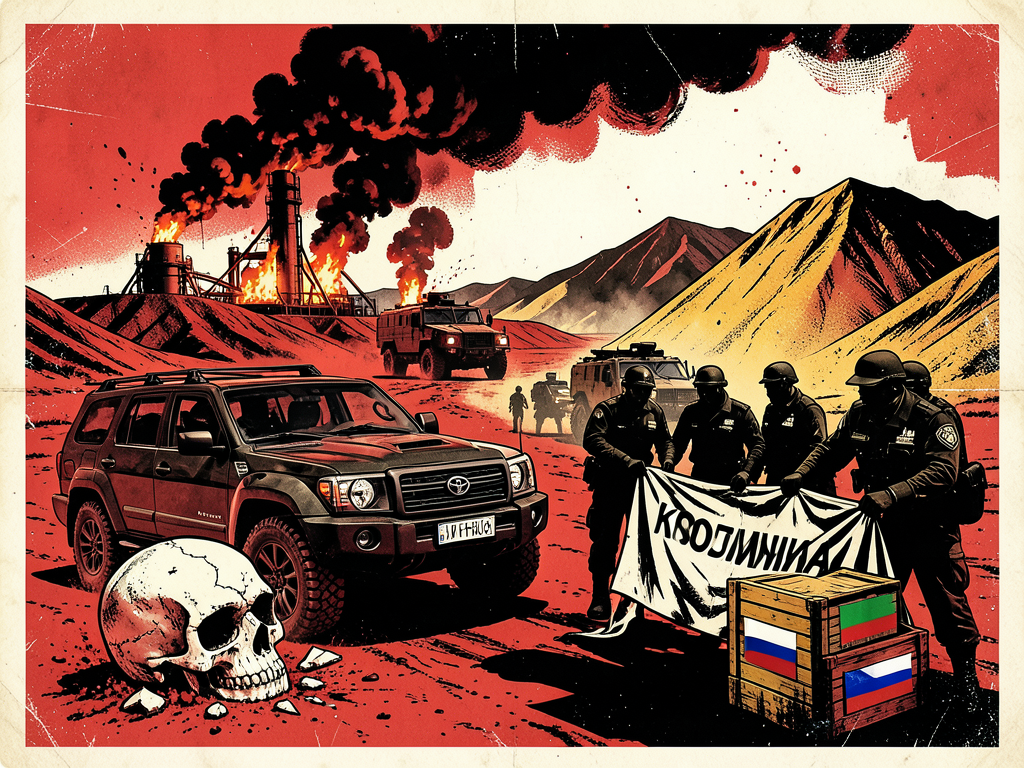
Normalize Mali-Russia Resource Grab: Junta and Kremlin Advance Through Manufactured Crisis
An information operation designated Normalize Mali-Russia Resource Grab has surged in intensity between April 25, 2026, and May 6, 2026. Fourteen articles ac...
Sources & Articles
Apr 26, 2026
Apr 27, 2026
Apr 27, 2026
May 17, 2026
Apr 27, 2026
Apr 27, 2026
May 8, 2026
May 1, 2026
Apr 30, 2026
Showing 10 of 16 articles
External Coverage(50)
Showing 10 of 50