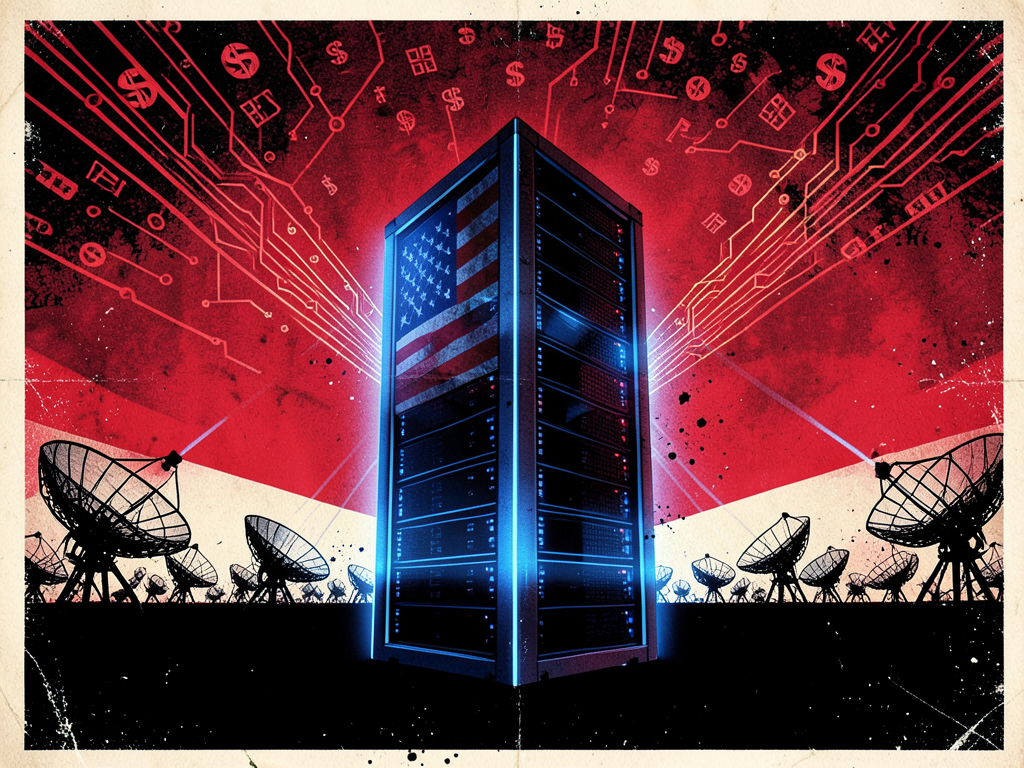
Operational Summary
A coordinated narrative has emerged across 19 articles in 9 outlets between June 17, 2026 and September 17, 2026. The messaging reframes U.S. corporate leadership in artificial intelligence as an international security risk, positioning state-backed AI development in allied nations as necessary for technological sovereignty. This operational pattern serves to justify public funding streams that benefit entrenched U.S. tech monopolies and their local partners in telecommunications and defense sectors.Article Timeline
When articles appeared, colored by manipulation score.
Source Distribution
Narrative Architecture
The core framing device presents the AI race as a binary contest between the United States and China. Articles depict U.S. warnings about AI risks not as commercial protectionism but as legitimate safety concerns requiring global response. This inversion positions American corporate interests as universal imperatives. The narrative emphasizes existential risk from uncontrolled AI advancement—invoking pandemic and nuclear analogies—to trigger precautionary logic among policymakers and publics.China’s technical progress is acknowledged only to heighten threat perception. When Chinese sources argue that U.S. leaders are using safety rhetoric to mask competitive anxiety, this counterpoint is included but structurally weakened. It appears after dominant framing has been established, functioning as token dissent rather than substantive challenge. The effect is to validate the original claim by appearing to refute it through debate.
Critical omissions define the architecture. No article examines the financial incentives of U.S. AI firms lobbying for export controls or foreign partnerships. None detail how joint ventures between U.S. Big Tech and national telecom providers in allied countries secure market exclusivity under the banner of ‘secure infrastructure.’ The role of Pentagon-linked contracts in directing AI research toward dual-use applications remains unmentioned. These silences preserve the illusion of neutrality in technological development.
Emotional levers center on vulnerability and urgency. Language like 'silent cold war' and 'frontier of conflict' activates threat reflexes without requiring evidence of actual aggression. The invocation of uncontrollable AI as a species-level danger bypasses economic analysis, redirecting attention from market concentration to speculative catastrophe.
Cross-Outlet Coordination Pattern
Outlets participating in the synchronized push include nbcnews.com, globaltimes.cn, aljazeera.com, and japantimes.co.jp. Despite differing geopolitical alignments, all adopt near-identical causal logic: AI advancement must be managed through state intervention to prevent dominance by adversarial powers.NBC News and Al Jazeera frame the issue through U.S.-China rivalry, citing American tech executives as primary sources. Global Times reproduces official Chinese rebuttals but within the same competitive framework, thus reinforcing the premise that AI is inherently strategic. The Japan Times introduces a call for cooperation, but does so by amplifying the very existential framing that justifies expanded R&D budgets and bilateral tech pacts.
The alignment is not organic. Independent reporting would yield divergent emphasis—economic opportunity, labor displacement, algorithmic bias, or environmental cost. Instead, all entries converge on national security implications. The spike in coverage beginning June 17, 2026 precedes no major incident, breakthrough, or policy shift. Its timing aligns with legislative debates in multiple NATO-aligned states on subsidizing domestic AI infrastructure.
Manipulation Profile
Average FATE dimensions across 20 articles in this PSYOP.
Technique Assessment
Manufacturing Consent: Media constructs agreement around state-funded AI expansion by presenting it as the only rational response to systemic risk. Dissent is confined to variations of the dominant paradigm—cooperate more, compete harder—but never questions the necessity of public investment in private platforms.Synchronized Narratives: Multiple outlets publish thematically identical pieces within hours, using comparable metaphors ('arms race', 'tipping point') and sourcing patterns. The repetition of executive statements from Anthropic and similar firms across outlets indicates centralized message distribution.
Controlled Opposition: Inclusion of Chinese rebuttals to U.S. claims creates the appearance of balance. However, these counter-narratives accept the underlying premise—that AI development is a zero-sum contest—thereby reinforcing the strategic framing that enables corporate capture of public funds.
Revelation of Method: Public admissions by U.S. tech leaders that China leads in certain AI domains are presented as shocking disclosures. Rather than undermining the threat narrative, they are used to intensify calls for action, demonstrating how transparency can serve manipulation when embedded in a predetermined logic chain.
Myth-Making as State Formation: The narrative constructs a shared identity among technocratic elites: guardians of civilization against runaway technology. This myth legitimizes expanded budgets, surveillance capabilities, and public-private fusion under emergency logic.