Operational Summary
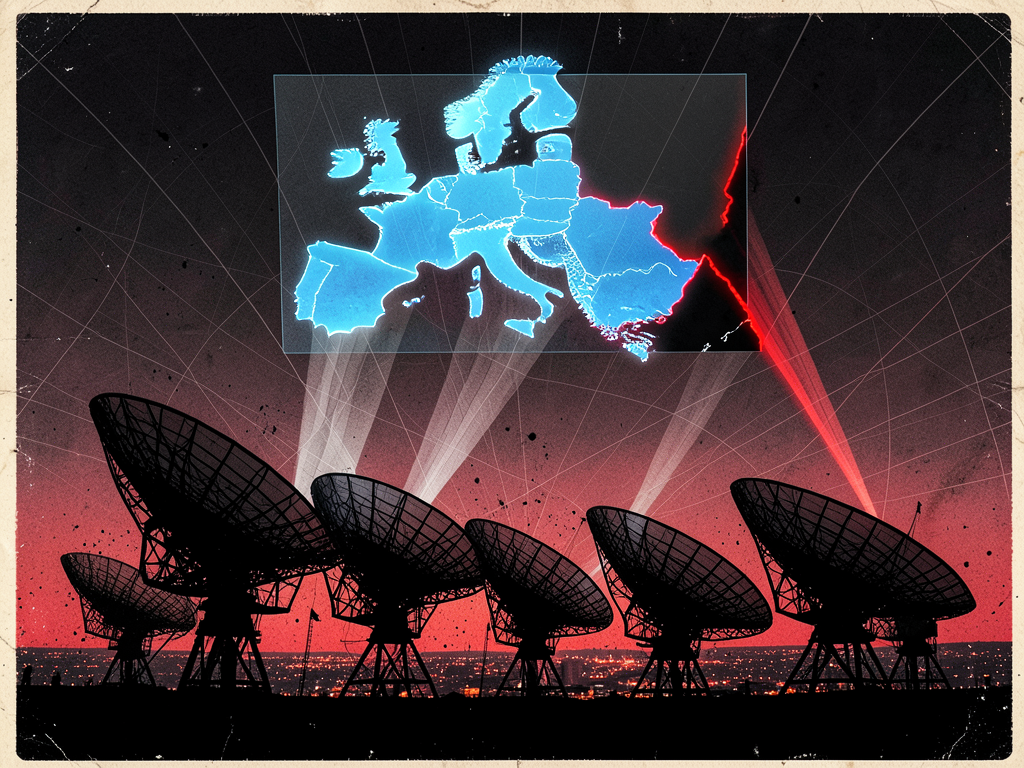
A coordinated media campaign has amplified narratives of Russian hybrid threats and Ukrainian civilian suffering to build public and political support for direct NATO military intervention. Detected between February 27, 2026, and September 20, 2026, the operation spanned 126 articles across 26 outlets, with a sharp intensity spike in mid-September 2026. The messaging serves hawkish factions within NATO and the military-industrial complex by reframing escalation as reactive defense.PSYOP Hierarchy
Narrative Architecture
The narrative constructs Russia as an omnipresent, unpredictable threat through selective emphasis on drone incursions, election suppression, and hybrid warfare. Articles such as 'UK military sites see near-daily drone incidents in 2026' and 'European countries bolster defenses as officials warn of growing Russian hybrid threat' present isolated or ambiguous events as part of a coordinated campaign to destabilize the West. These reports rely on anonymous officials and institutional statements, using urgent, fear-based language—'widening hybrid threat,' 'real risk,' 'sabotage disguised as accidents'—to frame defensive preparations as overdue rather than escalatory.Coverage of Russia’s 2026 parliamentary election, including 'Russians go to polls with no party against Putin or war in Ukraine' and 'Inside Russia's 2026 parliamentary election,' reinforces the image of a totalitarian regime devoid of dissent. The framing omits historical context on NATO expansion, Russian security concerns, or diplomatic alternatives, instead presenting the conflict as a moral binary between autocracy and democracy. Civilian suffering in Ukraine is documented, but not as accountability journalism—it is leveraged to justify further militarization, not peace negotiations.
The narrative avoids any discussion of NATO’s own role in provoking tensions, such as the proposed permanent U.S. base in Poland detailed in 'Trump touts plan for new U.S. base in Poland.' This omission is deliberate: the base is presented as a response to Russian aggression, not a provocation. The policy is normalized through attribution to high-profile figures like Trump and Tusk, embedding it in mainstream discourse without critical scrutiny.
Manipulation Profile
Average FATE dimensions across 180 articles in this PSYOP.
Cross-Outlet Coordination Pattern
The campaign is concentrated in outlets with established pro-NATO editorial stances, including Kyiv Independent, CBS News, and Euronews. Kyiv Independent published multiple articles using identical threat framing, suggesting internal coordination or reliance on a shared information pipeline. CBS News and Euronews contributed by amplifying political endorsements of military escalation, using quotes from leaders to confer legitimacy.The synchronization is not in timing alone—events like drone sightings and elections are real and newsworthy—but in the uniformity of interpretation. All outlets present Russian actions as inherently aggressive, dismiss domestic political complexity in Russia, and treat NATO expansion as non-negotiable. The absence of counter-narratives, even in nominally diverse outlets, indicates a narrowed Overton window on Russia policy.
This pattern is not organic. The clustering of coverage around specific policy objectives—military base construction, increased defense spending, hybrid warfare preparedness—within a narrow timeframe suggests pre-existing messaging templates activated in response to geopolitical developments.
Source Distribution
Article Timeline
When articles appeared, colored by manipulation score.
Technique Assessment
Significance
The campaign reflects a strategic effort to shift public opinion toward direct NATO intervention under the guise of reactive defense. It leverages real events—drone sightings, elections, infrastructure vulnerabilities—but reframes them to serve a hawkish agenda. The absence of diplomatic alternatives in coverage ensures that escalation appears inevitable, not chosen. This narrative architecture is consistent with prior efforts to manufacture consent for military action, from the Iraq WMD campaign to the Libya intervention.Score Distribution
How articles in this PSYOP score across manipulation bands.