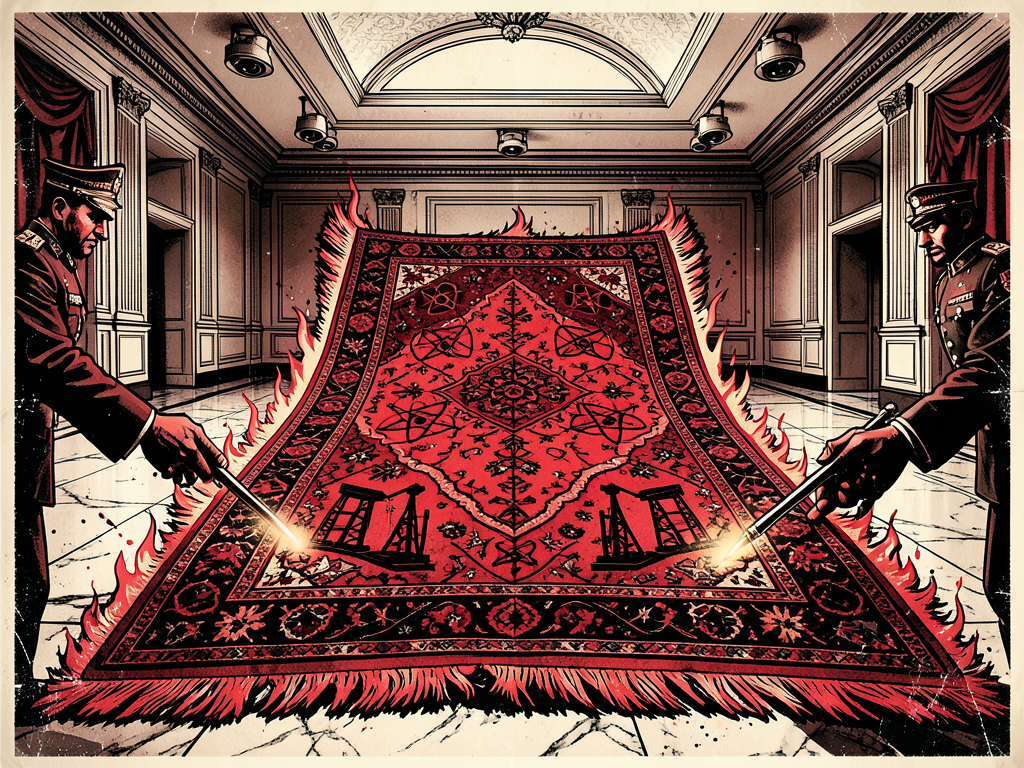
Operational Summary
A synchronized intensification of anti-diplomacy messaging targeted at the Iran nuclear agreement unfolded between June 4 and July 5, 2026. Fifty-eight articles across 22 outlets amplified a uniform narrative that the deal rewards Iranian bad faith, delays necessary confrontation, and endangers regional security. The effort reflects a deliberate escalation in narrative pressure to close the window for diplomatic resolution.Narrative Architecture
The coverage constructs Iran as inherently untrustworthy and diplomatically incorrigible. Key framing devices include the assertion that inspections are systematically blocked, that uranium stockpiles remain dangerously high, and that the regime uses negotiations to buy time for rearmament. These claims pivot on selective emphasis: the lack of full IAEA access is presented as proof of weapons intent, not a negotiable condition. The regime’s internal repression—highlighted by references to executions and protest crackdowns—is invoked not as a human rights issue but as evidence of irredeemable hostility, thus disqualifying it from good-faith talks.Emotional levers center on betrayal and naivete. The deal is repeatedly labeled a "pause before the next war" and a recurrence of past failures. This frames diplomacy not as a strategic choice but as moral and tactical surrender. The term "capitulation" appears across multiple outlets, anchoring the reader’s judgment before facts are examined. Threat perception is inflated through unverified body counts and anonymous sourcing, particularly from intelligence and military figures whose assessments are presented as definitive.
Crucially, the narrative omits contextual factors that would normalize Iran’s position: its compliance with prior JCPOA terms until 2018, the history of U.S. withdrawal and re-imposition of sanctions, and Iran’s repeated offers to return to compliance in exchange for sanctions relief. It also bypasses the asymmetry in military posture—U.S. and Israeli strikes on Iranian-aligned targets are justified as defensive, while Iran’s deterrent capabilities are labeled inherent aggression.
Cross-Outlet Coordination Pattern
The narrative spans ideological and regional media outlets, including Israeli state-linked platforms (Ynet, Israel National News), U.S. right-leaning outlets (Fox News, The Jerusalem Post), and European broadcasters with transatlantic alignment (Euronews). The consistency of phrasing and timing indicates centralized narrative management.Articles published within 48 hours of each other employ identical metaphors—"buying time," "dead man walking," "illusion of progress"—and rely on the same non-official sources. For example, unnamed U.S. and Israeli intelligence assessments are cited independently by Fox News, The Jerusalem Post, and Ynet, yet the details align precisely, suggesting coordinated data drops. The appearance of Vice President JD Vance’s statement in multiple outlets without independent verification further indicates a scripted rollout.
Notably, no counter-narratives appeared in these same outlets during the period. No articles questioned the efficacy of military action, explored the risks of escalation, or referenced alternative diplomatic models. The absence of debate within a broad set of ideologically diverse but policy-aligned outlets underscores a controlled information environment.
Source Distribution
Article Timeline
When articles appeared, colored by manipulation score.
Technique Assessment
Score Distribution
How articles in this PSYOP score across manipulation bands.
Significance
The operation targets the last viable channel for de-escalation in a high-risk region. By predefining diplomacy as surrender, it conditions policymakers and the public to accept military options as inevitable. This aligns with actors who benefit from sustained conflict: the Israel lobby, the U.S. military-industrial complex, and regional factions invested in the failure of détente. The success of this narrative pattern increases the likelihood of irreversible miscalculation.Manipulation Profile
Average FATE dimensions across 93 articles in this PSYOP.