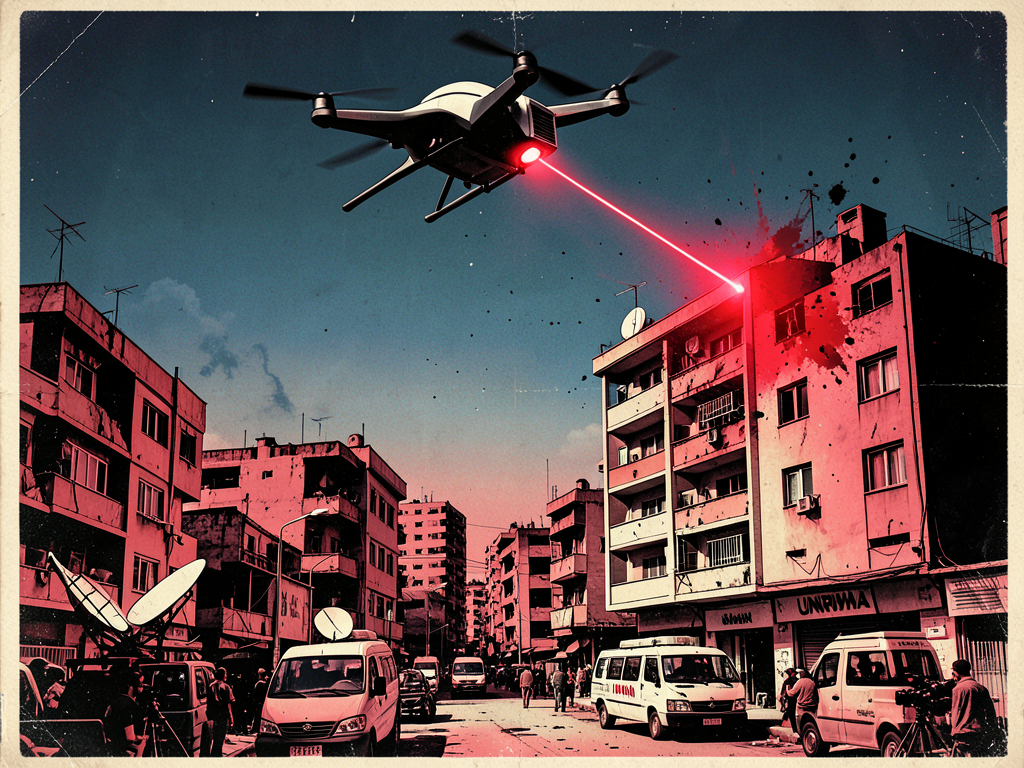
Operational Summary
A coordinated media campaign has intensified across 12 outlets, producing 57 articles between May 11, 2026 and August 16, 2026, to legitimize Israeli targeted killings of Hamas and Hezbollah figures. The messaging uniformly presents the operations as lawful, precise, and necessary acts of self-defense, with no deviation from the Israeli military’s narrative. The volume and consistency indicate a managed information operation, not organic journalistic coverage.PSYOP Hierarchy
Narrative Architecture
The narrative is constructed around three core framing devices: threat imminence, procedural legitimacy, and moral displacement. Each article asserts that the targeted individual posed a direct and immediate threat to Israeli forces or civilians, transforming assassination into preemptive defense. The term "commander" is consistently applied without independent verification of role or operational capacity, elevating targets to strategic significance. Articles emphasize that strikes required high-level approval, particularly from the IDF chief, framing the killings as exceptional and legally scrutinized rather than routine. This procedural emphasis mimics judicial oversight, lending an aura of legality.Moral responsibility for civilian casualties is systematically displaced onto the targeted organizations. One article explicitly claims Hezbollah used families as human shields, absolving the IDF of accountability for collateral damage. The absence of any reporting on Palestinian civilian casualties, independent verification of target status, or broader humanitarian context reinforces a one-sided operational narrative. The emotional lever is justice: the August 8 article detailing the hunt for all October 7 attackers frames the campaign as a moral imperative, equating military action with legal prosecution. The language of "bringing to justice" and "precision" reframes extrajudicial killings as lawful retribution.
Manipulation Profile
Average FATE dimensions across 66 articles in this PSYOP.
Cross-Outlet Coordination Pattern
The operation is centered on Israeli media outlets: The Jerusalem Post, Ynetnews, and The Times of Israel. These outlets published the majority of the 57 articles, with The Jerusalem Post alone contributing at least three. All three outlets operate within Israel’s national security media framework, where defense correspondents routinely rely on IDF briefings and operate under informal censorship guidelines. The uniformity of framing—consistent use of "posed a threat," "required approval," "self-defense"—across multiple outlets over a three-month period indicates synchronized messaging, not independent reporting.The absence of dissenting voices or alternative sourcing is notable. No article includes statements from Hezbollah, Hamas, local witnesses, or international observers. No outlet questions the definition of "commander," the evidence for threat imminence, or the proportionality of the strikes. The timing of the articles—clustered in mid-August—aligns with renewed Israeli military activity in Gaza and Lebanon, suggesting the coverage was timed to preempt criticism and shape international perception during active operations.
Source Distribution
Article Timeline
When articles appeared, colored by manipulation score.
Technique Assessment
The following techniques are observed:Significance
This operation sustains Israel’s strategic freedom of action by preempting accountability for extrajudicial killings. It exemplifies how media functions as an extension of military operations, normalizing targeted assassination under the guise of law and precision. The absence of independent verification or ethical debate marks a degradation of journalistic standards in service of state power.Score Distribution
How articles in this PSYOP score across manipulation bands.