Legitimize Israeli Targeted Killings
This PSYOP aims to legitimize Israel's targeted killings of Hamas and Hezbollah figures by framing them as necessary and precise acts of self-defense. It benefits the Israeli government and military by garnering public and international support for ongoing military operations and deflecting criticism.
Cluster signature
Peak 30 articles in May 2026
Bars run to 40, not to the tallest band.
Focus, Authority, Tribe, Emotion — averaged across 66 articles.
- Loaded Language111
- Appeal to Values45
- Name Calling/Labeling21
- Exaggeration/Minimisation19
- Appeal to Authority13
- Guilt by Association10
- Appeal to Fear/Prejudice9
- Doubt9
Bar length is square-root scaled so the tail stays readable; counts are exact.
Executive Summary
Power Patterns
Manufacturing Casus Belli
The articles consistently frame Israeli actions as responses to 'unprovoked' attacks or existential threats, manufacturing a casus belli for ongoing military operations. The narrative scapegoats Hamas and Hezbollah as pure 'terrorists' to displace blame for the conflict's broader context, while implicitly legitimizing Israeli actions through a 'self-defense' narrative that resonates with religious and national security justifications. The consistent focus on 'terrorist' leaders being eliminated also serves to demonize the enemy, making their deaths appear justified and necessary.
Cui Bono — Who Benefits?
This narrative enables the Israeli government to maintain domestic and international support for its military campaigns, including targeted killings and broader operations in Gaza and Lebanon. By framing these actions as defensive and necessary responses to terrorism, it preempts international condemnation, justifies disproportionate force, and allows for the continued pursuit of strategic objectives, such as the elimination of Hamas and Hezbollah leadership, without significant political cost.
Historical Parallels
Iraqi WMDs (2002-2003)
Similar to the WMD narrative, this PSYOP uses intelligence claims (e.g., 'key planner of October 7 attack') and media amplification to justify military action against a designated enemy, with little independent verification and strong emphasis on the enemy's threat.
The Humanitarian Intervention Template (Libya 2011, Syria 2011-present)
While not 'humanitarian' in the same sense, the PSYOP uses a similar mechanism of framing military actions as necessary to eliminate a 'threat' (terrorism) to justify interventions that have broader geopolitical aims and often result in significant civilian casualties, which are then downplayed or ignored.
The Atrocity Propaganda Template (Nayirah Testimony, 1990)
The repeated emphasis on Hamas's October 7 actions, particularly the 'massacre' framing, serves to generate and sustain public outrage, overriding rational analysis and justifying ongoing military responses, similar to how atrocity propaganda was used to build support for the Gulf War.
Narrative Mechanics
Synchronized Talking Points
“Hamas/Hezbollah are 'terrorists' and 'aggressors' who pose an 'existential threat' to Israel.”
“Israeli military actions, especially targeted killings, are 'precise,' 'justified,' and 'necessary self-defense.'”
“Elimination of high-ranking Hamas/Hezbollah figures is a 'significant blow' and part of 'dismantling leadership.'”
“The October 7 attack is the primary justification for ongoing military operations.”
“UN and other international bodies are biased and politically motivated when criticizing Israel, especially regarding sexual violence allegations.”
Framing Evolution
Initially, the narrative focused on direct retaliation for October 7. It has evolved to emphasize the ongoing necessity of eliminating Hamas and Hezbollah leadership, framing these actions as continuous self-defense rather than isolated retaliatory strikes. More recently, it includes a strong counter-narrative against UN accusations of sexual violence, portraying Israel as unfairly targeted.
Suppressed Counter-Narratives
×The broader historical and political context of the Israeli-Palestinian conflict and Israeli occupation.
×The scale of civilian casualties and humanitarian impact of Israeli military operations in Gaza and Lebanon.
×The legality of targeted killings under international law, especially when family members are also killed.
×The specific evidence and verification process behind UN allegations of sexual violence by Israeli forces.
×The motivations and grievances of Hamas and Hezbollah beyond being labeled 'terrorists.'
×The role of Israeli settlement expansion and settler violence in escalating regional tensions.
Outlet Coordination
Outlets like israelnationalnews.com, timesofisrael.com, and israelhayom.com consistently push the 'justified self-defense' and 'terrorist elimination' narrative, often with high scores indicating strong alignment. Mainstream Western outlets like NDTV and France24 also report on Israeli claims of targeted killings, often echoing the 'high-value target' framing, though sometimes including mentions of civilian casualties. Middleeasteye.net and cbc.ca provide more critical perspectives, particularly regarding UN accusations and EU sanctions, but still operate within the established framework of reporting on Israeli actions and claims.
Bigger Picture
This PSYOP is a critical component of Israel's long-term strategy to neutralize regional adversaries, particularly Hamas and Hezbollah, and to expand its sphere of influence, potentially towards a 'Greater Israel' project. By securing public and international consent for its military actions, it facilitates the ongoing conflict and prevents meaningful international intervention or accountability. It also serves to delegitimize international bodies that attempt to hold Israel accountable, thereby eroding the 'rules-based international order' when it conflicts with Israeli interests.
Prediction
This PSYOP is likely building toward public acceptance of continued, possibly escalated, Israeli military operations in Gaza and Lebanon, including further targeted killings and potentially larger incursions. It also prepares the public for Israel's continued defiance of international bodies and norms, particularly concerning human rights and international law, by framing such defiance as a necessary stand against biased accusations.
Intelligence Coverage
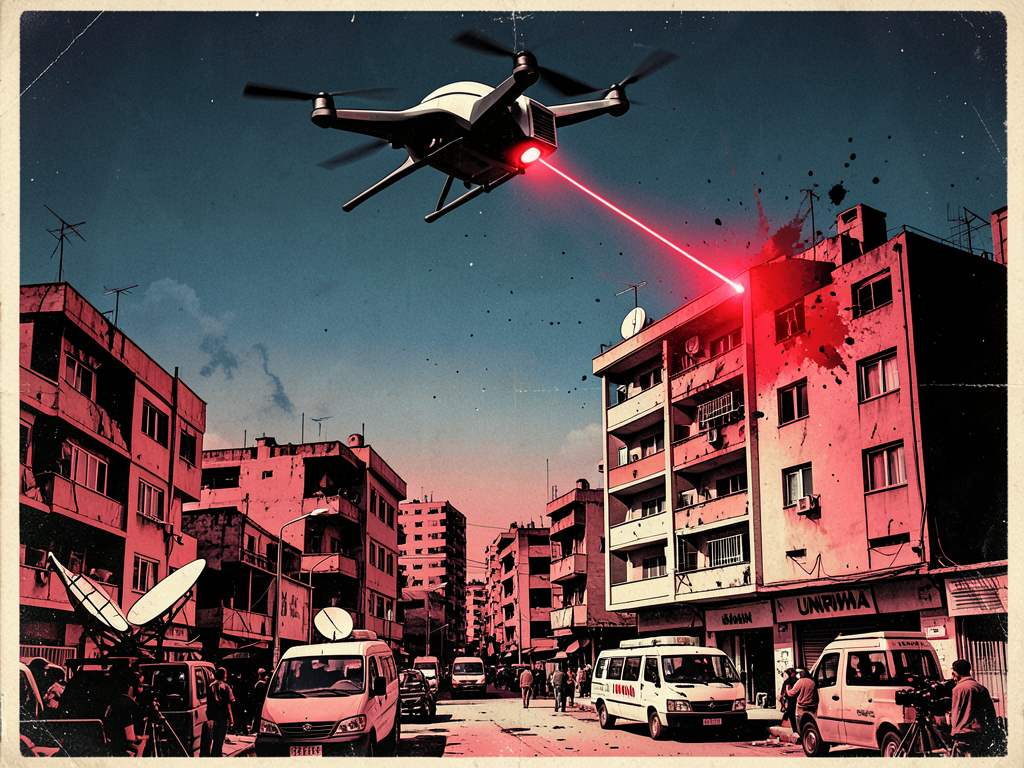
Israeli targeted killings are being framed as precise and lawful, not acts of war
A coordinated media campaign has intensified across 12 outlets, producing 57 articles between May 11, 2026 and August 16, 2026, to legitimize Israeli targete...
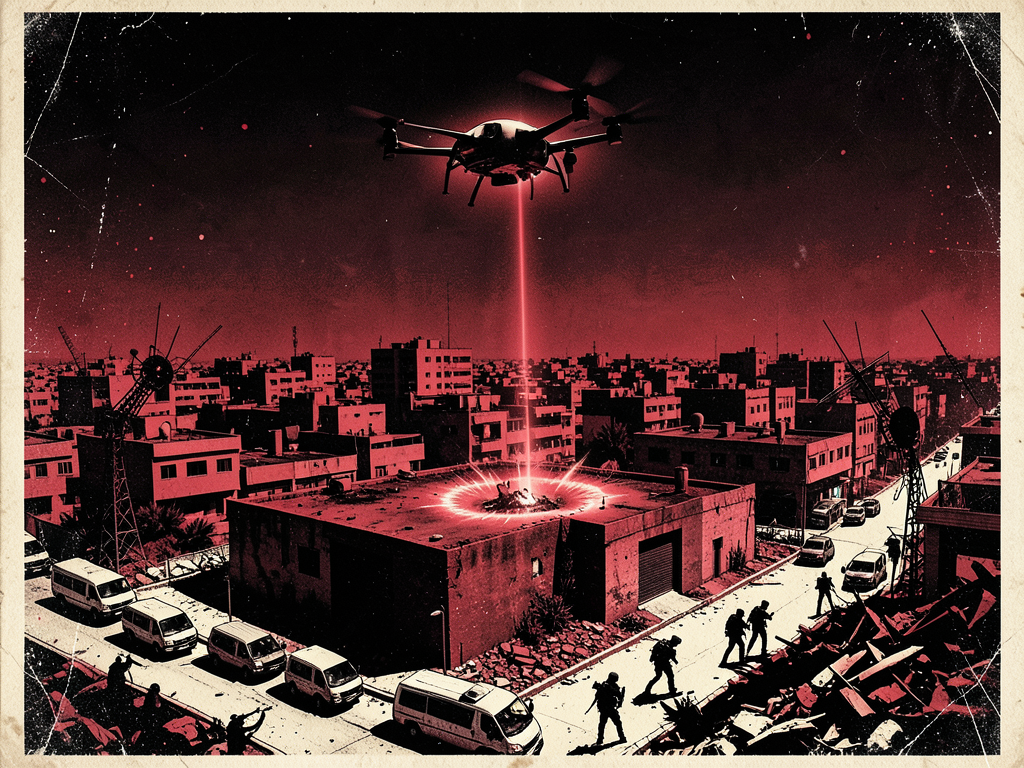
Israeli strikes on Gaza militants are being framed as precise and necessary acts of self-defense
A coordinated media narrative has emerged across 12 outlets, spanning from May 11, 2026, to August 8, 2026, to legitimize Israeli targeted killings of Hamas ...
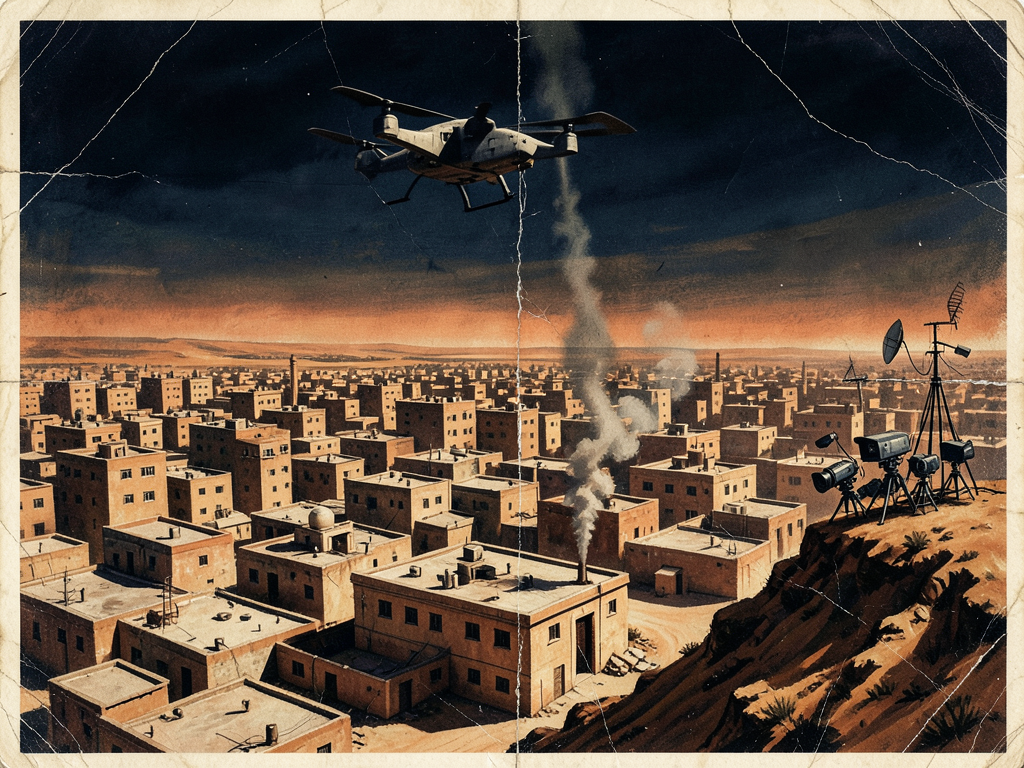
Israeli strikes in Gaza are being framed as precise justice, not escalation
A coordinated narrative has emerged across 12 outlets, spanning from July 23 to July 26, 2026, focused on legitimizing Israeli targeted killings of Hamas and...

Israel’s targeted killings are being reframed as precise acts of self-defense
A coordinated media campaign has emerged normalizing Israel’s targeted killings of Hamas and Hezbollah figures by consistently framing them as necessary and ...

Normalize Targeted Killings of Hamas: Coordinated Narrative Spike Detected
A synchronized information operation to normalize and justify Israel’s targeted killings of Hamas commanders was detected between May 11 and May 30, 2026. Th...
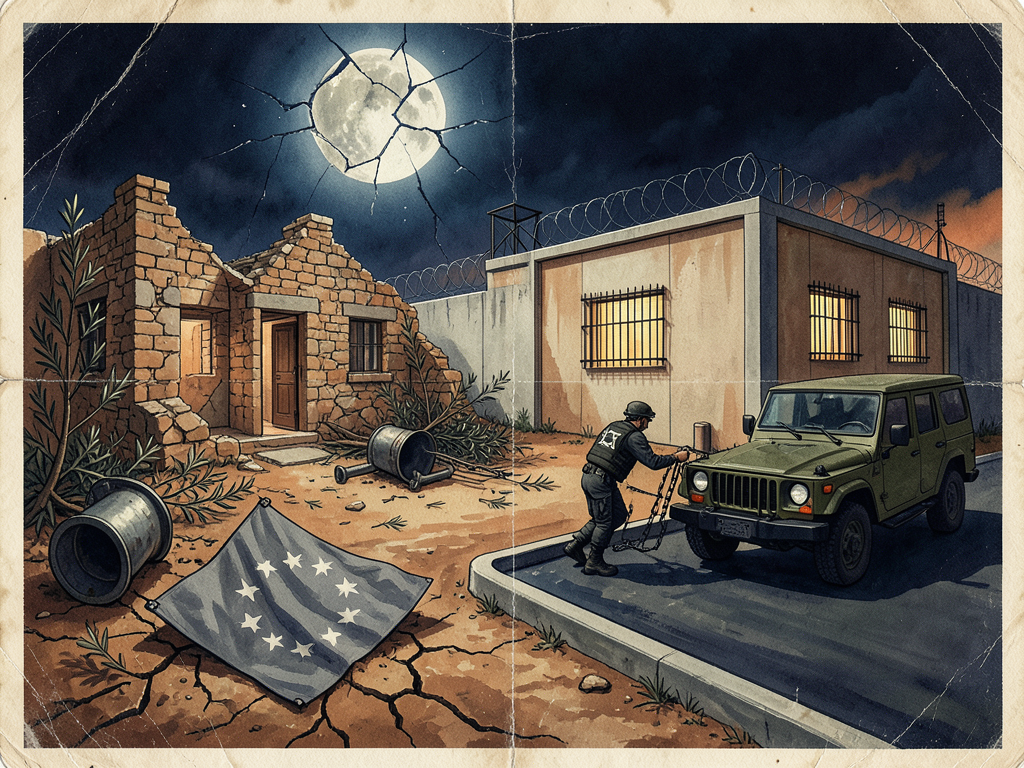
Normalize Israeli Settler Violence: EU Sanctions Framed as Moral Equivalence
A coordinated narrative has emerged across seven outlets from May 11 to May 22, 2026, reframing EU sanctions on violent Israeli settlers as a false moral equ...
Sources & Articles
2026-10-11T04:48:56.000Z
2026-09-21T20:54:59.000Z
2026-09-20T11:41:13.000Z
2026-09-20T04:30:05.000Z
2026-09-16T05:32:09.000Z
2026-08-28T16:55:10.000Z
2026-08-23T04:49:53.000Z
2026-08-16T08:34:17.000Z
2026-10-07T03:30:44.992Z
2026-09-30T22:00:41.000Z
Showing 10 of 66 articles