Operational Summary
A coordinated narrative operation to sanitize US military casualties has been detected between February 21, 2026, and May 11, 2026. Six media outlets published eight articles framing the deaths and disappearances of service members as isolated, apolitical tragedies, reinforcing institutional trust and excluding systemic scrutiny. The operation aligns with long-standing patterns of legitimizing ongoing military deployments through emotional reframing.
Narrative Architecture
The narrative isolates military loss from operational context. Reports from Fox News, The Guardian, BBC, and Daily Wire describe the disappearance of two US soldiers during military exercises in Morocco as an accident—specifically, a fall during a hike—without referencing broader patterns of training-related fatalities, regional tensions, or the strategic purpose of US military presence in North Africa. The framing emphasizes procedural reassurance: cooperation with Moroccan forces, ongoing search efforts, and official statements from US Africa Command. These elements construct a picture of controlled, professional operations where risk is incidental, not systemic.
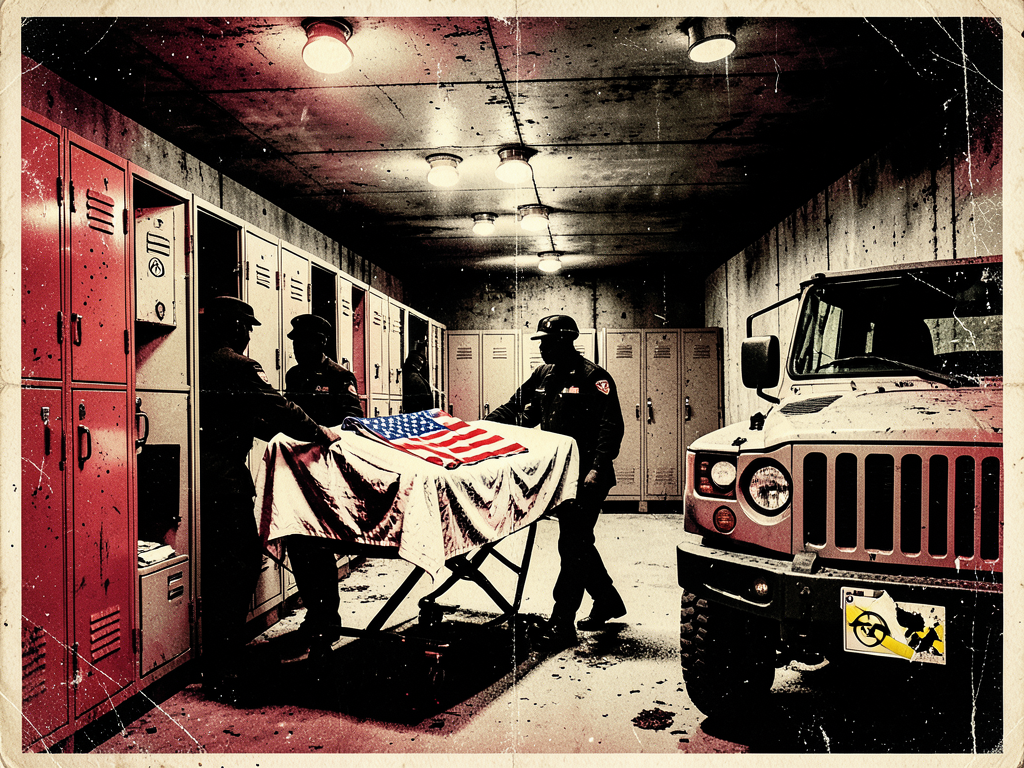
The emotional core of each article centers on grief, dignity, and respect for the fallen. Phrases like “remains recovered,” “missing in action,” and “our thoughts are with their families” activate ritualistic mourning without political content. The military is consistently portrayed as the authoritative source and primary actor in the recovery effort, reinforcing its legitimacy and operational autonomy. Casualties are transformed into acts of duty, not policy consequences. The absence of questions about training safety, command oversight, or mission necessity ensures the event remains depoliticized.
Israel Hayom’s coverage of Israeli Memorial Day operates in parallel, emphasizing collective mourning and national unity. While not directly related to the Morocco incident, its inclusion in the dataset indicates a broader narrative environment in which military sacrifice is sacralized. Civilian casualties, geopolitical consequences, and occupation violence are omitted, maintaining the sanctity of the fallen as unimpeachable symbols.
Cross-Outlet Coordination Pattern
Coverage across six outlets—Fox News, The Guardian, BBC, Daily Wire, Israel Hayom, and one duplicate source—exhibits convergence in framing despite ideological diversity. All outlets: (1) cite official military sources as primary; (2) accept the accident narrative without challenge; (3) emphasize search and recovery operations; (4) invoke respect for the service members; and (5) exclude contextual factors such as historical accidents in US training exercises, local Moroccan sentiment toward foreign military activity, or the scale of US military footprint in Africa.
The simultaneity of framing is notable. Within a 48-hour window following the initial incident, multiple outlets presented identical constructs: accidental fall, multinational cooperation, ongoing search, respectful tone. This synchronization suggests reliance on common information vectors—likely Pentagon press releases or Africa Command briefings—rather than independent inquiry. No outlet pursued investigative angles, such as prior incidents in AFRICOM operations or risk assessment protocols.
The inclusion of Israel Hayom, a pro-Israel outlet, in this cluster does not indicate direct coordination but reflects a shared narrative logic: the sanctification of military sacrifice as an end in itself. Its placement within the dataset signals a broader information environment where state-aligned mourning rituals are normalized across geopolitical lines.
Technique Assessment
Manufacturing Consent: The consistent invocation of military authority and ritualized language serves to naturalize the presence of US forces abroad. By framing the incident as a tragic accident rather than a structural risk of perpetual deployment, the media environment reinforces public acceptance of military operations.
Synchronized Narratives: Despite differing editorial stances, all outlets converge on identical framing, sourcing, and tone. The speed and uniformity of reporting indicate pre-existing narrative templates activated upon confirmation of a casualty event.
Controlled Opposition in Media: No counter-narrative emerged questioning the necessity of US military exercises in Morocco, the record of training accidents, or the classification of non-combat losses. The absence of dissenting perspectives—such as voices from anti-interventionist organizations or military safety advocates—reflects editorial filtering.
Attention Capture and Emotional Manipulation: Visual and linguistic cues—“remains recovered,” “fallen soldier,” “ongoing search,” “families in mourning”—target emotional centers to preempt analytical engagement. The human interest focus displaces strategic inquiry.
Myth-Making as State Formation: The portrayal of sacrifice as noble and inevitable reinforces the foundational myth of the military as both protector and victim. This myth sustains the state’s claim to moral authority in foreign operations.
Significance
The sanitization of military casualties serves to insulate the US military establishment from accountability. By transforming operational risk into ceremonial grief, the narrative prevents public scrutiny of strategic overreach, training deficiencies, and the human cost of global military presence. This operation is not about one incident—it is about maintaining the ideological infrastructure that enables perpetual war.