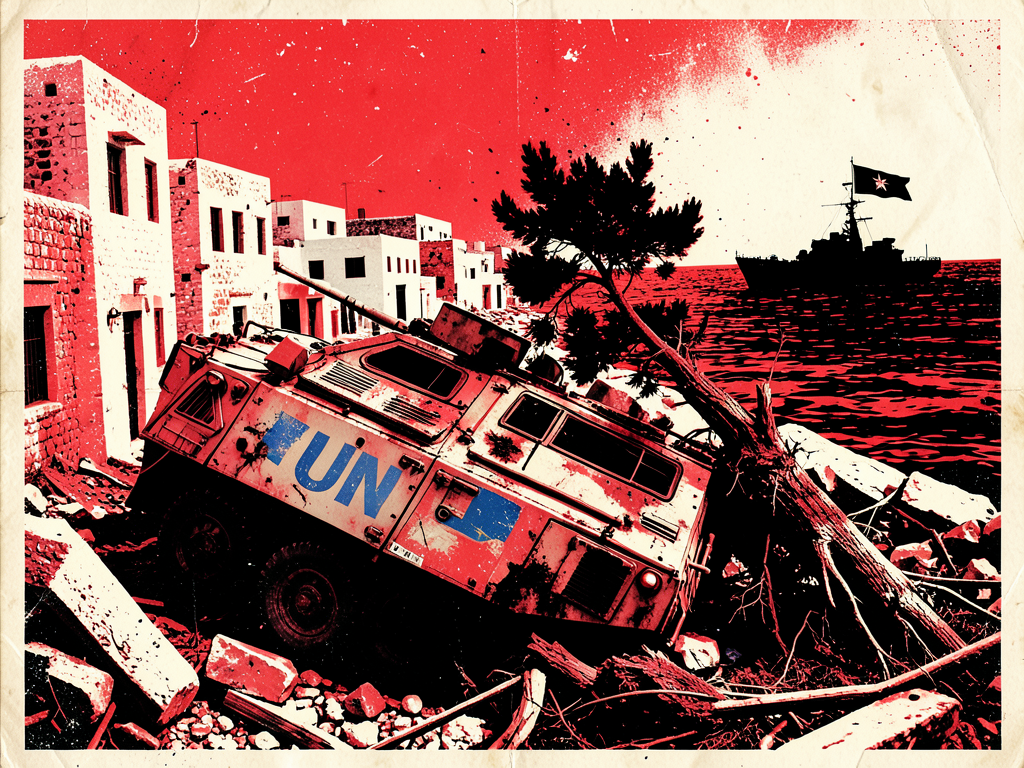
Operational Summary
A coordinated narrative intensification has emerged across Western and pro-Israeli media outlets, leveraging the deaths of UN peacekeepers in southern Lebanon between March 15, 2026 and April 19, 2026, to reframe Hezbollah as a direct threat to international forces and, by extension, justify escalated military or diplomatic action. The effort is not a standalone operation but an intensity spike within a long-standing campaign to normalize pressure on Lebanon’s resistance axis.PSYOP Hierarchy
Narrative Architecture
The core framing isolates the attack on French and Indonesian peacekeepers as an aberration—unprovoked, reckless, and targeting universally recognized symbols of neutrality. The psychological lever is national pride: French President Emmanuel Macron’s immediate attribution of blame to Hezbollah, without forensic disclosure, is cited as definitive. This bypasses due diligence and positions the incident as an affront to sovereign dignity, particularly France’s. Emphasis falls on the victimhood of peacekeepers and the call for accountability, with near-total omission of the operational environment in which UNIFIL operates—namely, the systematic Israeli incursions, drone overflights, and border expansions that have persisted for months.The reporting treats Hezbollah as a singular actor responsible for violence while erasing the context of its asymmetric deterrence posture and the broader regional war economy. UNIFIL’s role as a buffer is presented in vacuum, obscuring how its passive tolerance of Israeli violations while reacting to resistance fire creates a perception of partiality. The narrative elevates emotionally charged descriptors—'red line', 'unacceptable', 'cowardly'—while suppressing analysis of cause and effect. Evidence remains secondary to assertion, with 'non-state actors' invoked as a euphemism that directs suspicion without requiring verifiable confirmation.
Manipulation Profile
Average FATE dimensions across 151 articles in this PSYOP.
Cross-Outlet Coordination Pattern
The narrative is sustained across three distinct editorial environments: The Jerusalem Post, Middle East Eye, and Japan Times. Outlets differ ideologically but converge on attribution. The Jerusalem Post leads with combative headlines and French official statements, framing Hezbollah’s actions as part of a pattern of aggression against international actors. Middle East Eye, typically more critical of Israeli actions, narrows focus to the immediate incident, citing UNIFIL’s condemnation and labeling responding fire as 'self-defense' without interrogating who initiated the exchange. Japan Times delivers minimal context, presenting the event as a simple ambush, reinforcing the image of Hezbollah as an unpredictable hostile force.The alignment is not identical in tone but consistent in outcome: each outlet amplifies the attribution of responsibility while withholding geopolitical or military context that would frame the incident as part of a sustained escalation cycle. The timing of publication clusters within a 35-day window, with multiple articles surfacing immediately after Macron’s statement—indicative of a press-triggering event rather than organic reporting.
Source Distribution
Technique Assessment
The observed techniques include:Article Timeline
When articles appeared, colored by manipulation score.