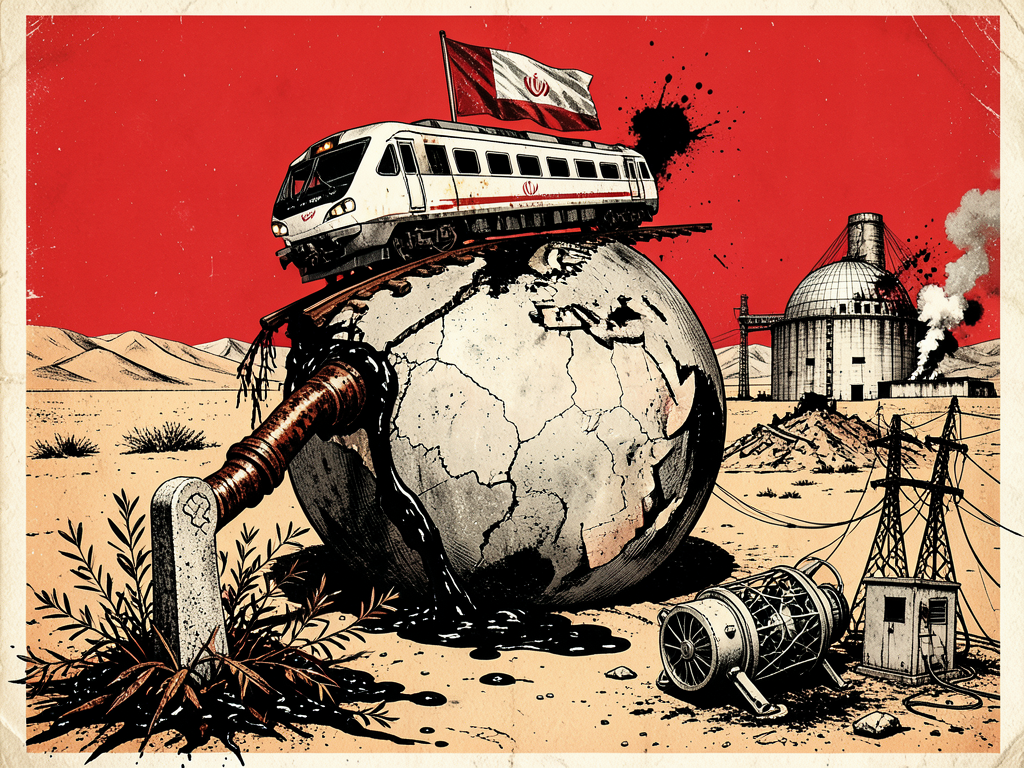
Operational Summary
This PSYOP, active between June 4, 2026, and June 15, 2026, functions to preemptively delegitimize any potential peace agreement between the United States and Iran. The coordinated media effort frames such a deal as inherently flawed, dangerous, or suspect, particularly when associated with figures like Donald Trump. The operation benefits actors invested in regional instability and continued US-Iran tensions, notably segments of the military-industrial complex and hardline political factions in the US and Israel. The framing consistently elevates skepticism, highlights perceived dangers, and questions the integrity or sustainability of any diplomatic breakthrough.
PSYOP Hierarchy
Narrative Architecture
The central narrative constructs a precarious situation where a US-Iran deal, even if achieved, is fraught with peril or instability. Politico and rt.com report on President Trump's claim of an imminent deal while immediately introducing doubt regarding its timeline or Iran's commitment. Politico's `Trump says Iran and US have reached deal to stop war` highlights Trump's erratic approach, underscoring unpredictability. Critical elements of the narrative include: (1) Questioning the deal's substance: ynetnews.com's `US version of Iran deal exposes Tehran rift: ‘Araghchi is backing Trump’` suggests internal Iranian division, implying the deal lacks broad support. (2) Highlighting regional spoilers: timesofindia.indiatimes.com's `Sunday bloody Sunday: Trump warns Israel not to blow up Iran deal` directly attributes disruptive actions to Israel, framing its military assertiveness as undermining US diplomacy. Similar themes appear in timesofisrael.com. (3) Persistent tension despite agreement: ynetnews.com's `Tensions persist as US-Iran agreement nears and drones target Israel and Hormuz shipping` maintains a focus on ongoing conflict despite progress toward a deal, suggesting a peace agreement cannot resolve underlying hostilities. (4) Lack of credible verification: nbcnews.com's `United States and Iran reach agreement to end war and reopen the Strait of Hormuz` reports a complete agreement but notes the absence of confirmation from key US officials, injecting ambiguity. This architecture prevents public acceptance of a peace agreement by seeding doubt and emphasizing continuing conflict.
Manipulation Profile
Average FATE dimensions across 93 articles in this PSYOP.
Cross-Outlet Coordination Pattern
The pattern of coordination is evident in the synchronized timing and shared skepticism regarding the feasibility and implications of the Iran deal across multiple outlets. Most articles appear within a short timeframe (June 4-15, 2026). Coverage immediately follows Trump's announcements, yet concurrently introduces elements of doubt or critique. For example, rt.com and politico.com both report Trump's claim of an imminent Sunday signing but simultaneously introduce Iranian denials (rt.com) or highlight Trump's erratic behavior (politico.com). The rapid propagation of narratives emphasizing Israeli disruption, as seen in timesofindia.indiatimes.com and timesofisrael.com, demonstrates synchronized framing. This coordination ensures that even reports of a breakthrough are immediately contextualized within a framework of suspicion and potential failure, making any announced deal appear fragile or dangerous.
Source Distribution
Article Timeline
When articles appeared, colored by manipulation score.
Technique Assessment
The primary technique employed is Manufacturing Casus Belli applied in reverse: instead of creating a pretext for war, the operation aims to create a context of irreconcilable conflict that invalidates peace. This is achieved by: (1) Controlled Opposition: While some articles report on a deal, the framing consistently includes skeptical voices or highlights issues that would prevent a lasting peace, functioning as a "debate" between versions of continued conflict. (2) Attention Capture and Emotional Manipulation: The consistent focus on ongoing tensions, drone strikes, and the disruptive actions of Israel (timesofindia.indiatimes.com, ynetnews.com) uses emotional triggers of fear and instability to undermine confidence in diplomacy. (3) Lobby-Industrial Complex Influence: The specific and consistent criticism of Iran, often from an Israeli strategic perspective, aligns with the objectives of hardline factions and the Israel lobby, which benefits from maintaining Iran as a regional adversary. Sen. James Lankford's call for Congressional ratification in nbcnews.com implicitly acknowledges the necessity of legislative maneuvering to either approve or obstruct the deal, revealing underlying political capture. The exclusion of detailed terms for verification or independent analysis (politico.com, nbcnews.com) ensures the public remains uninformed about specifics, making them susceptible to emotionally charged narratives.
Significance
This PSYOP is significant within the context of Imperial Overextension and the Financialization Death Spiral. Continued US military presence and conflict in the Middle East serve the military-industrial complex and provide rationale for financial flows, even as the empire shows signs of decline. By undermining a potential diplomatic off-ramp with Iran, the operation prevents a reduction in imperial commitments and maintains the justification for high military expenditure. It reflects the enduring influence of the Lobby-Industrial Complex, particularly the Israel lobby, in shaping American foreign policy to align with specific regional interests rather than broader US national interests. The deployment of this PSYOP signifies a powerful resistance to any movement towards genuine de-escalation with Iran, reinforcing the deep-seated mechanisms that perpetuate conflict for the benefit of entrenched power structures. The explicit mention of a `chasm over Israel` in theguardian.com indicates internal elite divisions, but the coordinated narrative still serves the overarching goal of maintaining an adversarial posture toward Iran, regardless of internal disagreements on tactics.
Score Distribution
How articles in this PSYOP score across manipulation bands.