Operational Summary
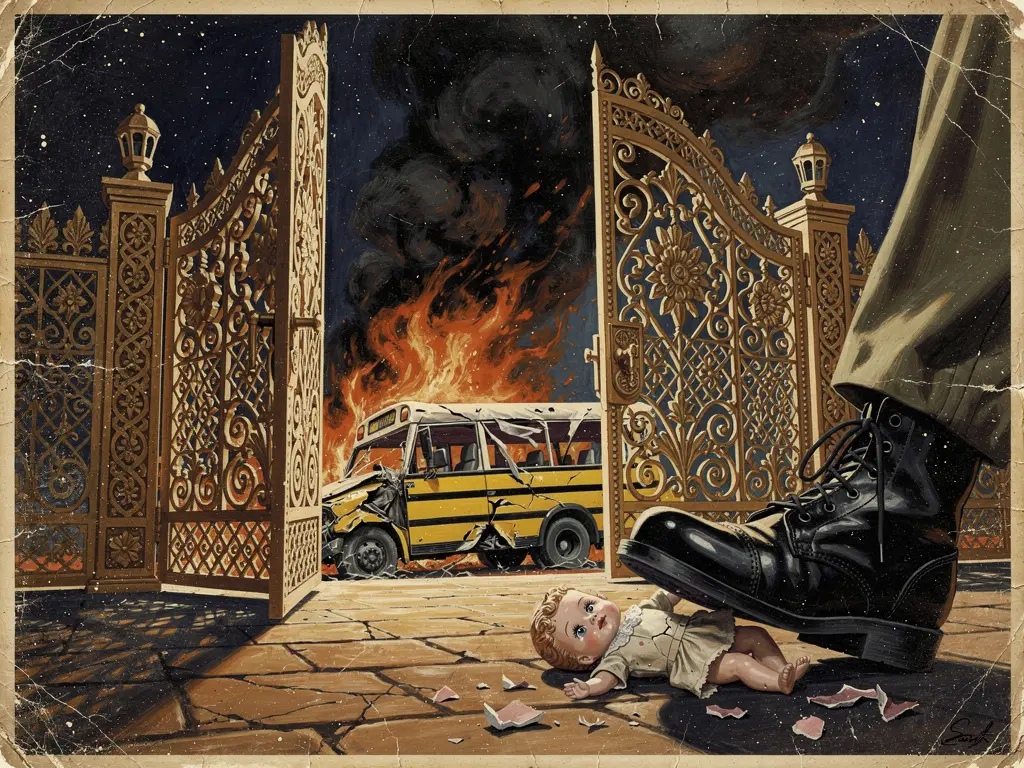
PsyopDetector.com identified a coordinated narrative beginning March 12, 2026, to sanitize the impact of a US strike on an Iranian school. This operation minimizes the event, framing it as an 'unintended error' across three distinct media outlets. The objective is to protect the US military's image and deflect accountability for targeting practices, benefiting elements of the US military-industrial complex and foreign policy establishment.
Narrative Architecture
The core narrative architecture centers on casting the school bombing as an 'unintended error' and a 'mistake' resulting from technical deficiencies, specifically 'outdated targeting data.' This framing normalizes civilian casualties as an unfortunate but correctable side-effect of military operations, rather than a consequence of systemic targeting failures or policy decisions. The messaging consistently uses vague language and appeals to authority, prioritizing military officials' statements and 'sources' to shape public perception. By emphasizing 'human mistakes' and the inevitability of 'fixable consequences,' the narrative bypasses deeper critiques of military action and avoids scrutiny of operational protocols. Emotional language is deployed to acknowledge the tragedy of killed children, yet this emotive content is immediately redirected toward explanations of technical error, functioning as a displacement mechanism. Crucially, the narrative omits crucial context regarding the long history of US operations in the region, broader geopolitical drivers, and detailed accounts of human suffering, which would encourage a more critical assessment. Instead, it promotes patience for 'more investigation' rather than immediate questioning of military actions, delaying judgment while deflecting from accountability.
Cross-Outlet Coordination Pattern
All three detected articles, from smh.com.au, japantimes.co.jp, and theglobeandmail.com, exhibit synchronized narrative messaging. The headline from japantimes.co.jp, "U.S. may have struck Iranian girls' school after using outdated targeting data, sources say," is remarkably similar to theglobeandmail.com's, "U.S. military may have bombed Iranian girls’ school using outdated targeting data, sources say." This near-identical phrasing, focusing on 'outdated targeting data' as the primary explanation for a school bombing resulting in fatalities, signals coordinated narrative management. Each outlet prioritizes military officials' statements and anonymous 'sources' to bolster the 'unintended error' framing. There is a collective avoidance of critical questioning regarding the presence of US military operations in the region that would lead to such an event, or the broader ethical and legal implications of strikes on civilian infrastructure. This coordinated messaging creates a narrow Overton Window, ensuring that public discourse remains confined to discussions of technical error rather than systemic accountability.
Technique Assessment
The PSYOP employs several established power mechanisms and media manipulation techniques.
Manufacturing Consent: The synchronized narrative across multiple outlets manufactures public agreement that the strike was an unfortunate error rather than a potentially deliberate act or symptom of a larger problem. This is achieved by relying heavily on official sources and framing the incident in terms that align with the military's preferred explanation, while marginalizing dissenting interpretations.
Scapegoating and Displacement: Blame is displaced from broader operational strategy or command responsibility onto technical issues like 'outdated targeting data' or 'human mistakes.' This pattern protects the legitimacy of the military institution by identifying a narrower, seemingly fixable cause for civilian casualties.
Manufacturing Casus Belli (inverted): While not manufacturing a pretext for war, this operation inverts the traditional casus belli, manufacturing a narrative of 'unintended error' to mitigate the negative consequences of an actual military action, thus preventing a potential casus belli against the US.
Attention Capture and Emotional Manipulation: The narrative acknowledges the emotional impact of a school bombing but immediately channels that emotion toward accepting the 'unintended error' explanation, using emotive language to soften the impact of tragic news while simultaneously directing the audience toward a pre-determined conclusion.
The use of 'sources say' and 'preliminary inquiry' further employs Think Tanks and Intelligence as Media Sources, lending authority to claims without full transparency or independent verification, a common method for laundering policy positions through media.Significance
This operation demonstrates immediate narrative control following a significant military incident with civilian casualties. The synchronized messaging ensures that the dominant public understanding aligns with the perpetrator's self-preserving explanation, circumventing accountability. This repeated pattern of sanitizing military errors and minimizing human impact is critical for maintaining public support for ongoing military operations and preventing scrutiny that could challenge the current foreign policy establishment and its associated military-industrial complex.