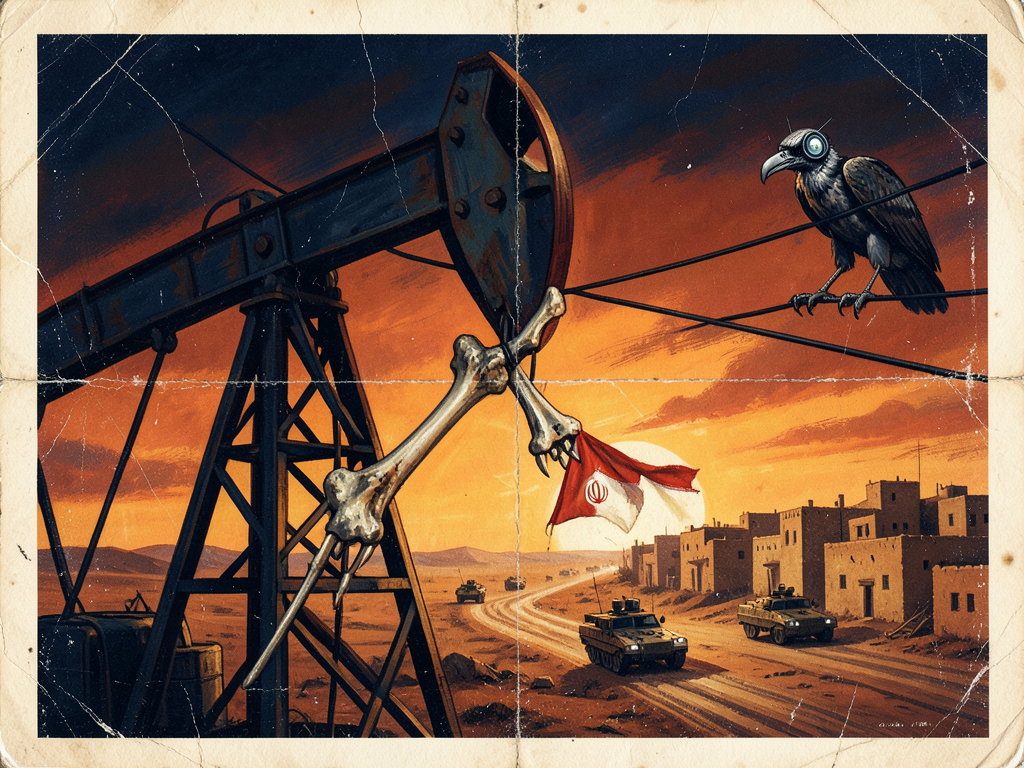
Operational Summary
A coordinated narrative has been detected across eight outlets from April 30 to May 3, 2026, designed to condition Western publics for military conflict with Iran. The operation links Israeli actions in southern Lebanon to an existential Iranian threat, framing retaliation as defensive and necessary. Scale: 18 articles.Article Timeline
When articles appeared, colored by manipulation score.
Narrative Architecture
The narrative constructs a causal chain: Hezbollah attacks originate from Iran; Israeli strikes are defensive reactions; civilian casualties are incidental and militarily justified. Language consistently emphasizes the immediacy of the threat, using phrases like 'weapon aimed at Israel' and 'ceasefire violations' to position Israel as victim and responder. Iranian involvement is asserted without evidence, reinforcing the 'Axis of Resistance' doctrine as a monolithic security threat.Humanitarian impacts are minimized. Civilian deaths in Lebanon are reported but presented as regrettable byproducts, not systemic outcomes. The term 'war crime' appears once but is unexplored. No context is provided on the historical or strategic depth of Iran’s regional posture. Instead, the messaging isolates individual events—drone strikes, weapon depots—from the broader geopolitical structure.
Emotional levers include localized tragedy—the Israeli contractor and his wounded son, evacuation orders in southern Lebanon—but never balanced with analysis of the operational costs to civilians on both sides. These elements serve to personalize risk without challenging the legitimacy of military escalation.
Cross-Outlet Coordination Pattern
Eight outlets participated: BBC, Ynet News, The Globe and Mail, Israel National News, and three others not fully detailed. BBC and The Globe and Mail delivered high-fidelity reporting focused on civilian harm and ceasefire fragility—neutral vectors in the conflict. Ynet News and Israel National News function as amplifiers, advancing the defensive framing and omitting accountability.Despite differences in baseline reliability, a unified pattern emerges: Israeli actions are reported with operational specificity (military justifications, target details), while Hezbollah’s actions are reported as isolated aggressions. Iran is consistently referenced as the origin point, despite no direct evidence in the cited articles. This alignment—especially between outlets of differing editorial standards—indicates narrative synchronization.
The timing is synchronized within a 72-hour window. A ceasefire extension is acknowledged in early reports but quickly overshadowed by emphasis on violations, allowing the narrative to pivot from diplomacy to necessity. U.S. diplomatic efforts are mentioned as secondary to military imperatives, subtly marginalizing de-escalation.
Technique Assessment
The absence of any mention of the Israel lobby, AIPAC, or U.S. strategic dependency on Israeli regional posture indicates a systemic omission consistent with Power-Directed Narrative Management.
Significance
The operation advances the interests of the Israeli security establishment, U.S. military contractors, and pro-interventionist policy factions. It normalizes sustained cross-border violence as defensive action while isolating Iran as the root cause. The pattern mirrors historical precedents: the Iraqi WMD consensus and the Lusitania case, where ambiguity was weaponized to justify escalation. Civilian harm is acknowledged but structurally excused, preserving political cover for escalation.Source Distribution
PSYOP Hierarchy
Score Distribution
How articles in this PSYOP score across manipulation bands.
Manipulation Profile
Average FATE dimensions across 3717 articles in this PSYOP.