Operational Summary
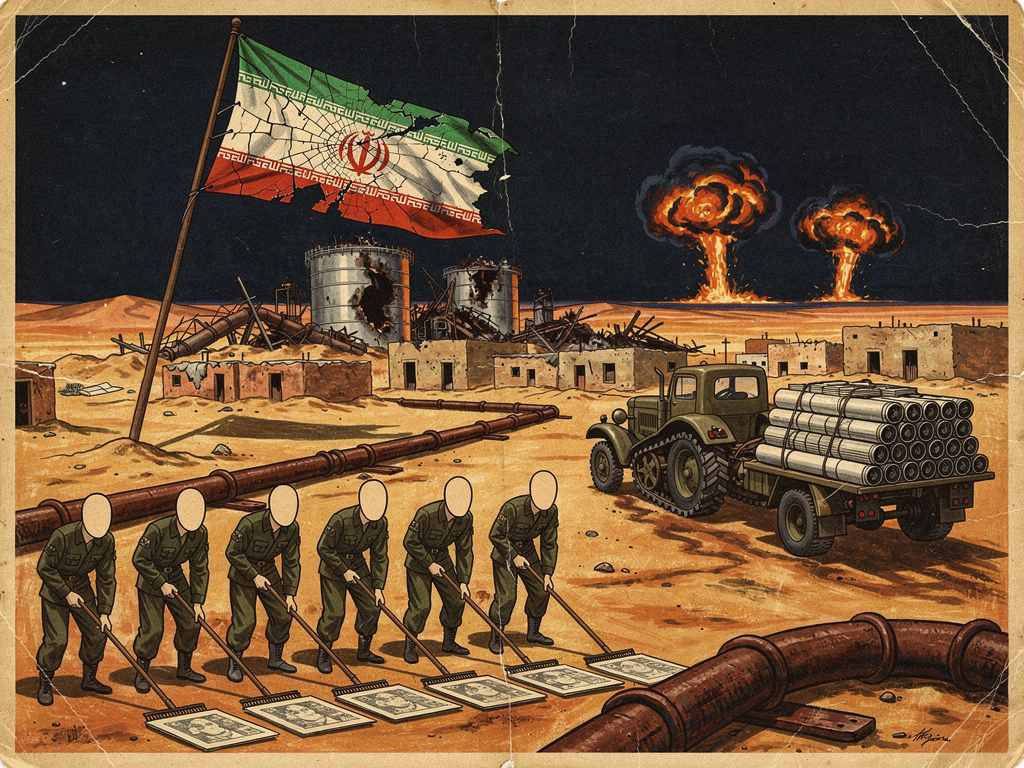
A coordinated narrative campaign has been detected normalizing sustained U.S. military and economic pressure against Iran. Active from April 3, 2026, to May 3, 2026, the operation spanned 101 articles across 22 outlets. The messaging frames coercive actions as diplomatic leverage or necessary responses, aligning with strategic objectives of the Trump administration, Israeli foreign policy, and the military-industrial complex.
Narrative Architecture
The narrative constructs Iran as a persistent threat requiring continuous containment. Language in outlets such as Breitbart emphasizes Iran’s “untrustworthiness” and frames any diplomatic overture from Tehran as insincere or tactical. Articles highlight U.S. withdrawal from Germany and economic pressure on Iran as complementary tools of strategic repositioning, presenting troop reductions in Europe as leverage while intensifying coercion in the Middle East. The tone is alarmist—one article quotes Iran as stating the U.S. faces only ‘impossible military op or…’ diplomatic concession—while simultaneously depicting Trump as resolute, reinforcing hawkish credibility.
Critical context is omitted. U.S. sanctions, drone incursions, and assassination of Qasem Soleimani, all escalatory acts, are erased from causality chains. Instead, Iran’s response to these actions is portrayed as unprovoked aggression. Economic warfare is reframed as diplomacy. One report notes the U.S. blocking Iranian oil exports while discussing rising oil prices and domestic political pressure on Trump, but omits any analysis of civilian impact in Iran, thereby sanitizing economic strangulation.
Emotional triggers include fear of Iranian retaliation and moral certainty in the necessity of containment. The narrative relies on binary framing: diplomacy only viable if dictated unilaterally by the U.S., any mutual negotiation deemed appeasement. This constructs ideological rigidity as strategic prudence.
Cross-Outlet Coordination Pattern
The campaign is distributed across ideologically disparate outlets, suggesting coordinated messaging rather than organic consensus. Breitbart publishes alarmist claims about Iran’s global threat profile, while NBC News amplifies elite disapproval of troop withdrawals, indirectly reinforcing the need for an alternative focus—regional coercion in the Persian Gulf. Ynetnews, an Israeli outlet, advances the strategic frame of ‘oil vs time,’ positioning economic pressure as a legitimate tool of attrition. Times of India, not a Western mouthpiece, echoes the U.S.-centric framing, suggesting narrative laundering through third-party outlets to project international legitimacy.
Despite differing political angles—allies unreliable (Breitbart), U.S. weakening under Trump (NBC), Iran gaining upper hand (Times of India), U.S. strategic calculations (Ynetnews)—each narrative thread converges on a single operational point: ongoing pressure on Iran must not stop. There is no coverage presenting diplomatic disengagement or de-escalation as viable. This uniformity across diverse outlets indicates synchronized narrative management.
Source Distribution
Technique Assessment
Significance
The Normalize Iran Coercion operation sustains an undeclared war by reframing aggression as negotiation. It serves the strategic interests of actors invested in permanent conflict: the Israel lobby, U.S. military contractors, and neoconservative policymakers. By saturating the information environment with narratives of inevitability and moral necessity, it preempts public scrutiny and legislative oversight. The campaign exemplifies how power maintains policy continuity across administrations through manufactured consensus.