Legitimize US Trade Aggression
This PSYOP frames U.S. tariffs as justified responses to foreign transgressions, preparing the public to accept aggressive protectionist trade policies by the Trump administration and benefiting specific American industries.
Executive Summary
Power Patterns
Manufacturing Casus Belli
The articles, particularly those from CNBC and Al Jazeera, frame the U.S. tariffs as a justified response to alleged 'unfair trade practices' or 'discrimination' by Canada and Brazil. This manufactures a casus belli for economic aggression, presenting the U.S. as reacting to provocations rather than initiating coercive trade policy. The underlying mechanism is Exorbitant Privilege, as the U.S. leverages its economic power to impose tariffs without significant immediate domestic consequence, while the tariffs themselves can be seen as a form of Rent-Seeking Behavior by specific American industries benefiting from reduced competition.
Cui Bono — Who Benefits?
The Trump administration benefits by demonstrating decisiveness and fulfilling protectionist campaign promises, while the USTR gains legitimacy for its aggressive trade enforcement. Specific American industries benefit from reduced competition and increased market share due to tariffs on foreign goods. The narrative enables these actors to pursue protectionist policies under the guise of defending national interests against foreign unfairness, thereby normalizing economic coercion as a legitimate tool of foreign policy.
Historical Parallels
Sanctions as Siege Warfare
The use of tariffs, framed as a response to 'unfair practices,' mirrors the mechanism of sanctions, which are presented as targeted but often function as collective punishment or economic coercion to achieve geopolitical goals, as seen in articles discussing tariffs on Brazil over 'illegal deforestation' or the Pix payment system.
Iraqi WMDs (2002-2003)
Similar to the WMD narrative, the claims of 'unfair trade practices' or 'discrimination' are presented as definitive justifications for action, often without independent verification or a balanced presentation of the accused nation's perspective, as noted in the CNBC and Al Jazeera articles regarding Canadian and Brazilian tariffs.
Narrative Mechanics
Synchronized Talking Points
“U.S. tariffs are a 'justified response' to 'unfair trade practices' or 'discrimination' by Canada/Brazil.”
“The tariffs are 'legally grounded' under specific U.S. trade laws (e.g., Section 338 of the Tariff Act of 1930, Section 301).”
“Canada's/Brazil's actions are 'provocations' or 'retaliation' that warrant U.S. action, often downplaying that U.S. actions came first.”
“The U.S. is 'reconstructing its protectionist trade agenda' or 'reviving its tariff playbook' in a systematic way.”
Framing Evolution
The initial framing from NBC News and NPR focused on Trump's direct imposition of tariffs and Canada's reaction. Later articles, particularly from CNBC and Al Jazeera, began to emphasize the 'legal' and 'systematic' nature of the U.S. actions, expanding the scope to include Brazil and future tariffs, thereby normalizing and legitimizing the broader protectionist agenda.
Suppressed Counter-Narratives
×Independent verification of U.S. claims regarding Canadian or Brazilian 'unfair trade practices' or 'discrimination'.
×The full context of Canada's or Brazil's actions as responses to prior U.S. tariffs or policies.
×The potential negative impacts of these tariffs on American consumers (e.g., higher prices) or on international trade relations.
×Alternative diplomatic or economic solutions to trade disputes.
×The perspective of affected foreign workers or industries beyond official government statements.
Outlet Coordination
CNBC and Al Jazeera, particularly in articles like 'Trump imposing 50% tariffs on certain Canadian goods over alleged trade discrimination' (CNBC) and 'Trump’s new 50 percent Canada tariffs: What products are affected and why?' (Al Jazeera), push hardest on framing the U.S. actions as justified and legally sound, often citing U.S. officials and trade experts without critical counter-analysis. NBC News and NPR, while reporting the tariffs, tend to include more direct mention of Canadian warnings of trade war or the retaliatory nature of Canadian responses, indicating slightly less manipulative framing compared to CNBC and Al Jazeera.
Bigger Picture
This PSYOP fits into a broader geopolitical landscape where the U.S. is increasingly using economic tools, rather than purely military ones, to assert its power and challenge established international trade norms. It signals a shift towards a more protectionist and unilateral approach to global commerce, potentially leading to increased trade wars and fragmentation of the global economy.
Prediction
This PSYOP is likely building toward public acceptance of a sustained and expanded U.S. protectionist trade policy, including further tariffs on a wider range of countries. It prepares the public to view such actions as necessary defenses of American interests, rather than aggressive unilateral moves that could destabilize global trade and harm consumers.
Intelligence Coverage
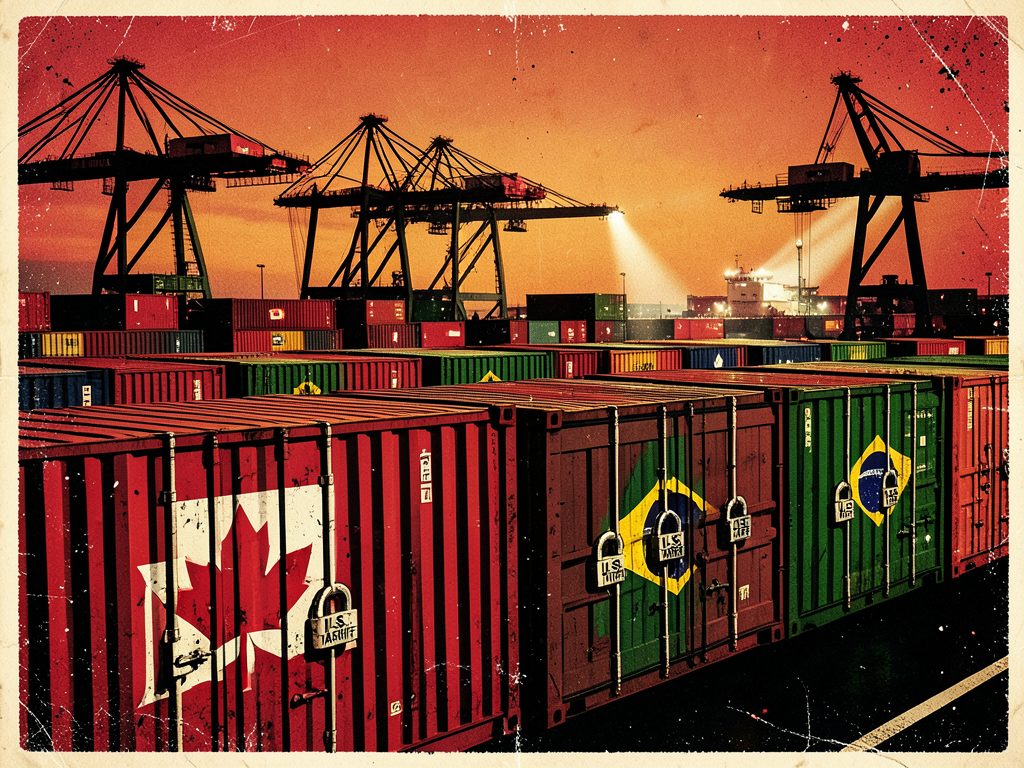
New US tariffs on Canada and Brazil are being framed as necessary and justified responses to trade disputes
On July 21–22, 2026, a spike in near-simultaneous reporting occurred across multiple outlets—CNBC, Al Jazeera, and NBC News—framing U.S. tariffs against Cana...
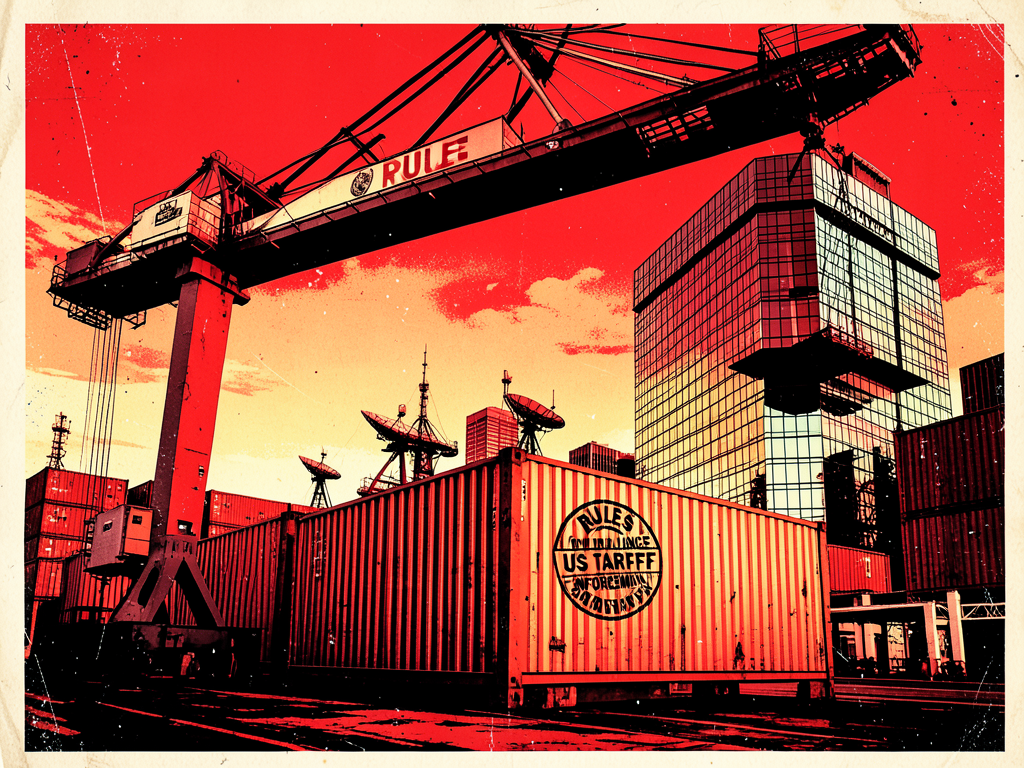
New US tariffs are being framed as rules-based responses to trade abuses
A coordinated narrative emerged on July 22, 2026, across three major outlets, normalizing U.S. tariff escalations against Canada and Brazil as legally justif...
Sources & Articles
2026-07-21T13:06:36.000Z
2026-07-20T21:00:39.000Z
2026-07-21T01:15:38.000Z
2026-07-16T05:04:30.000Z
2026-07-21T13:25:37.000Z
2026-07-21T15:54:13.000Z
2026-07-21T00:08:50.000Z
2026-07-20T21:42:42.658Z
2026-07-16T07:36:17.096Z
2026-07-21T10:31:34.000Z