Manufacture China Conflict Consent
This PSYOP systematically inflates isolated espionage cases into a sweeping narrative of systemic Chinese threat to justify expanded surveillance, military build-up, and repression of Sino-Western exchange, primarily benefiting the U.S. military-intelligence apparatus and allied security agencies.
Cluster signature
Peak 23 articles in July 2026
Bars run to 40, not to the tallest band.
Focus, Authority, Tribe, Emotion — averaged across 55 articles.
- Loaded Language102
- Appeal to Fear/Prejudice41
- Appeal to Authority27
- Exaggeration/Minimisation23
- Appeal to Values12
- Name Calling/Labeling12
- Guilt by Association11
- Flag Waving7
Bar length is square-root scaled so the tail stays readable; counts are exact.
Executive Summary
Power Patterns
Manufacturing Casus Belli
The cluster presents isolated espionage cases as part of a coordinated, existential campaign by the Chinese Communist Party, suggesting an imminent threat that requires a robust response. This mirrors the manufacturing casus belli pattern, where discrete incidents are aggregated into a justification for escalation. Articles from Fox News and El País emphasize urgency and alarm, using official statements without critical context—consistent with creating a pretext for broader security measures. The SMH article, citing joint Five Eyes intelligence, adds institutional legitimacy, making dissent appear naive or dangerous.
Cui Bono — Who Benefits?
These actors benefit by securing expanded surveillance authorities, increased defense and intelligence funding, and stronger legal powers to investigate foreign connections. The narrative enables the institutionalization of suspicion toward Chinese individuals and diasporas, justifies the tightening of data controls, and supports a broader strategic pivot toward containing China through diplomatic, economic, and military means.
Historical Parallels
Iraqi WMDs (2002-2003)
Just as the WMD narrative achieved near-unanimous media consensus without public evidence, the China spy threat is presented as self-evident, based on classified intelligence and official pronouncements, despite a lack of verifiable, public proof of coordinated mass infiltration. Dissent is marginalized, and the threat is framed as imminent and existential.
The Lusitania / Pearl Harbor
While no attack has occurred, the narrative prepares public opinion for a possible future conflict by suggesting that China is already at war with the West through espionage and political subversion. It functions as a preemptive narrative justifying military readiness and intelligence expansion, much like pre-World War incidents were used to overcome public reluctance to war.
Narrative Mechanics
Framing Evolution
The narrative has shifted from reporting on isolated espionage cases to constructing a picture of systemic, coordinated, and expanding Chinese intelligence operations. Recent coverage emphasizes the use of social engineering (fake job offers) and cryptocurrency payments, suggesting evolved tradecraft and implying that the threat is not only current but adaptive. There is also a growing emphasis on political influence as an objective, not just intelligence gathering.
Suppressed Counter-Narratives
×Historical context: U.S. and allied powers engage in comparable or greater levels of espionage globally
×Assessment of reciprocity: Western spies operate in China, but such cases are not framed as existential threats
×Domestic surveillance overreach: The narrative enables expanded domestic spying under the guise of national security
×Diplomatic alternatives: De-escalation or multilateral verification efforts receive no mention
Outlet Coordination
The SMH article, based on coordinated Five Eyes intelligence, likely stems from official briefings, creating a halo effect for similar claims elsewhere. Fox News amplifies the threat with a domestic focus, emphasizing betrayal by American citizens, framing it as a direct attack on national sovereignty. El País provides an international veneer, presenting the issue as a shared European concern, thus normalizing the threat across regions. All outlets reference official sources and avoid investigative skepticism, suggesting pre-approved messaging.
Bigger Picture
This cluster fits within a broader U.S.-led strategic competition with China, aiming to consolidate the Five Eyes alliance and allied nations around a posture of containment. The narrative dehumanizes Chinese state actions, reframes economic and technological competition as existential conflict, and positions intelligence expansion as necessary for survival. It prepares the ground for long-term military, diplomatic, and economic confrontation.
Prediction
This PSYOP is likely building toward public acceptance of expanded domestic surveillance laws, increased military deployment in the Indo-Pacific, and a broader crackdown on academic, technological, and cultural exchanges with China. It may also pave the way for preemptive cyber operations or sanctions justified as responses to espionage threats.
Intelligence Coverage
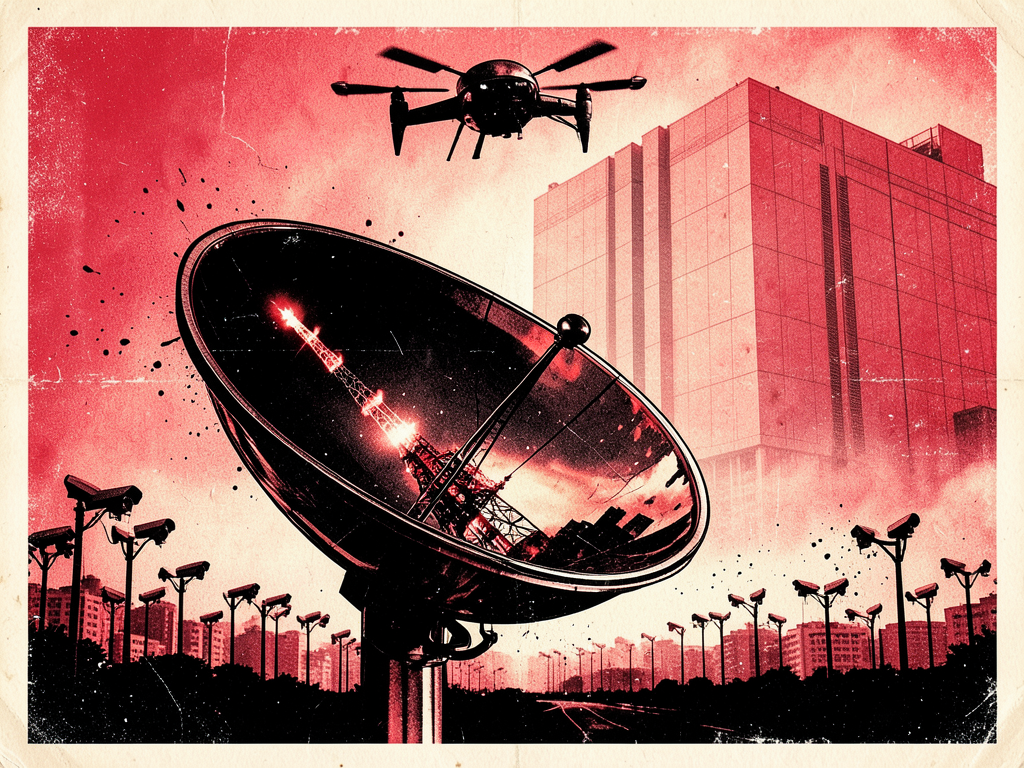
Chinese technology is being framed as an inherent national security threat
A coordinated narrative has intensified across 37 articles in 12 outlets from May 11 to August 7, 2026, portraying Chinese technology firms and products as s...

China's international activities are being recast as covert threats to justify U.S. surveillance and military expansion
A coordinated narrative has emerged across ten media outlets between May 11, 2026, and July 25, 2026, linking disparate incidents involving Chinese technolog...

Chinese technological advances are being recast as imminent threats to justify militarized responses
A synchronized narrative surge recast isolated incidents involving Chinese technological activity into a unified threat framework. Occurred between May 11, 2...
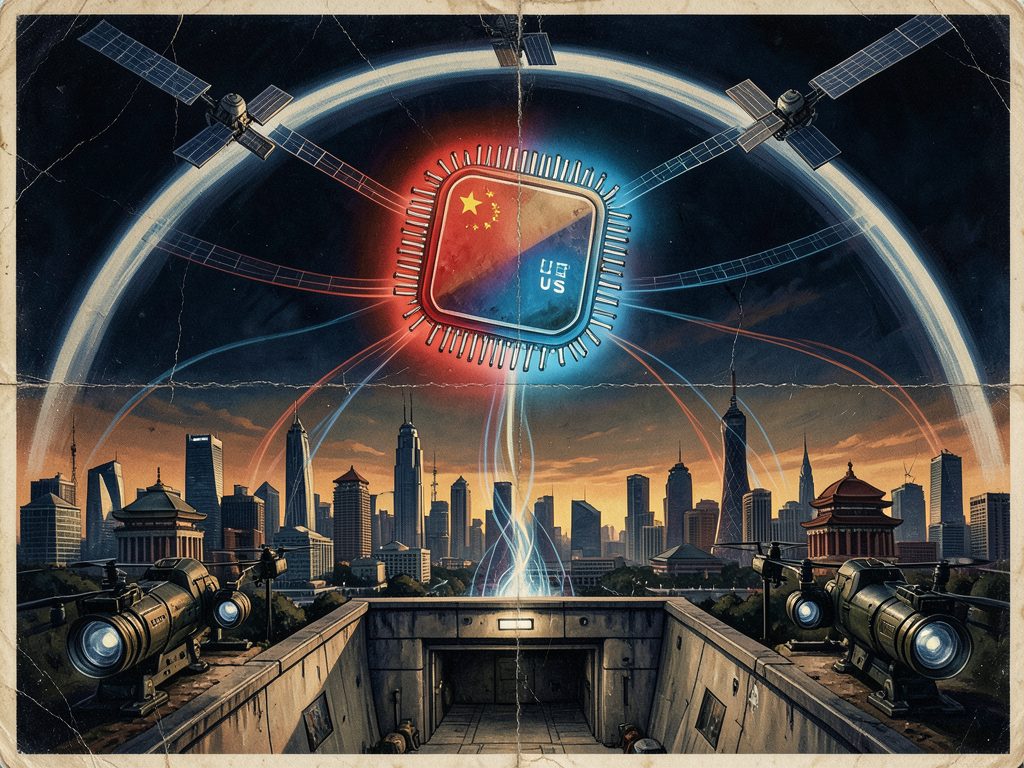
China's AI competition is being framed as a national security emergency
A coordinated messaging campaign focused on Chinese technological espionage intensified between June 24 and July 2, 2026, centering on allegations by U.S. AI...

Outlets are framing Chinese tech firms as national security threats
A coordinated narrative surge occurred between May 11, 2026, and June 14, 2026, across seven media outlets, linking major Chinese technology and industrial c...
Sources & Articles
2026-10-06T16:51:06.000Z
2026-09-10T21:02:32.000Z
2026-09-07T16:57:50.000Z
2026-10-08T01:20:29.977Z
2026-09-08T12:00:40.000Z
2026-10-08T02:50:17.000Z
2026-10-05T04:13:20.000Z
2026-10-05T01:26:40.000Z
2026-10-01T09:00:31.115Z
2026-09-11T10:18:00.000Z
Showing 10 of 55 articles