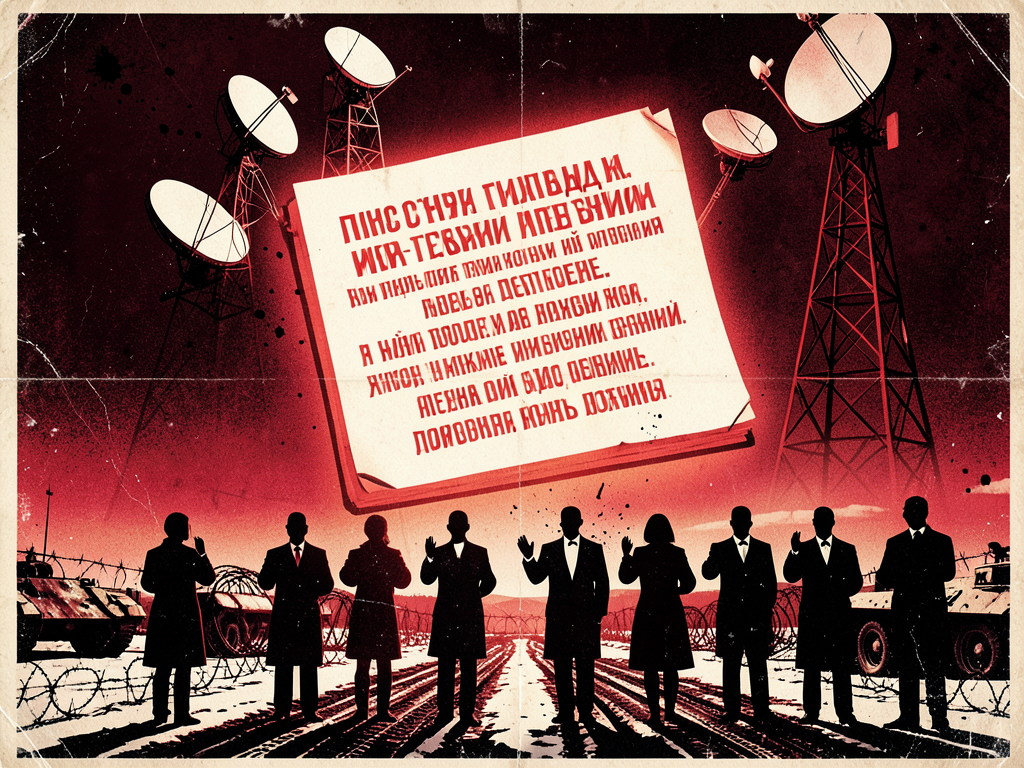
Operational Summary
A coordinated messaging campaign has emerged across 20 outlets, spanning March 27 to September 10, 2026, normalizing Russia’s territorial annexations in Ukraine. The operation reframes military occupation as legitimate negotiation demands and positions Russian war aims as reasonable conditions for peace. Scale: 163 articles.Article Timeline
When articles appeared, colored by manipulation score.
Source Distribution
Narrative Architecture
The narrative constructs a false equivalence between Ukrainian sovereignty and Russian territorial acquisition. Articles consistently present Russia’s recognition of annexed territories as a prerequisite for peace, implying these areas are no longer under dispute. This framing treats fait accompli land grabs as settled facts rather than violations of international law. The language of diplomacy—"negotiations," "peace talks," "compromise"—is applied asymmetrically: Russian demands are called pragmatic, while Ukrainian resistance is labeled ideological or inflexible.Emphasis is placed on Western responsibility for prolonging the war. Coverage asserts that US military aid sustains the conflict, positioning American policy as the obstacle to resolution. This inversion shifts agency from the aggressor to the defender. The 2014 origins of the conflict are selectively invoked only when attributing causality to NATO expansion, never when discussing Crimea’s illegal annexation.
Russian actions are described through defensive lexicons: "response," "reaction," "stability." Lavrov’s statement that the EU has "shot itself in the foot and head" is presented without challenge, embedding the idea that collective defense is self-destructive while offensive action is justified. Emotional appeals center on fatigue, futility, and exhaustion—framing continued Ukrainian defense as pointless sacrifice.
Critical omissions include how referenda were conducted under armed occupation, with mass displacement and coercion. No article acknowledges that annexation preceded any negotiation. The absence of Ukrainian voices advocating for territorial integrity further distorts the balance. The narrative does not deny violence; it sanitizes its political consequences.
Cross-Outlet Coordination Pattern
RT dominates the sample, publishing multiple articles daily using identical phrasing and sourcing. Al Jazeera appears as a secondary vector, lending credibility through perceived editorial independence. RT pieces rely exclusively on Kremlin officials—Putin, Lavrov, unnamed security advisors—as primary sources. Al Jazeera’s article introduces Trump envoys as mediators, creating an illusion of multiparty legitimacy around Russian terms.All outlets converge on the same conclusion within 48 hours of each other: Ukraine must concede territory to achieve peace. The timing aligns with diplomatic activity involving US intermediaries, suggesting exploitation of real events to amplify predetermined messaging. Despite differing audiences, the core argument remains unchanged: Russian annexations are non-negotiable starting points, not obstacles to be reversed.
This is not organic news development. The repetition of specific formulations—"restart peace talks," "reasonable demands," "Western support prolongs war"—across ideologically distinct platforms indicates pre-established talking points. The synchronization occurs not at the level of breaking news but in interpretive framing, which cannot be attributed to wire services.
Technique Assessment
Manufacturing Consent: Media outlets generate artificial consensus around Russian territorial claims by presenting them as standard diplomatic conditions. Dissent is excluded. No outlet questions whether a state can annex territory mid-war and then demand recognition as a peace term.Controlled Opposition: The debate is confined to variations of accommodation. Options range from immediate recognition to phased negotiations, but withdrawal from annexed areas is never presented as viable. This creates the illusion of discourse while enforcing ideological uniformity.
Scapegoating and Displacement: Blame for ongoing hostilities is displaced from Russia onto the United States and Ukraine. The perpetrator becomes the peacemaker; the victim becomes the obstacle. This reversal relies on omitting the initiation of force.
Myth-Making as State Formation: The narrative contributes to the construction of a new geopolitical reality—one where borders altered by invasion become permanent through rhetorical normalization. Each repetition reinforces the perception that these territories are beyond return.
Revelation of Method: RT openly broadcasts Kremlin strategy, treating it as transparent policy. This is not concealment but demonstration: power asserting its ability to redefine facts without consequence. The message is not secrecy but inevitability.
Significance
The operation advances Russia’s strategic objective by eroding the normative barrier against territorial conquest. It prepares global publics to accept annexations as irreversible, reducing political cost for future recognition. In the information environment, this represents a shift from denial to assimilation—where aggression is no longer defended, but assumed.Score Distribution
How articles in this PSYOP score across manipulation bands.
Manipulation Profile
Average FATE dimensions across 195 articles in this PSYOP.