Operational Summary
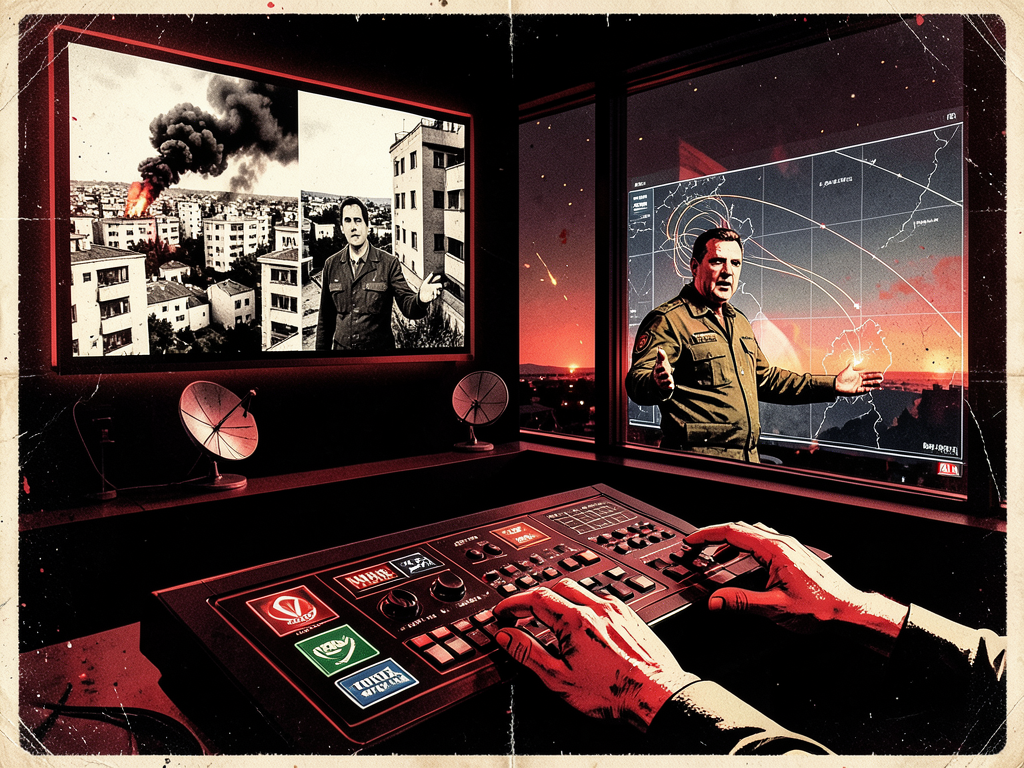
A coordinated media narrative emerged on February 25, 2026, and intensified through August 16, 2026, across 25 outlets, promoting the justification of Israeli military operations in Lebanon. The messaging consistently portrays Hezbollah as the sole aggressor and Israel’s actions as lawful, necessary, and proportionate, despite documented civilian casualties. The pattern aligns with prior operations to sanitize Israeli military escalation.
Narrative Architecture
The narrative constructs a binary in which Hezbollah initiates violence and Israel responds with calibrated force. Civilian casualties are acknowledged but attributed to Hezbollah’s tactics—specifically, the placement of command centers near civilian homes. This framing shifts moral and legal responsibility from the attacker to the defender, a recurring mechanism in justifying disproportionate force. Articles emphasize Israeli soldiers wounded in border incidents as the casus belli, while downplaying the scale of Israeli retaliation. The language of “command centers,” “ceasefire violations,” and “legitimate military targets” serves to legitimize strikes under international law, regardless of actual compliance.
Emotional levers are deployed selectively: the wounding of Israeli soldiers is presented as a discrete, unjustified act of aggression, while the killing of Lebanese civilians—including women and children—is rendered as collateral damage, inevitable under the circumstances. No article in the sample questions the proportionality of an 11-person death toll in response to three wounded soldiers. The omission of Lebanese civilian perspectives, political context, or historical grievances reinforces a one-sided operational logic. The narrative avoids any discussion of Israel’s long-term strategic objectives in Lebanon, such as dismantling Hezbollah’s military infrastructure or preventing cross-border threats, which would expose the offensive dimension of the campaign.
Opinion pieces amplify the narrative by dismissing diplomacy as naïve and equating military action with national survival. One article explicitly rejects American-led peace plans as “la-la land,” framing any restraint as a surrender to existential threats. This rhetorical escalation primes the target audience—Western publics and policymakers—for broader military engagement, not just retaliation.
Cross-Outlet Coordination Pattern
The outlets involved include Jerusalem Post, Times of Israel, and Israel National News—organizations with established editorial alignment to Israeli state and security narratives. Coverage across these platforms follows an identical sequence: Hezbollah action first, Israeli response second, civilian deaths third, and attribution of blame to Hezbollah fourth. The consistency in structure, timing, and language indicates coordinated messaging rather than organic reporting.
Articles published within hours of each other on August 5 and August 15, 2026, use nearly identical phrasing: “IDF strikes Hezbollah after attack,” “ceasefire violation,” “wounded soldiers,” “command center.” The repetition of these frames across outlets suggests a shared narrative vector, likely originating from official Israeli sources or embedded correspondents. Independent verification of Hezbollah’s actions or the military status of strike locations is absent. No outlet includes statements from Lebanese authorities or independent conflict monitors, a notable omission in a region where battlefield claims are routinely contested.
The geographic and political diversity of the outlets is superficial. While they differ in branding, all operate within the same information ecosystem, relying on IDF briefings and Israeli government sources as primary references. This structural dependence produces synchronized narratives that appear pluralistic but are functionally monolithic.
Technique Assessment
Source Distribution
Article Timeline
When articles appeared, colored by manipulation score.
Score Distribution
How articles in this PSYOP score across manipulation bands.
PSYOP Hierarchy
Manipulation Profile
Average FATE dimensions across 331 articles in this PSYOP.
Significance
The coordinated framing serves to normalize Israeli military escalation in Lebanon and insulate it from accountability. It advances the interests of the Israel lobby, the US military-industrial complex, and Israeli strategic objectives by shaping Western public opinion ahead of potential wider conflict. The pattern reflects a mature, repeatable operational model for justifying force in asymmetric conflicts where civilian harm is predictable and extensive.