Operational Summary
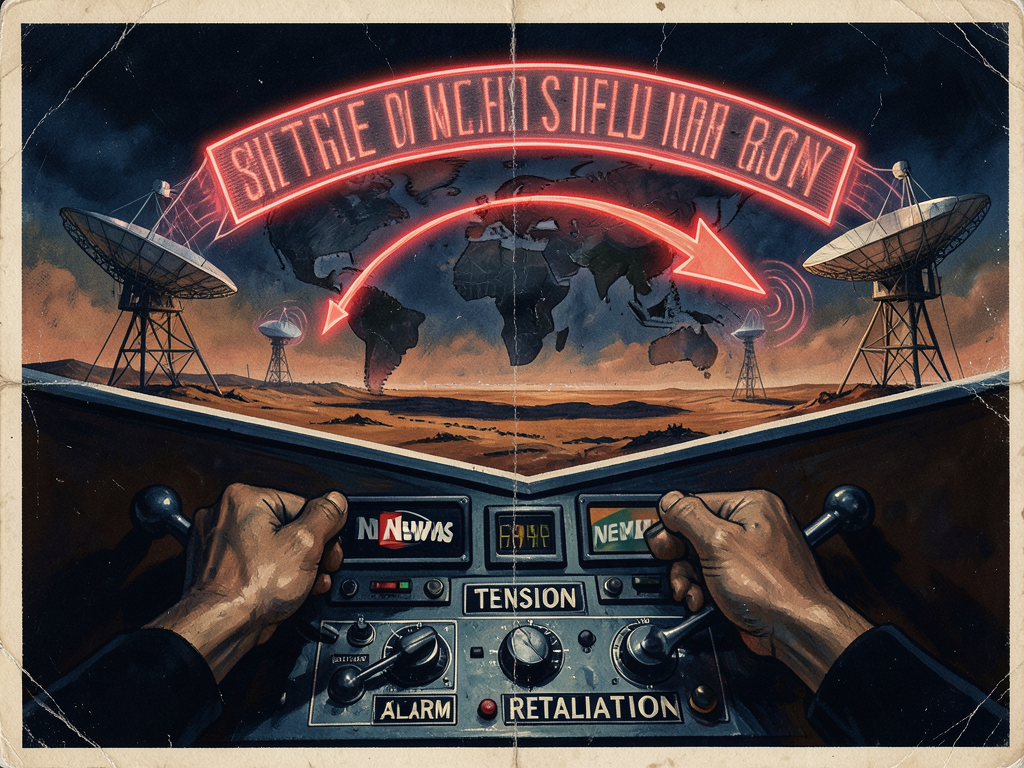
A coordinated narrative across 54 outlets has intensified coverage of the US-Israel military posture toward Iran from February 19 to July 24, 2026. The campaign amplifies threat perception, justifies preemptive actions, and constructs strategic inevitability around escalation. Volume peaked in late July 2026, aligning with heightened regional tensions and leadership targeting claims.Article Timeline
When articles appeared, colored by manipulation score.
Narrative Architecture
The messaging constructs Iran as a shadowy, relentless aggressor while erasing context for active Israeli operations. Articles emphasize infiltrations, assassination plots, and 'deep penetration' by Iranian proxies, portraying Israel as under constant siege. The threat is abstract and dispersed: 'layered proxies,' 'global terror networks,' and 'sleeper cells' replace specific actors or locations. This framing strips Iran of agency by depicting it as inherently expansionist, while Israel is presented as reactive and technologically superior.Reporting omits any reference to Israeli actions prior to or following the described Iranian threats. No investigative angle questions the sourcing of intelligence claims or the escalation logic itself. Civilian impact, diplomatic channels, and strategic patience as alternatives are excluded. Instead, the narrative relies on unverifiable senior official statements from Israel and curated quotes from Iranian figures—used only to confirm Israeli assessments. One article quotes Iran’s foreign minister describing survival of a strike, not to condemn aggression, but to reinforce Israeli precision and intelligence penetration.
Emotional manipulation centers on survival, betrayal, and existential dread. Terms like 'crushing blow,' 'deadly strike,' and 'top officials killed' dominate headlines. The timing of the Israeli leadership strike—initially withheld—creates an artificial backdrop of vulnerability exploited for narrative leverage. This pattern shifts blame to Iran for a situation ostensibly triggered by Israel’s own kinetic action, turning retaliation into preemptive defense.
Cross-Outlet Coordination Pattern
Coverage is synchronized across ideological and geographic lines. Jpost.com, IsraelNationalNews.com, and other aligned outlets released near-identical narratives within hours. All emphasize intelligence foils, Iranian internal chaos, and inevitable retaliation. Language is consistent: 'crushing blow,' 'foils plot,' 'surviving strikes,' 'terror cell,' 'global network.'Jpost.com and israelnationalnews.com syndicate variations of the same stories, with identical sourcing and chronology. Statements from Israeli defense officials are repeated verbatim or with minimal variation. One article presents Mossad’s success in uncovering a network; another amplifies the defensive posture; a third reports on Iranian disarray—all feeding a single operational pattern.
No outlet publishes counter-indicators: Iranian denials without Israeli rebuttal, regional mediation efforts, or assessments from neutral actors. The uniformity suggests reliance on a single intelligence narrative vector emanating from Israeli agencies, possibly filtered through Western diplomatic channels. There is no diversity in sourcing, investigative follow-up, or alternative framing.