Operational Summary
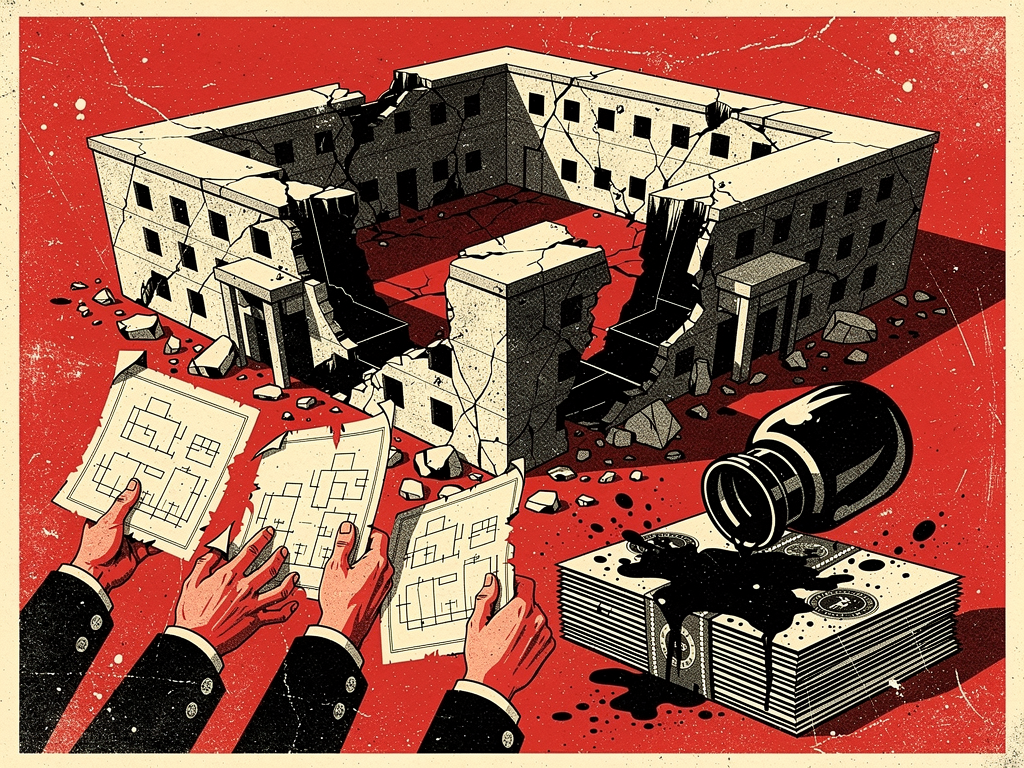
A PSYOP designated "Undermine Pentagon Legitimacy" was detected with an intensity spike on March 22, 2026. This operation, active across four articles in three outlets, aims to erode public trust in the Pentagon by portraying it as secretive and ideologically driven. The narrative vector benefits political factions and foreign adversaries seeking to destabilize US institutions.
Narrative Architecture
This PSYOP constructs a narrative of an opaque, politically motivated Pentagon actively suppressing journalistic freedom. Messaging emphasizes "restrictive policies," "strict controls," and efforts to "weed out disfavored journalists." The
breitbart.com article directly weaponizes a federal judge's ruling, framing it as validation that the Pentagon impedes the public's right to information regarding ongoing conflicts. The
cbsnews.com piece highlights constitutional violations, using loaded language like "strict controls" to encourage public siding with journalistic freedom. The
npr.org article, specifically "Pentagon tightens controls over Stars and Stripes after calling it 'woke,'" employs alarming language and a false dichotomy between journalistic freedom and military control. This aims to generate concern about the Pentagon's actions without providing its full justifications or defining "woke distractions." A critical omission across the narrative is a comprehensive explanation of the Pentagon's security justifications for its policies. The narrative leverages concern for free press foundational myths while simultaneously framing internal military cultural debates as a threat to independent journalism. This creates a scenario of bureaucratic sclerosis and perceived authoritarian drift, eroding public confidence.
Cross-Outlet Coordination Pattern
Key synchronization indicators are present. While
npr.org's non-PSYOP article functions as a baseline, the remaining coverage demonstrates narrative alignment.
breitbart.com and
cbsnews.com immediately employ the judge's ruling as proof of Pentagon overreach, focusing on the suppression of information. The
npr.org piece concerning
Stars and Stripes further amplifies the perception of the Pentagon controlling information flows for ideological reasons. This creates a convergent narrative across outlets with differing ideological leanings, suggesting coordinated messaging. The swift adoption of a unified framing, particularly after the judge's ruling, indicates pre-prepared talking points circulated to exploit the political opportunity presented by a legal challenge to a high-profile institution.
Outlets involved:
breitbart.com
npr.org
cbsnews.comTechnique Assessment
This PSYOP primarily employs
Manufacturing Casus Belli against an internal institution, by framing policy decisions as an attack on core democratic values (freedom of the press). The articles also engage in
Controlled Opposition, where different outlets present nuanced but ultimately aligned critiques that serve to undermine the Pentagon. The strategic omission of the Pentagon's full justifications prevents a complete understanding, enabling
Attention Capture and Emotional Manipulation by appealing to outrage and concern over government secrecy. The
npr.org article specifically uses
Scare Tactics by deploying "alarming language" to present a false choice between journalistic freedom and military control. The narrative exploits a
Revelation of Method dynamic, exposing internal struggles within the Pentagon as a means to induce learned helplessness and distrust in the institution.
Significance
This operation directly contributes to
Elite Overproduction by fueling intra-elite competition and fracturing ruling coalitions. Undermining the Pentagon's legitimacy, a pillar of state power, exacerbates
Bureaucratic Ossification and facilitates
The Consent-Deception-Coercion Cycle by portraying the institution as deceptive. The narrative weakens
Social Cohesion and Asabiyyah by eroding trust in a foundational government body, making it vulnerable to external and internal pressures. The PSYOP's timing aligns with a period of
Civilizational Cycle Theory decline, where such challenges to institutional credibility are amplified, accelerating processes of fragmentation.