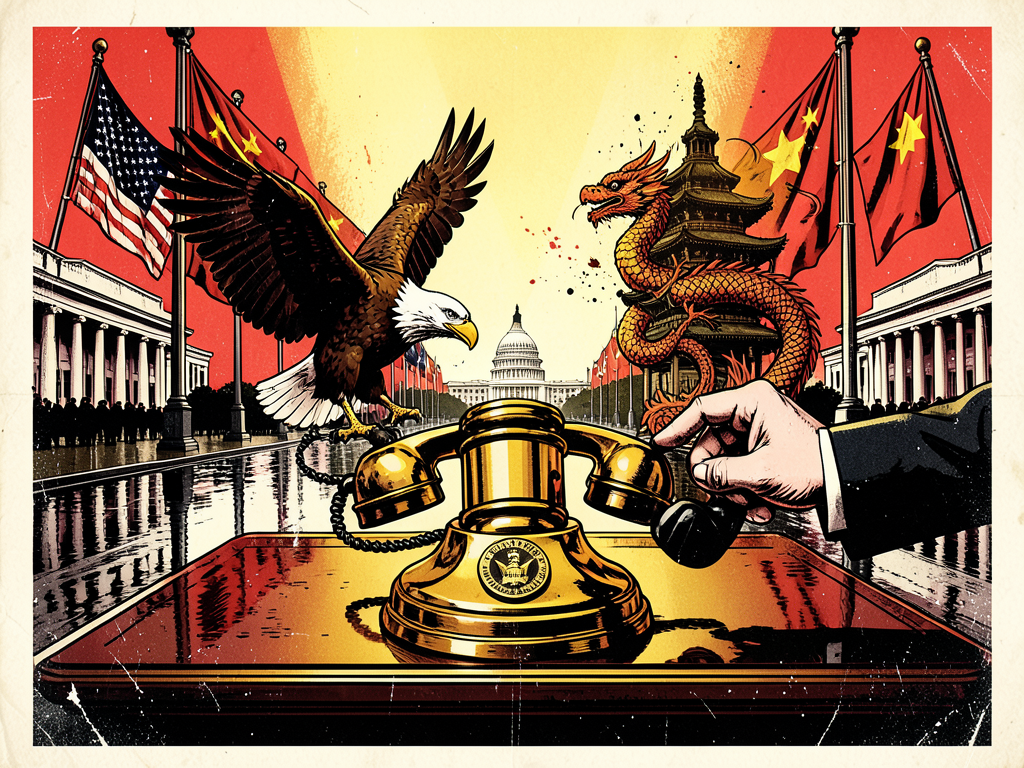
Operational Summary
A coordinated narrative operation was detected between May 12 and May 13, 2026, spanning 17 articles across 10 media outlets. The operation promotes Donald Trump’s personalized, transactional diplomacy with China as strategically effective and necessary amid U.S. geopolitical overreach. The messaging benefits both Trump’s political positioning and China’s goal of direct, unstipulated negotiations outside institutional constraints.Narrative Architecture
The narrative centers on the contrast between American impulsiveness and Chinese strategic patience. In articles like 'Patience as power: How Beijing turned America's Iran war into a Taiwan strategy' (timesofindia.indiatimes.com), China is framed as a restrained, rational actor gaining influence by abstaining from direct conflict, while the U.S. is portrayed as destabilizing through military escalation in Iran. This reframing positions China’s diplomatic leverage not as a product of aggressive posture but as a reward for non-intervention.Trump’s summit with Xi Jinping is consistently depicted as high-stakes and personally pivotal. Coverage on cbsnews.com and smh.com.au elevates the visit’s gravity by emphasizing national security and strategic competition, particularly regarding Iran and Taiwan, while marginalizing structural issues like human rights or military modernization. The presence of top U.S. business leaders is noted without scrutiny, allowing corporate influence in diplomacy to appear normal rather than problematic. This omission advances the perception that private-sector access and elite dealmaking are inherent to effective statecraft.
Economic outcomes are prioritized over political or ethical concerns. NDTV’s live updates focus on trade agreements in agriculture, technology, and aviation, treating diplomatic engagement as a venue for market stabilization. The narrative avoids discussing labor rights, intellectual property theft, or digital authoritarianism, reinforcing a transactional paradigm. By anchoring success in stock market movements and oil prices, the articles equate diplomatic value with immediate financial metrics, sidelining long-term strategic implications.
Emotional appeal operates through contrast: U.S. volatility versus Chinese composure. The framing implies that only a leader with Trump’s unorthodox style can navigate this imbalance. His personal rapport with Xi is presented as an asset, bypassing traditional diplomatic channels and reducing policy to individual chemistry. This serves to legitimize ad hoc decision-making as a viable alternative to multilateral, rules-based engagement.
Cross-Outlet Coordination Pattern
The outlets involved—cbsnews.com, ndtv.com, smh.com.au, timesofindia.indiatimes.com—represent diverse national media ecosystems but converge on identical framing. All emphasize Trump’s personal role, China’s strategic advantage through restraint, and the centrality of economic deals. The consistency in tone and emphasis, particularly the downplaying of U.S.-China tensions and the elevation of summit pageantry, indicates coordinated narrative management rather than organic editorial alignment.The rapid spike across multiple outlets within a 24-hour window—May 12 to May 13, 2026—suggests pre-positioned content released in response to the summit’s announcement. The absence of dissenting perspectives or analytical counterpoints across the coverage further indicates narrative synchronization. While NDTV’s second article is classified as non-PSYOP due to its neutral reporting, its inclusion in the cluster aids the operation by lending credibility through association with more overtly slanted pieces.