Operational Summary
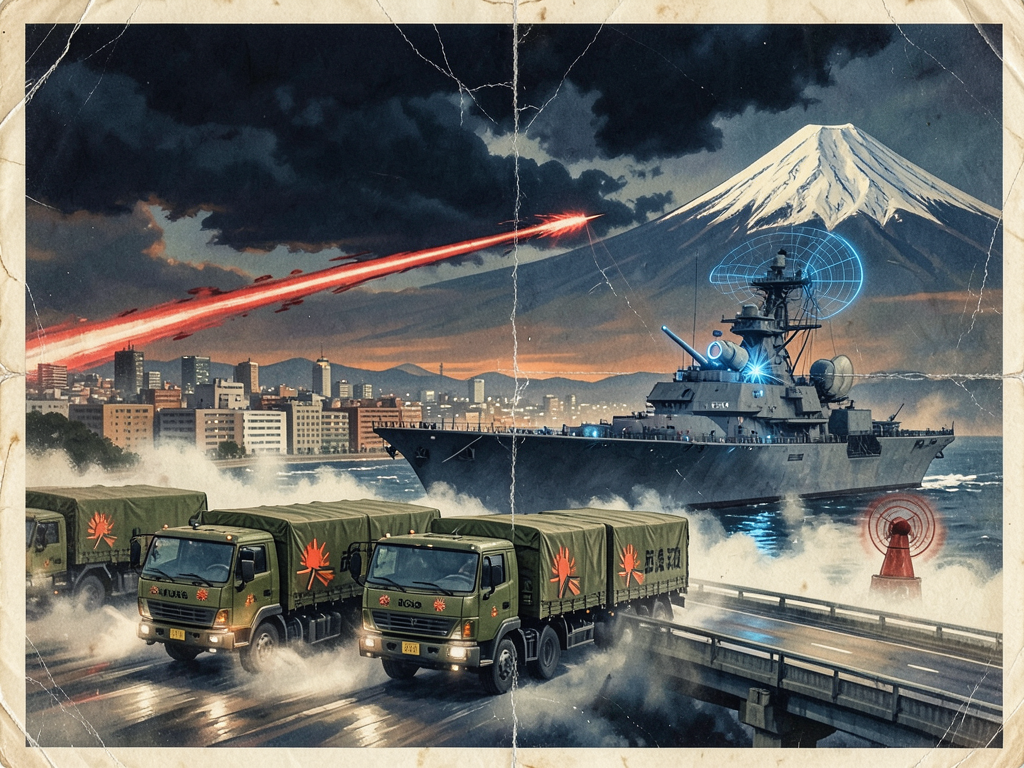
A coordinated narrative has emerged across seven international outlets to normalize Japan's shift toward offensive military capabilities. Detected from March 25 to May 26, 2026, the operation spans eight articles that align in framing Japan’s remilitarization as a necessary, responsible response to external threats. The pattern serves Japanese and U.S. strategic interests by softening domestic and regional opposition to militarization.Narrative Architecture
The messaging constructs Japan as a reluctant actor compelled by external dangers. Primary threats cited are North Korean missile launches and Chinese assertiveness in the South China Sea and around Taiwan. The tone is calm, rational, and policy-oriented, invoking defense analysts and official statements to confer legitimacy. Articles emphasize Japan’s adherence to alliance frameworks with the U.S., UK, and Philippines, positioning arms exports and policy shifts as acts of collective security.Critical omissions define the narrative’s direction. There is no substantive discussion of Japan’s postwar pacifist identity, Article 9 of the constitution, or domestic opposition to remilitarization. The historical burden of Japanese imperialism is absent. Regional anxieties—particularly in China, South Korea, and Southeast Asia—about a rearmed Japan are minimized or omitted. The narrative replaces historical context with forward-looking security logic.
Emotional appeals are indirect but present. The specter of escalation in Ukraine and instability in the South China Sea are invoked not as subjects of analysis but as ambient justifications. This creates a tacit sense of urgency: Japan must act because the world is unsafe. The framing avoids alarmism but leverages a pervasive threat environment to make military expansion seem inevitable, even mundane.
Cross-Outlet Coordination Pattern
Outlets involved include BBC, NPR, Japan Times, CBC, and The Times of India. Coverage is not identical but shares core framing: Japan’s actions are defensive, measured, and justified. All articles emerged within a seven-week window, with clusters around announcements of arms export rule changes and missile tests by North Korea.The Japan Times and BBC adopt near-identical language in describing Japan’s shift as a response to “regional tensions” and “China’s growing assertiveness.” NPR echoes this, using phrases like “responsible and necessary,” while citing only government and allied defense sources. CBC positions the policy change as a “rebuilding of war machine” in a documentary-style tone, normalizing the concept through exposition rather than debate.
No outlet includes voices from Japanese pacifist groups, constitutional scholars, or regional critics. The absence of counter-narratives across independent editorial lines indicates either structural alignment—reliance on the same official sources—or coordinated messaging guidance. The speed and consistency of framing suggest pre-positioned narratives activated by policy milestones.
Technique Assessment
Manufacturing Consent: The narrative environment is shaped by structural filters—corporate media dependence on official sources and alignment with U.S.-aligned foreign policy. Stories rely exclusively on government and allied defense experts, omitting dissent and reinforcing elite consensus.Synchronized Narratives: Multiple outlets converged on identical framing within days of policy announcements. The uniform use of phrases like “necessary response,” “rising tensions,” and “defense posture” across editorially independent platforms indicates a shared script or guidance.
Bureaucratic Ossification: The narratives treat Japan’s policy changes as procedural evolution rather than political rupture. Language like “scrapping a ban” or “loosening rules” depoliticizes the shift, reducing it to administrative adjustment rather than a reversal of national identity.
Religious Legitimation of Power: While not religious in content, the framing legitimizes the state’s authority through appeals to rationality, rules, and alignment with “like-minded democracies.” This modern secular legitimacy functions identically to older theocratic models—placing policy beyond challenge.
Divide and Rule: Regional dynamics are simplified into binary threat perception—China and North Korea as aggressors, Japan and its allies as defenders. This frames cooperation between former adversaries (Japan, Philippines, South Korea) as natural, obscuring historical tensions while building a unified bloc under U.S. strategic oversight.