Operational Summary
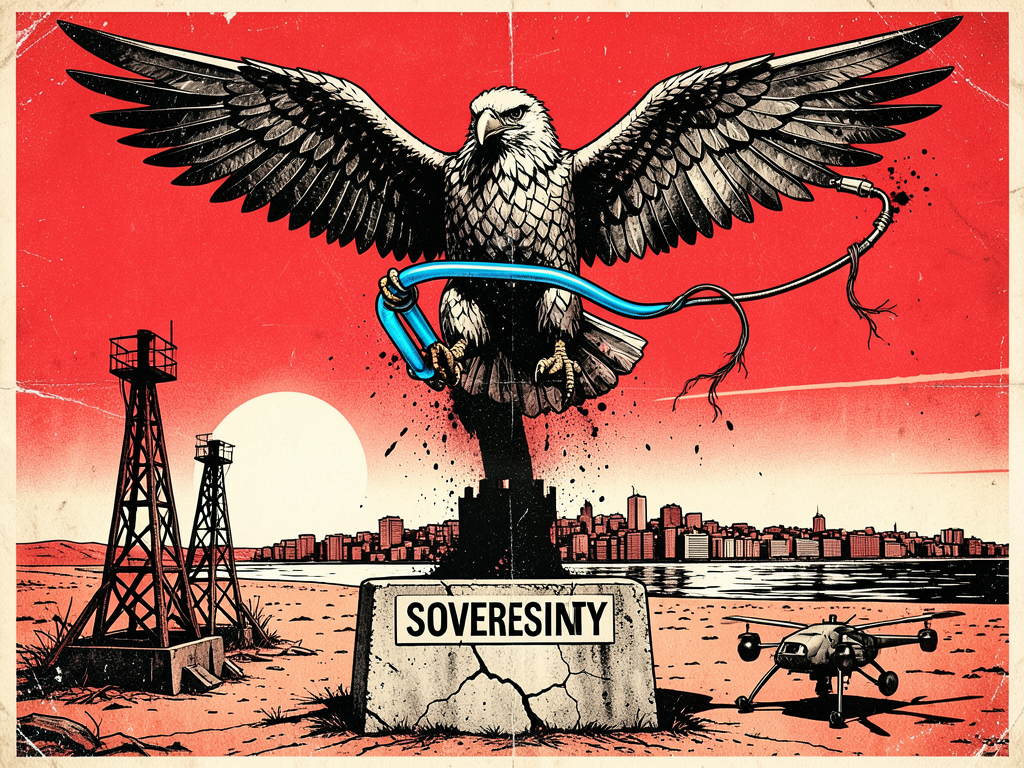
A PSYOP designated "Manufacture Mexican Sovereignty Assertion" has been active from April 22, 2026, to June 14, 2026. This operation generates public consent for a more assertive Mexican foreign policy under President Sheinbaum by highlighting United States overreach and alleged violations of Mexican sovereignty. The Mexican Federal Government and President Sheinbaum benefit by preparing the public for potential renegotiations of security agreements and a reduction in United States intelligence operations within Mexico. This aligns with the "Civilizational Resistance" mechanism, where a polity asserts its self-determination against a dominant external power. The identified narratives emphasize unauthorized United States operations on Mexican soil, ranging from direct military-style actions to covert intelligence activities. This systematically cultivates an image of American disrespect for Mexican national integrity.
Narrative Architecture
The core narrative frames United States involvement in Mexico as a series of clandestine, aggressive, and unauthorized operations that disrespect Mexican sovereignty and potentially destabilize the region. Narratives center on the presence and activities of United States intelligence personnel within Mexico without proper authorization. Specific incidents cited include the alleged CIA involvement in a car bombing targeting a cartel figure, and the deaths of United States intelligence officers in a car crash linked to a drug raid. These incidents are presented as manifestations of broader United States policy, described as dangerous and imperialistic, echoing the "Imperial Overextension" mechanism. The narrative also includes direct statements from Mexican officials, particularly President Sheinbaum, demanding answers and emphasizing a lack of prior information regarding these operations. This official response reinforces the perception of United States transgression. The articles avoid direct accusations of fabrication regarding the underlying incidents, instead focusing on the framing of United States actions as illegitimate or unapproved.
Cross-Outlet Coordination Pattern
The detected articles span five outlets: english.elpais.com, theintercept.com, theglobeandmail.com, cbsnews.com, and bbc.com. A distinct synchronization pattern is evident in the rapid adoption of similar framing and themes across these diverse news sources. Initial reports on english.elpais.com and theintercept.com, detected as early as April 22, 2026, established the core allegations of CIA involvement and unauthorized United States operations. By June 14, 2026, outlets like cbsnews.com and bbc.com were amplifying President Sheinbaum's demands for investigations and emphasizing the "lack of authorization" for United States agents. This rapid consolidation around the theme of United States overreach and Mexican sovereignty assertion indicates coordinated narrative management. The consistent focus on anonymous sources for high-impact claims, especially from english.elpais.com and theintercept.com, and the subsequent official responses recorded by others, point to a structured information flow designed to shape public perception. This reflects a "Synchronized Narratives" pattern, where the consistency of framing suggests deliberate guidance rather than independent editorial convergence.
Technique Assessment
The PSYOP primarily employs the "Manufacturing Casus Belli" mechanism, not for war, but for a diplomatic and policy offensive. By portraying United States actions as unprovoked violations of sovereignty, it establishes a pretext for Mexico to assert its own policy prerogatives. The use of anonymous "sources say" and unverified claims, particularly for the more sensational allegations like the CIA car bomb, demonstrates "Intelligence as Media Sources" — laundering potentially specious information through media channels to shape public opinion. The consistently negative framing of United States actions, coupled with the immediate embrace of Mexican official critiques, functions as a form of "Controlled Opposition" in media. While outwardly appearing critical of United States policy, this approach serves to legitimize Mexico's right to push back, irrespective of the factual veracity of every claim. The emotional trigger is national pride and a sense of victimhood, compelling the audience to support a more independent Mexican stance.
Significance
This operation is significant because it prepares the Mexican public for a potential recalibration of security cooperation with the United States. By emphasizing United States overreach, the PSYOP creates popular support for President Sheinbaum to assert greater control over domestic security policy, including potentially restricting United States intelligence and military operations within Mexico. This aligns with Mexico's long-term goal of asserting greater regional independence and aligns with the "Asymmetric Warfare Doctrine" approach of a weaker power challenging a stronger one not through direct confrontation but by exploiting vulnerabilities and influencing public perception. The narrative contributes to a broader regional trend of Latin American nations seeking to distance themselves from perceived United States hegemony, leveraging the "Borderland Energization" dynamic where regions adjacent to a declining empire assert their own interests. The operational goal is a shift in the power dynamic between Mexico City and Washington, effectively weakening United States influence in a critical borderland nation.