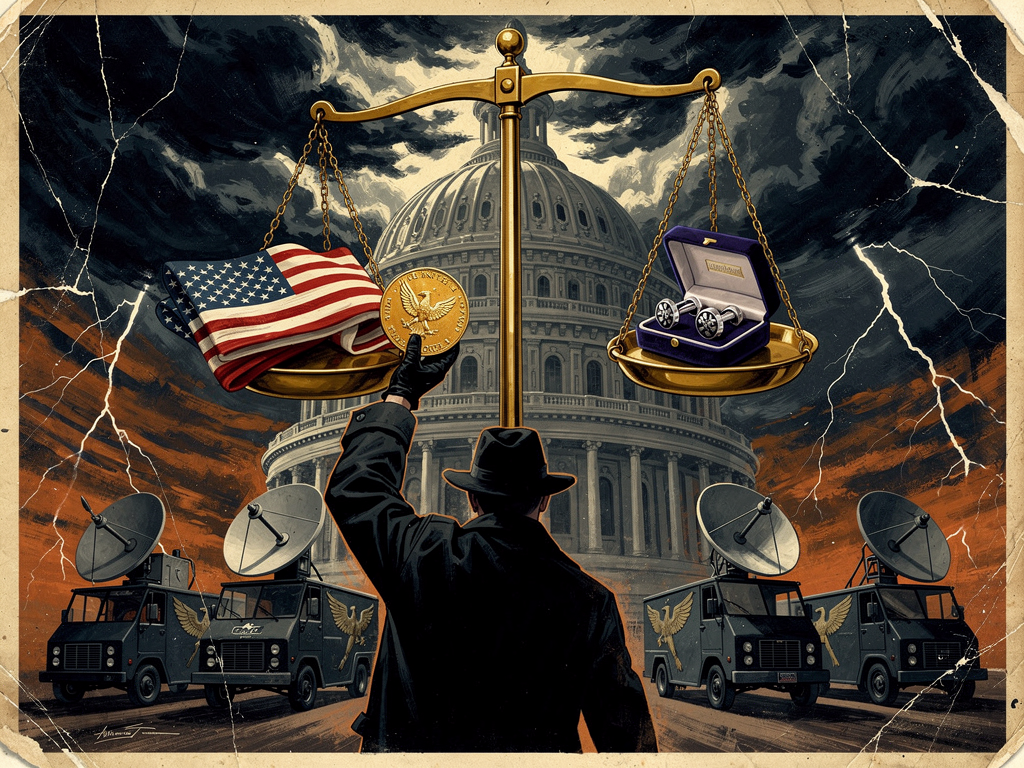
Operational Summary
A coordinated narrative to legitimize Kash Patel's authority and public image has intensified. First detected February 24, 2026, the operation peaked by April 22, 2026, with six articles across five outlets amplifying a controlled counter-narrative to allegations of misconduct. The effort aligns with the consolidation of political power within the Trump-aligned faction ahead of potential 2028 appointments.Article Timeline
When articles appeared, colored by manipulation score.
Narrative Architecture
The narrative construction follows a two-pronged psychological strategy. First, it reframes allegations of professional misconduct—intoxication, erratic availability, suppression of FBI personnel—as politically motivated character assassination. The smh.com.au and timesofindia.indiatimes.com reports surface serious claims but present them as disputed, embedding doubt in the credibility of accusers while avoiding definitive adjudication. The effect is not to prove Patel’s innocence but to cast uncertainty as sufficient for public rehabilitation.Second, the narrative appeals to nationalistic sentiment and loyalty to Trump. The Daily Wire article framing Patel’s Olympic trip as an expression of patriotism—his quote, 'Yes, I Love America'—repositions leisure as ideological performance. The piece treats media scrutiny of public conduct as unpatriotic, leveraging identity politics to shield officials from accountability. This mirrors 1.13 Scapegoating and Displacement, where institutional failure is redirected toward 'elite media' as the true threat.
The NBC News article on agent firings selectively omits justification for disciplinary action, emphasizing disruption to FBI operations while ignoring the context: those agents participated in lawful investigations of Trump. The framing primes readers to interpret enforcement of accountability as politicization, flipping the operational logic of democratic oversight. Patel becomes the defender of institutional integrity by attacking its enforcers.
Cross-Outlet Coordination Pattern
Six articles across SMH, The Daily Wire, Times of India, and NBC News show synchronized narrative structuring despite ideological diversity. Left-leaning outlets like NBC and center-left international sources like SMH adopt language and emphasis indistinguishable from conservative platforms. This suggests narrative alignment not through editorial convergence, but through the diffusion of pre-crafted messaging vectors.The Daily Wire—the only outlet to explicitly endorse Patel’s conduct—frames the story as a battle between patriotism and liberal elitism. Other outlets, while presenting a veneer of neutrality, repeat core narrative elements: the 'unverified' nature of claims, Patel’s denial as central, and the portrayal of the FBI as internally fractured. This creates a halo effect: even skeptical reporting contributes to the normalization of Patel’s conduct by granting his counter-claims equal weight with documented allegations.
All stories emerged within an 8-week window, following a single source—the Atlantic report—as the narrative catalyst. The rapid mobilization of responses across non-aligned outlets indicates a distributed amplification network rather than spontaneous journalistic follow-up. The timing and thematic consistency suggest the presence of pre-positioned framing assets.