Criminalize Dissent, Empower Right
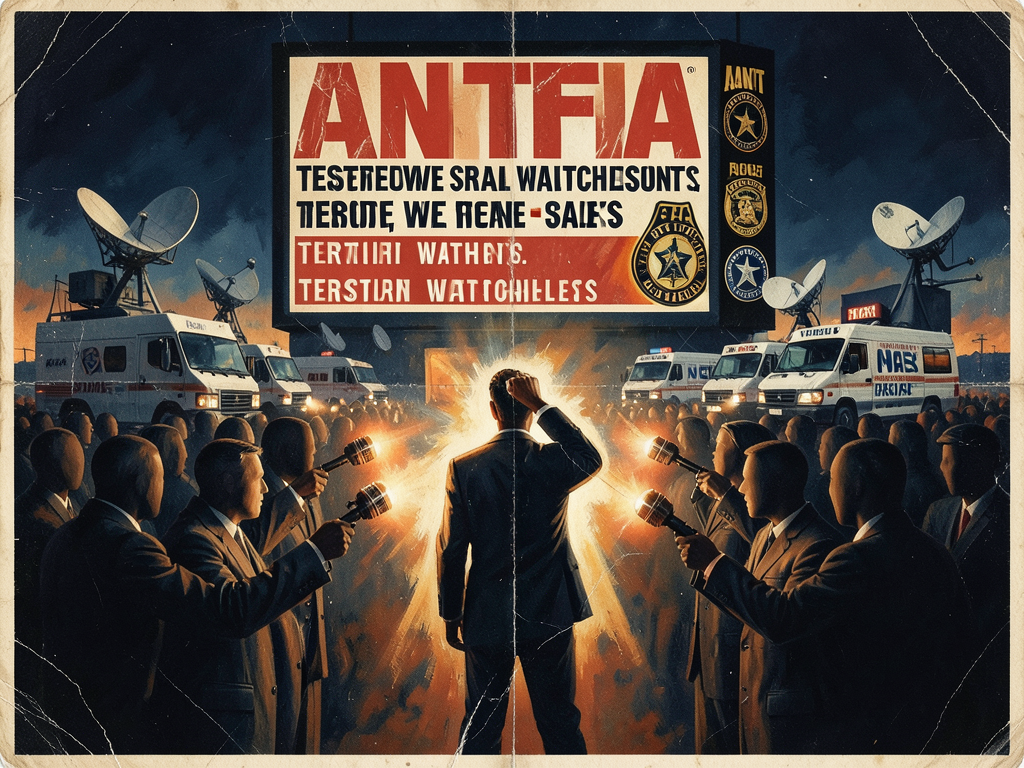
This PSYOP reframes left-wing activism as terrorism to justify state repression and expand surveillance, consolidating power for conservative factions and normalizing the far-right.
PSYOP Hierarchy
Executive Summary
Power Patterns
Manufacturing Casus Belli
The PSYOP manufactures a casus belli by portraying left-wing activism as a violent, organized, and transnational terrorist threat, justifying a pre-planned crackdown. It divides society by scapegoating 'far-left extremists' and displacing blame for societal issues onto them, while simultaneously moving the system from deception to open coercion against dissent. The repeated, almost theatrical, emphasis on harsh sentences and the 'terrorist' label also serves as a revelation of method, demonstrating the state's willingness to use extreme force against perceived enemies.
Cui Bono — Who Benefits?
Conservative political factions benefit by delegitimizing and criminalizing their opposition, consolidating power, and justifying policies that expand state control. Law enforcement and intelligence agencies gain expanded budgets, powers, and public support for surveillance and aggressive tactics. The private prison industry benefits from increased incarceration rates. Far-right movements like the AfD benefit from the narrative that their opposition is illegitimate and violent, normalizing their own extremist positions and deflecting criticism.
Historical Parallels
The Reichstag Fire
The PSYOP creates a climate of fear around a perceived 'terrorist' threat (far-left extremism) to justify emergency measures and expand state power, similar to how the Reichstag Fire was used to consolidate Nazi power and suppress opposition.
Iraqi WMDs (2002-2003)
Intelligence claims of a significant, existential threat (far-left terrorism) are amplified across media with little critical scrutiny, manufacturing consent for aggressive state action, much like the WMD narrative for the Iraq War.
The Atrocity Propaganda Template (Nayirah Testimony, 1990)
Emotionally charged language and selective focus on violent incidents (e.g., shooting a cop, 'terror cell leader') are used to generate outrage and override rational analysis, similar to how the Nayirah testimony was used to build support for the Gulf War.
Narrative Mechanics
Synchronized Talking Points
“Far-left extremism is a serious, growing, and transnational terrorist threat.”
“This threat has been ignored due to ideological bias.”
“Left-wing groups are linked to foreign adversaries.”
“Appeals to civil liberties are used to shield violent activists.”
“Antifa is an organized, violent domestic terrorist organization.”
“Protests against government policies (especially immigration) are often criminal conspiracies or 'assaults on democracy'.”
“Harsh sentences for 'Antifa' members are justified and necessary.”
Framing Evolution
Initially, the narrative focused on specific violent incidents (ICE facility attack) and associated them with 'Antifa'. It then broadened to label 'far-left extremism' as a general, transnational terrorist threat, explicitly linking it to 'transgender ideology' and suggesting it's comparable to ISIS or al-Qaeda. The latest evolution involves high-level government officials (Secretary of State Marco Rubio) pushing for international recognition and action against this 'threat', indicating a move from domestic enforcement to a broader geopolitical framing.
Suppressed Counter-Narratives
×Data showing right-wing and jihadist threats remain far more prevalent than left-wing violence.
×Context around immigration enforcement policies (e.g., controversial tactics, deaths of US citizens, conditions in detention centers).
×The decentralized nature of Antifa and the distinction between protest and organized terrorism.
×The motivations of protesters and the legitimacy of their grievances.
×Concerns about the weaponization of the legal system against political dissent.
×The documented extremist ties and rhetoric of groups like Germany's AfD.
Outlet Coordination
Fox News and Daily Wire are the most aggressive in pushing this narrative, consistently using highly charged language ('poisonous,' 'evil,' 'terror cell,' 'assault on democracy') and framing left-wing activists as dangerous terrorists. Breitbart also contributes with similar framing. NBC News and CBS News report on the charges but often include some critical context or mention of civil liberties concerns, though still using the government's 'terrorist' framing. Al Jazeera and The Intercept offer more critical perspectives, highlighting government overreach and the weaponization of legal processes, often acting as counter-narrative outlets. The timing of the Rubio articles (July 16) suggests a coordinated push to elevate the 'far-left terror' narrative to an international level, following the domestic prosecutions in June.
Bigger Picture
This PSYOP is a critical component of a broader strategy to redefine the domestic political landscape, criminalize dissent, and consolidate authoritarian tendencies within the state. By creating a new 'enemy within' that can be linked to foreign adversaries, it prepares the ground for expanded surveillance, reduced civil liberties, and the normalization of aggressive state action against any form of opposition deemed 'extremist'.
Prediction
This PSYOP is likely building toward public acceptance of new legislation or executive orders that expand domestic surveillance powers, redefine 'domestic terrorism' to include a wider range of political activism, and potentially lead to the designation of certain left-wing groups as terrorist organizations. It also prepares the public for increased militarization of law enforcement and the suppression of protests, particularly those challenging conservative policies or the rise of the far-right.
Sources & Articles
2026-07-16T12:44:55.000Z
2026-07-04T17:37:02.000Z
2026-06-23T21:47:17.000Z
2026-06-24T13:58:26.000Z
2026-07-02T23:31:22.000Z
2026-06-16T20:39:10.000Z
2026-07-16T21:37:48.000Z
2026-06-24T15:43:46.000Z
2026-06-23T16:21:00.000Z
2026-06-23T19:56:17.000Z
Showing 10 of 18 articles
External Coverage(50)
Showing 10 of 50